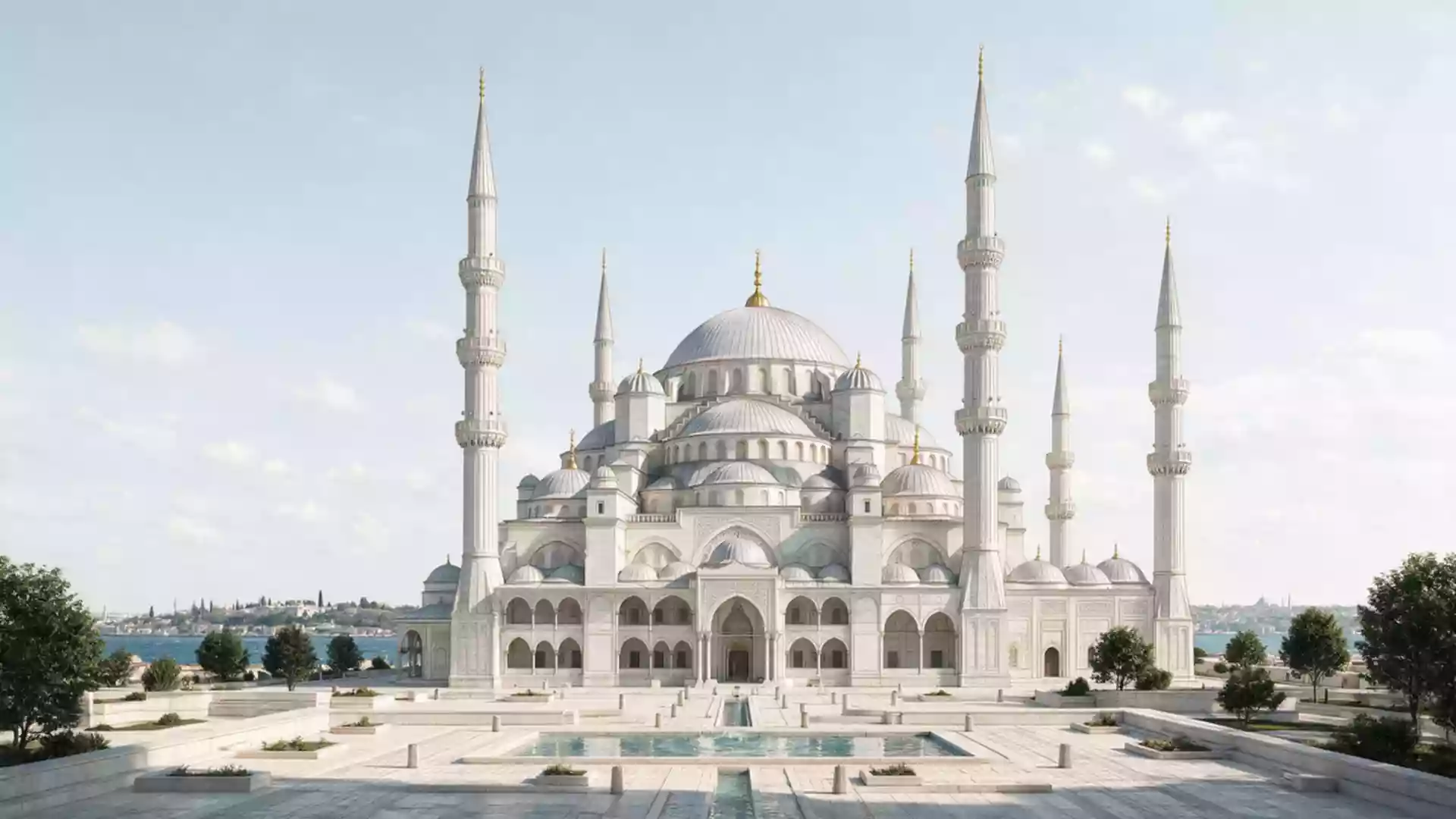
Sultanahmet Camii and its sea of domes above Istanbul
Published on 09/11/2026 at 06:17 | Editorial responsibility: Rafael Müller, Editor-in-Chief AD HOC NEWS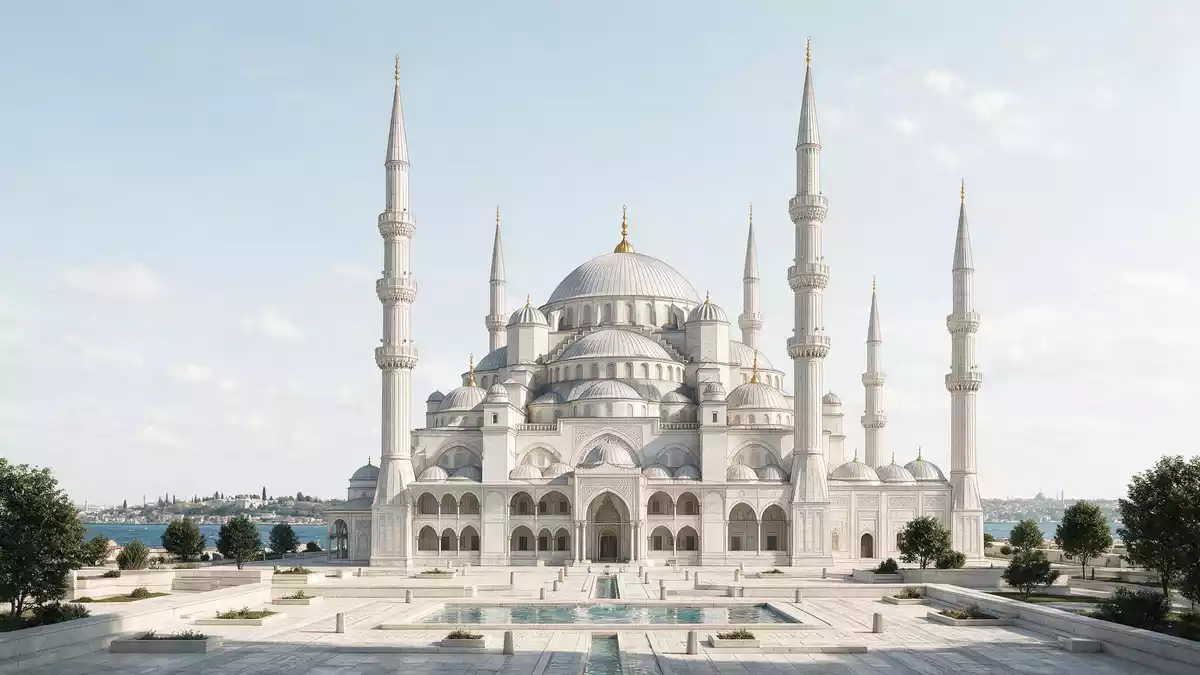
Sultanahmet Camii, known in English as the Sultan Ahmed Mosque or the Blue Mosque, spreads a vast composition of domes and minarets over the historic peninsula of Istanbul. Completed in the early seventeenth century under Sultan Ahmed I, it stands beside Hagia Sophia and the former Byzantine Hippodrome, forming one of the most recognisable silhouettes on the city’s skyline.
A seventeenth-century imperial mosque facing Hagia Sophia
Sultanahmet Camii is an Ottoman imperial mosque in the Fatih district, in the historic Sultanahmet area of Istanbul, Turkeyin Fatih, Istanbul, Turkey. The mosque complex was commissioned by Sultan Ahmed I, who ruled the Ottoman Empire from 1603 to 1617, as a major religious foundation bearing his nameSultan Ahmed I (r. 1603–1617). Construction began in 1609 and the mosque was completed in the second half of that decade, with primary sources recording its completion around 1616 or 1617built between 1609 and 1616. The architect was Sedefkâr Mehmed A?a, a court architect from the school of Mimar Sinan whose epithet refers to his skill in mother-of-pearl inlayMehmed A?a as architect.
The mosque stands just across a plaza from Hagia Sophia and beside the footprint of the ancient Hippodrome, now Sultanahmet Squarenext to the Hippodrome and Hagia Sophia. Its official Turkish name, Sultanahmet Camii, refers directly to Sultan Ahmed I, while “Blue Mosque” became common in European languages because of the colour of the interior tiles and painted decorationname Blue Mosque as Western usage. Around the main prayer hall lies a wider külliye, or complex, including courtyards and associated structures, with the tomb of Ahmed I integrated into the ensemble.
Cascading domes, six minarets and a vast interior
From outside, Sultanahmet Camii is defined by its cascading system of domes and semi-domes gathered around a central dome. This layered arrangement steps down towards the outer walls, creating a visual descent from the central mass to the surrounding arcadesmany domes and semidomes. The building’s plan and elevation draw on two centuries of Ottoman mosque design, synthesising elements familiar from Sinan’s major works with a dense decorative programmeculmination of Ottoman mosque design.
Sultanahmet Camii is also known for its six slender minarets that rise around the mosque, a number that was unusual for an Ottoman imperial mosque at the timesix minarets as distinctive feature. Inside, visitors step into a single vast prayer hall, its wide expanse carried by the main dome and the supporting semi-domes and piers. The interior surfaces combine stone, marble, painted plaster and ceramic tile, with inscriptions in Ottoman calligraphy running around the lower and upper wallscalligraphic decoration within the hall. The floors are laid with carpets, and low-hanging chandeliers and lighting keep the focus on the central space rather than on any single side aisle.
Blue tiles, light and the daily life of a working mosque
The mosque’s English name refers to the blue tones in its interior decoration. Iznik tiles with floral and geometric motifs line parts of the lower and gallery walls, and painted ornament extends the palette across plaster and stone surfacesIznik tile decoration. Windows pierce the drum of the main dome, the semi-domes and the walls of the prayer hall, admitting daylight that picks out the tiles, inscriptions and structural ribswindows around the dome and walls.
Sultanahmet Camii functions as an active place of worship within Istanbul’s religious lifestatus as an active mosque. The building is used for the five daily prayers, Friday congregational prayers and religious festivals, and it sits within a neighbourhood where religious, commercial and residential functions overlap. For visitors, the contrast between the busy streets around Sultanahmet Square and the ordered interior of the mosque is one of the clearest ways to sense how the architecture mediates between city and ritual.
Visiting Sultanahmet Camii: what travellers from Western Europe should know
- Sultanahmet Camii stands in the Sultanahmet district of Istanbul’s historic peninsula, within the Fatih municipality, facing Hagia Sophia across Sultanahmet Square.
- The mosque complex is approached on foot across paved courtyards and walkways, with steps at the thresholds and within the interior separating different floor levels.
- Tram services on the Kabata?–Ba?c?lar line serve the nearby Sultanahmet stop, and ferries across the Bosphorus connect Eminönü with districts on the Asian side of Istanbul.
- The official language is Turkish and the currency is the Turkish lira.
- Entry requirements depend on your nationality; UK travellers can check the FCDO travel advice at gov.uk/foreign-travel-advice, Irish travellers the Department of Foreign Affairs at ireland.ie.
Searching for Sultanahmet Camii on social platforms
These links open searches for Sultanahmet Camii on each platform.
Frequently asked questions about Sultanahmet Camii
Where is Sultanahmet Camii located in Istanbul?
Sultanahmet Camii stands in the Sultanahmet neighbourhood of the Fatih district on Istanbul’s historic peninsula, beside Sultanahmet Square and facing Hagia Sophia.
What should visitors expect inside Sultanahmet Camii?
Visitors enter a large carpeted prayer hall beneath a central dome supported by semi-domes and piers, with blue-tinted tiles, calligraphy and windows admitting daylight around the space.
What makes Sultanahmet Camii distinctive among Ottoman mosques?
Its combination of cascading domes, a central dome over a single vast hall, six minarets and extensive blue tile decoration makes Sultanahmet Camii a distinctive example of seventeenth-century Ottoman mosque architecture.