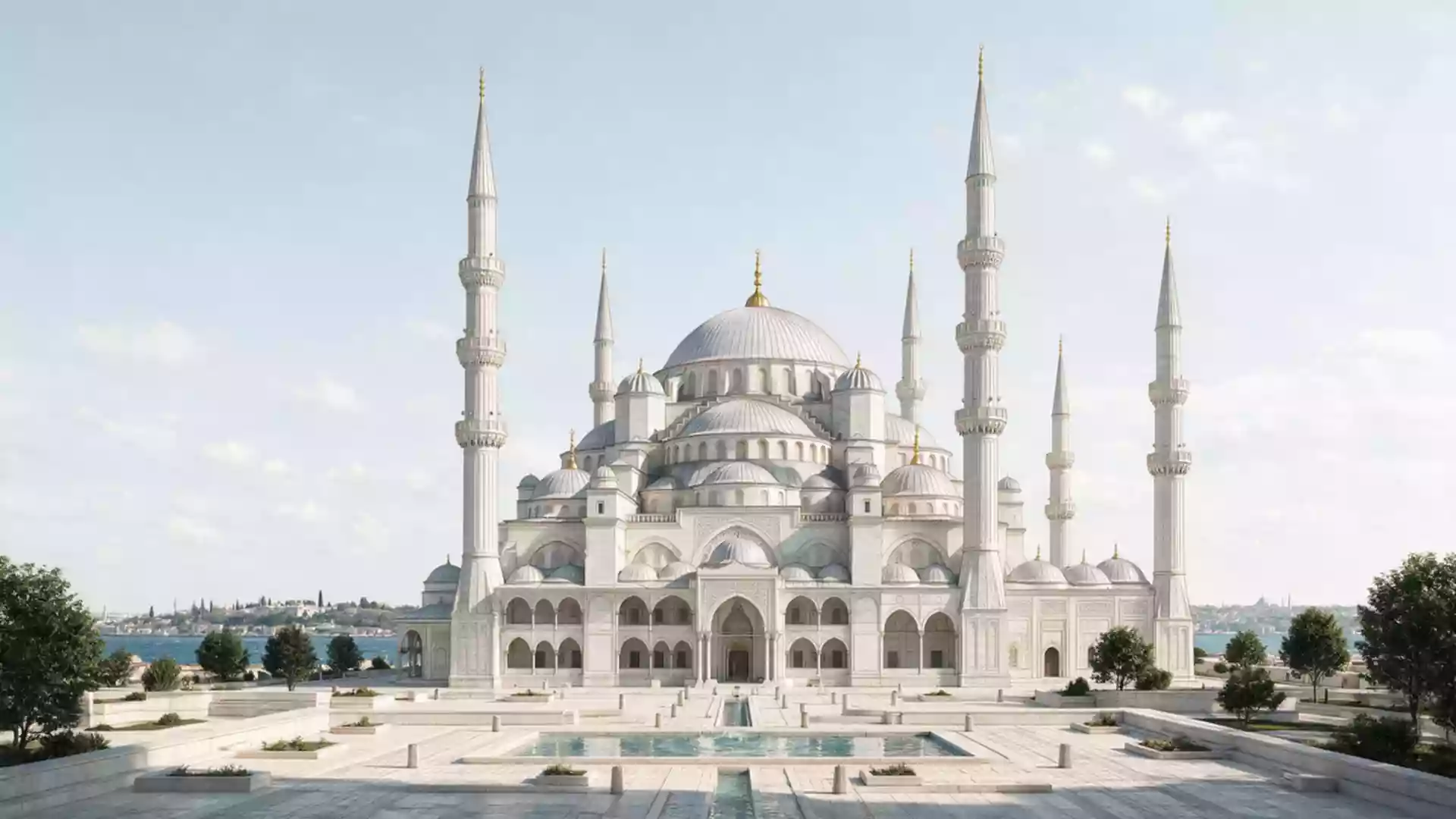
Sultanahmet Camii and its cascade of domes in Istanbul
Published on 09/09/2026 at 14:50 | Editorial responsibility: Rafael Müller, Editor-in-Chief AD HOC NEWS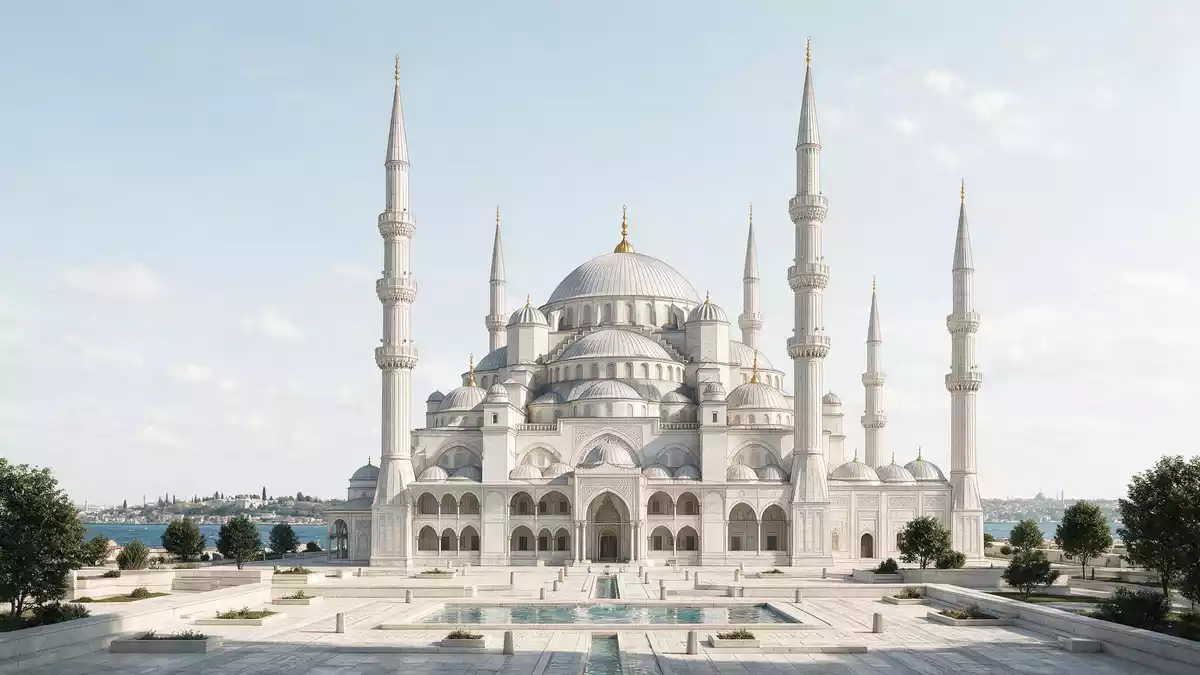
Sultanahmet Camii, known in English as the Sultan Ahmed Mosque or the Blue Mosque, is an early seventeenth-century Ottoman imperial mosque in Istanbul whose skyline is defined by a cascade of domes and slender minarets. Built between 1609 and 1616 during the reign of Sultan Ahmed I and designed by the architect Sedefkâr Mehmed A?a, it anchors the historic peninsula of Istanbul opposite Hagia Sophia in the district of Fatih.
A seventeenth-century imperial mosque facing Hagia Sophia
Sultanahmet Camii stands beside the former Byzantine Hippodrome on the historic peninsula of Istanbul, facing Hagia Sophia across Sultanahmet Square in the district of Fatih. The mosque complex was commissioned by Sultan Ahmed I in the early seventeenth century and built between 1609 and 1616 under the direction of the imperial architect Sedefkâr Mehmed A?a, a student of the school of Mimar Sinan.Ottoman imperial mosque The building belongs to the classical period of Ottoman architecture, when large central-domed mosques were developed on Istanbul’s hills above the Sea of Marmara.seventeenth-century mosque
The mosque is best known for the interplay between its large central dome, a series of half-domes and smaller domes, and its unusually high number of minarets. Sultanahmet Camii was the first Ottoman imperial mosque built with six minarets rather than the four that had been common in earlier large mosques, a feature that quickly became associated with the building’s identity.six minarets The domes and half-domes are arranged so that they seem to climb from the wide base of the mosque up to the central dome, giving the building its characteristic stepped silhouette over the surrounding streets.ascending domes and minarets
Domes, tiles and interior space
Inside Sultanahmet Camii, the main prayer hall is covered by a large central dome carried on four substantial piers and supported by semi-domes and arches, creating a single broad volume of worship space.completed mosque interior Light enters through numerous windows set into the domes and upper walls, highlighting the surfaces of stone, marble and tile. The interior takes its English nickname from blue ?znik tiles that cover wide areas of the walls, decorated with floral and geometric motifs that were characteristic of Ottoman tile workshops in the late sixteenth and early seventeenth centuries.blue Iznik tiles
The arrangement of the domes is visible from within as well as from outside, with half-domes extending on the qibla side above the main prayer space and smaller domes covering side aisles and galleries. These galleries frame the central hall and offer elevated views of the carpeted floor and the calligraphic panels that run along the walls. The transition from the spacious courtyard into the domed interior underlines the change from open space to covered volume, with the courtyard itself enclosed on several sides by arcades topped with smaller domes that echo the main roofline.courtyard and arcades
Sultanahmet Camii within the historic peninsula
The mosque complex forms part of a wider ensemble of religious and civic buildings in Sultanahmet, a district where Ottoman and Byzantine monuments stand within short walking distance of one another. Sultanahmet Camii occupies a site at Atmeydan? Caddesi, a street that follows the outline of the former Hippodrome, and its forecourt opens towards the axis of the old track.location in Fatih Across the square, Hagia Sophia’s mass and dome form the principal counterpart to the mosque’s own profile, making the area one of Istanbul’s most dense concentrations of monumental buildings.
The mosque’s six minarets rise above the low roofs of the surrounding streets and houses, and their slender forms emphasise the vertical dimension of the complex when seen from the approaches along Sultanahmet Square or from the tram route that passes nearby. Around the mosque, gardens and paved paths occupy the former imperial grounds, and the outlines of the square and the Hippodrome help visitors understand the layered history of the site as they move between the different monuments.historic peninsula setting
Visiting Sultanahmet Camii: what travellers from Western Europe should know
- Sultanahmet Camii stands in the Fatih district on Istanbul’s historic peninsula, facing Hagia Sophia across Sultanahmet Square and close to the route of the Kabata?–Ba?c?lar tram line.
- The mosque complex includes a broad courtyard, paved paths and interior galleries reached by steps, and visitors move between open square, garden areas and the carpeted main prayer hall.
- The official language is Turkish and the currency is the Turkish lira.
- Entry requirements depend on your nationality; UK travellers can check the FCDO travel advice at gov.uk/foreign-travel-advice, Irish travellers the Department of Foreign Affairs at ireland.ie.
Searching for Sultanahmet Camii on social platforms
These links open searches for Sultanahmet Camii on each platform.
Frequently asked questions about Sultanahmet Camii
Where is Sultanahmet Camii located in Istanbul?
Sultanahmet Camii stands on the historic peninsula of Istanbul in the district of Fatih, facing Hagia Sophia across Sultanahmet Square and beside the former Hippodrome.
What should visitors expect when entering Sultanahmet Camii?
Visitors pass through an arcaded courtyard into a large domed prayer hall, moving from paved exterior spaces into a carpeted interior framed by galleries, tilework and calligraphic panels.
What makes Sultanahmet Camii distinctive among Istanbul’s mosques?
Sultanahmet Camii is distinguished by its combination of a broad central dome, a cascade of half-domes and an unprecedented six minarets, together with extensive blue ?znik tile decoration inside.