
Sultanahmet Camii and its cascade of domes in Istanbul
Published on 09/03/2026 at 16:30 | Editorial responsibility: Rafael Müller, Editor-in-Chief AD HOC NEWS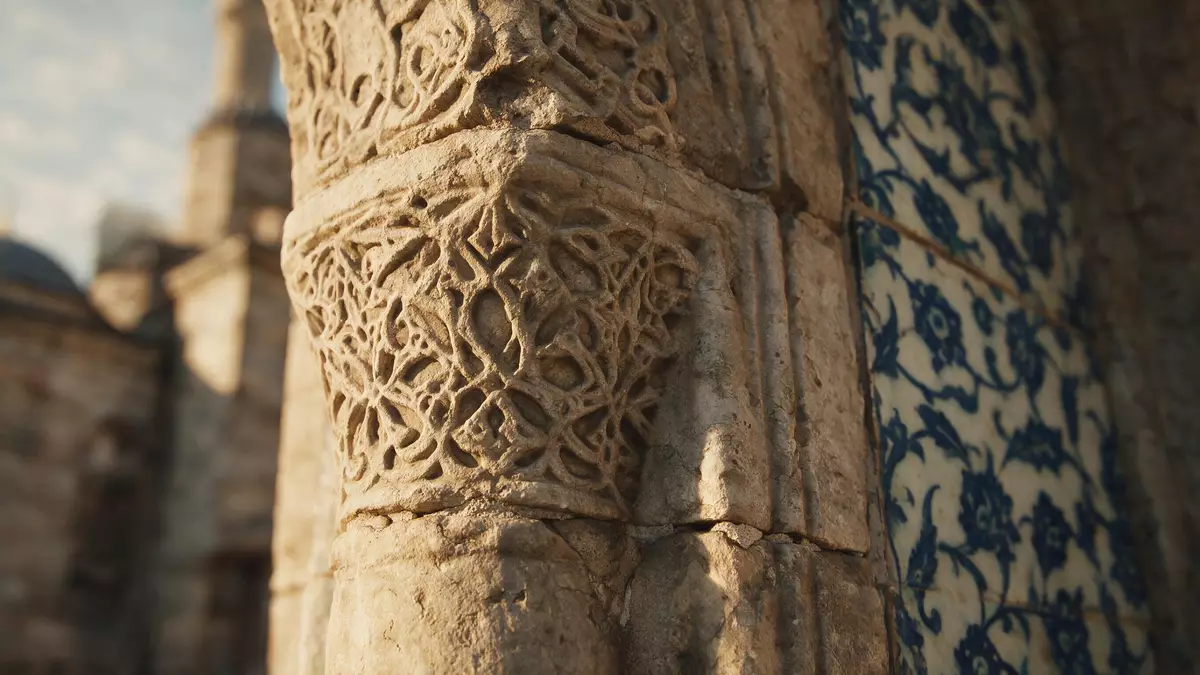
Sultanahmet Camii, widely known in English as the Sultan Ahmed Mosque or the Blue Mosque, is a seventeenth-century imperial mosque on Istanbul’s historic peninsula whose interior is lined with blue ceramic tiles and crowned by a high central dome framed by six slender minarets. Commissioned by Sultan Ahmed I during his reign over the Ottoman Empire and built between 1609 and the second decade of the seventeenth century under court architect Sedefkâr Mehmed A?a, it stands in the district of Fatih, facing Hagia Sophia across the area of the former Byzantine Hippodrome.
A classical Ottoman mosque built for an imperial capital
Sultanahmet Camii belongs to the classical period of Ottoman mosque design, the line of domed imperial mosques developed in Istanbul during the sixteenth and early seventeenth centuries. Sultan Ahmed I, who ruled the Ottoman Empire in the early seventeenth century, ordered an imperial mosque complex bearing his name near the Hippodrome and Hagia Sophia, and primary sources date the foundation of the mosque to 1609, with completion in the late 1610s.Primary sources date the foundation The architect Sedefkâr Mehmed A?a, an apprentice in the tradition of Mimar Sinan and Davud A?a, oversaw the design, and the mosque is regarded as one of the last major examples of classical Ottoman architecture in Istanbul.one of the last examples of Ottoman classical architecture
The building occupies a prominent position on the historic peninsula, set beside the site of the Byzantine Hippodrome and facing Hagia Sophia across the square known today as Sultanahmet. Together, Sultanahmet Camii and Hagia Sophia frame one of Istanbul’s most recognisable urban spaces, with the mosque’s domes and minarets forming a counterpoint to the great Byzantine basilica across the square.set next to the Byzantine Hippodrome and across from the Hagia Sophia The mosque is part of a larger complex that historically included auxiliary buildings around it, a common feature of Ottoman imperial mosques, although the main prayer hall and its courtyard remain the focus for visitors.
Cascading domes, six minarets and a sea of blue tiles
The exterior of Sultanahmet Camii is dominated by a central dome surrounded by semi-domes and smaller domes that step down toward the courtyard, creating a layered roofline often described as a cascade of domes. The central dome rises to about 43 m (141 ft) above the floor and spans roughly 23.5 m (77 ft) in diameter, supported by four massive internal pillars sometimes called “elephant feet”.central dome dimensions and support Around this core, a series of smaller domes and semi-domes buttress the main structure and generate the mosque’s distinctive silhouette against the Istanbul sky.
Sultanahmet Camii is also known for its six minarets, an unusual number for an Ottoman mosque, arranged around the mosque and courtyard rather than the four minarets more commonly found on earlier imperial mosques.known for having six minarets Inside, more than 20,000 handmade ceramic tiles from ?znik line the walls and piers, many decorated with stylised flowers, trees and abstract patterns in shades of blue and other colours.more than 20,000 handmade ceramic tiles from ?znik These tiles, together with stained-glass windows and calligraphic inscriptions, create the coloured interior that gave the mosque its English nickname, the Blue Mosque.
An active place of worship shaped by Ottoman traditions
Sultanahmet Camii was built as an imperial congregational mosque and continues to serve as an active place of worship for daily and Friday prayers, as well as a major landmark for visitors. The interior is organised around the central domed space of the prayer hall, with the mihrab indicating the direction of Mecca on one wall and a raised sultan’s loge and galleries along the sides, reflecting established Ottoman mosque typologies.elegant composition of ascending domes and six slender soaring minarets Large chandeliers historically hung from the ceiling, and patterned carpets cover the floor, marking the space where worshippers line up during prayer.
Architecturally, the mosque combines elements associated with classical Ottoman design and aspects drawn from the nearby Hagia Sophia and earlier imperial mosques. Its domed composition, semi-domes and buttressing arrangement belong to the tradition shaped by Sinan’s sixteenth-century works, while decorative programmes of tiles and inscriptions follow courtly tastes of the early seventeenth century.combines traditional Islamic architecture with Byzantine elements Together, these features make Sultanahmet Camii a key example of late classical Ottoman mosque architecture in Istanbul.
Visiting Sultanahmet Camii: what travellers from Western Europe should know
- Sultanahmet Camii stands in the Sultanahmet area of the Fatih district on Istanbul’s historic peninsula, opposite Hagia Sophia and beside the former Hippodrome, and is reached by city transport and by walking through the surrounding streets.
- The mosque’s main prayer hall is approached through a large courtyard with arcades and through entrance portals that open into an interior structured by domes, semi-domes and substantial supporting pillars, with carpets on the floor.
- The historic Sultanahmet Square around the mosque forms part of Istanbul’s old urban core, with paved surfaces, level approaches and views across to Hagia Sophia and the remnants of the Hippodrome.
- The official language is Turkish and the currency is the Turkish lira.
- Entry requirements depend on your nationality; UK travellers can check the FCDO travel advice at gov.uk/foreign-travel-advice, Irish travellers the Department of Foreign Affairs at ireland.ie.
Searching for Sultanahmet Camii on social platforms
These links open searches for Sultanahmet Camii on each platform.
Frequently asked questions about Sultanahmet Camii
Where is Sultanahmet Camii in Istanbul?
Sultanahmet Camii stands in the Sultanahmet area of the Fatih district on Istanbul’s historic peninsula, beside the former Hippodrome and facing Hagia Sophia across the square.
What can visitors expect inside Sultanahmet Camii?
Visitors enter a large carpeted prayer hall under a central dome supported by substantial pillars, with blue ?znik tiles, stained-glass windows and calligraphic inscriptions on the interior surfaces.
What makes Sultanahmet Camii distinctive among Istanbul’s mosques?
Sultanahmet Camii is distinctive for its combination of a high central dome, a cascading roofline of domes and semi-domes, six minarets and a richly tiled interior in blue hues.


