

Suchitoto’s colonial streets and lake views in El Salvador
Published on 08/26/2026 at 18:08 | Editorial responsibility: Rafael Müller, Editor-in-Chief AD HOC NEWS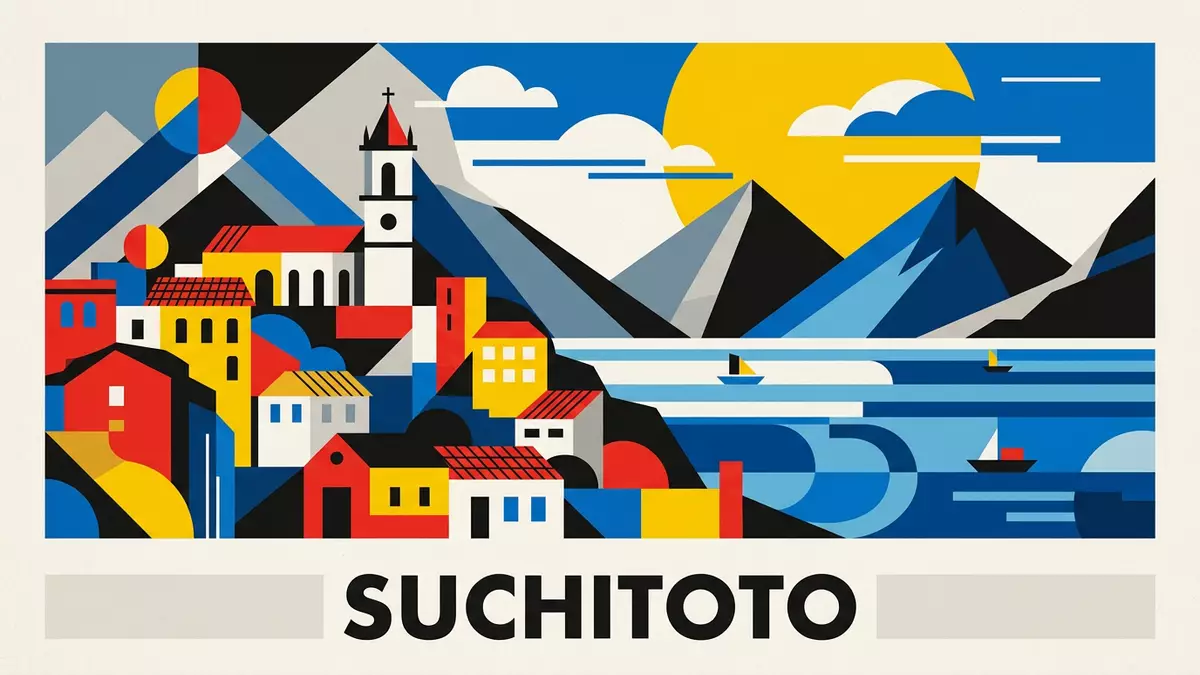
Suchitoto in central El Salvador is a small colonial town of cobbled streets, whitewashed houses and wide views across Lago Suchitlán. Set in the Cuscatlán Department and linked historically to the early sixteenth-century founding of San Salvador, it has become a compact cultural centre where a preserved townscape and the surrounding hills frame everyday life.
Colonial fabric above a vast artificial lake
Suchitoto stands on a ridge in the northern part of the Cuscatlán Department, looking down towards Lago Suchitlán, the reservoir formed on the Lempa River behind the Cerrón Grande hydroelectric dam in the 1970s.Lago Suchitlán, created by the Cerrón Grande dam stretches below the town, so that the streets and main square sit above the water with long views to distant volcanic silhouettes.The town’s position above the lake gives a clear sense of separation between the compact urban grid and the open water basin.
The town lies in the hills north of San Salvador, within reach of the capital yet markedly smaller and quieter in scale.It is part of the Cuscatlán Department and belongs to a chain of settlements overlooking the Lempa River valley. To one side, the land falls towards the reservoir’s irregular shoreline; on the other, low ridges rise behind the town, framing the skyline with trees and scattered houses rather than high-rise buildings.
Santa Lucía church and a nineteenth-century townscape
At the heart of Suchitoto stands the Iglesia Santa Lucía, a white church facing the main plaza whose present structure dates from the mid-nineteenth century.The current building was constructed between 1853 and 1857 under the guidance of Cayetano Bosque and architect Pío José Araujo, replacing an earlier temple that had been damaged by fire. In 1978 the church was declared a National Monument, a status that underlines its role as the town’s most prominent historic structure.Its designation as a monument in 1978 also reflects the value attached to its mixture of European-inspired architectural elements.
Around the plaza and throughout the historic centre, one-storey houses with red clay roof tiles line the cobblestone streets, creating a uniform streetscape that dates in large part from the nineteenth century.The town is described as a cohesive mid-sixteenth-century settlement with tiled roofs and interior courtyards, even though many of the buildings visible today reflect later rebuilding and adaptation. Interior courtyards, shaded corridors and simple façades give the centre a consistent scale and rhythm, with roadside trees and small squares breaking up the grid.
Layers of pre-Columbian and colonial history
The plateau occupied by Suchitoto has a history of human settlement that long predates Spanish colonisation. Archaeological and historical accounts describe habitation in the area during the pre-Columbian era, when Pipil communities lived in what is now central El Salvador.The territory has been inhabited since pre-Columbian times, with place names derived from the Nahuatl language. The name Suchitoto itself is linked to Nahuatl roots associated with flowers and birds, an echo of how indigenous languages encoded the landscape.
In 1528 the Spanish colonial authorities founded an early version of the town of San Salvador in the Suchitoto area while the conquest of the territory was under way.The first San Salvador was established here in 1528, though this initial settlement was abandoned after only some years and the capital shifted elsewhere. Later in the nineteenth century, Suchitoto itself acquired formal status as a town and then as a city, as El Salvador’s independent republic reorganised its municipal structures.It was recognised as a town in March 1836 and as a city in July 1858, anchoring its civic identity within the Cuscatlán Department.
Visiting Suchitoto: what travellers from Western Europe should know
- Suchitoto lies north of San Salvador in the Cuscatlán Department. The town is connected to the capital and other cities by paved roads used by interurban buses and private vehicles.
- The historic centre rests on sloping terrain, and many streets are paved with cobblestones. Walking around involves uneven surfaces and occasional inclines between the plaza and surrounding neighbourhoods.
- Lago Suchitlán lies below the town and is reached by descending from the central streets towards the lakefront. Paths and roads leading down can feel steep compared with the relatively level main square.
- The official language is Spanish and the currency is the United States dollar.
- Entry requirements depend on your nationality; UK travellers can check the FCDO travel advice at gov.uk/foreign-travel-advice, Irish travellers the Department of Foreign Affairs at ireland.ie.
Searching for Suchitoto on social platforms
These links open searches for Suchitoto on each platform.
Frequently asked questions about Suchitoto
Where is Suchitoto located in El Salvador?
Suchitoto is a town in the Cuscatlán Department of El Salvador, situated north of San Salvador on hills overlooking the reservoir known as Lago Suchitlán.
What can visitors expect when walking around Suchitoto?
Visitors encounter cobblestone streets, single-storey houses with red tiled roofs and the central plaza dominated by the white façade of the nineteenth-century Iglesia Santa Lucía.
What makes Suchitoto distinctive among Salvadoran towns?
Suchitoto combines a preserved colonial-era street grid, a prominent church recognised as a National Monument and an elevated position that gives long views over Lago Suchitlán and surrounding hills.


