
Suchitoto, El Salvador’s hillside colonial town above Lake Suchitlán
Published on 09/16/2026 at 12:32 | Editorial responsibility: Rafael Müller, Editor-in-Chief AD HOC NEWS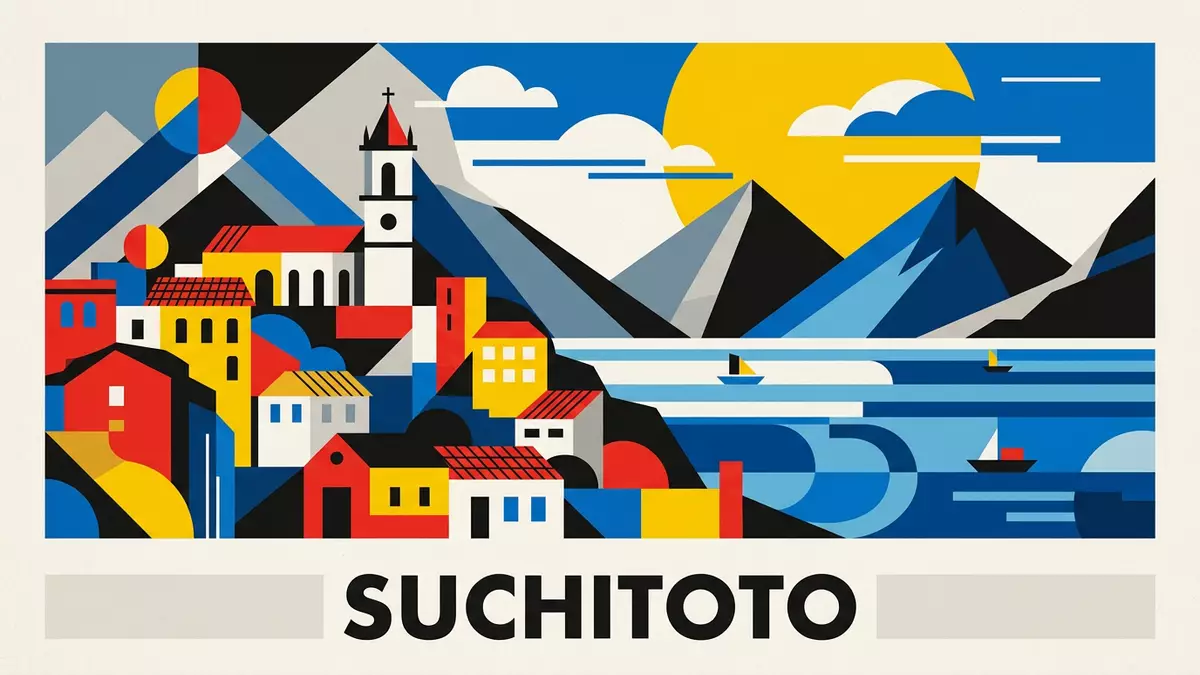
Suchitoto in central El Salvador is a hillside colonial town overlooking Lake Suchitlán, where cobblestone streets, whitewashed houses and a compact historic centre sit above the country’s largest reservoir formed on the Lempa River in the 1970s.Suchitoto The town belongs to the Cuscatlán Department and its municipal territory includes the site where the Villa de San Salvador was founded in 1528 before that early settlement was abandoned.founding of San Salvador in 1528
A colonial grid town above a flooded valley
Suchitoto’s historic centre follows a rectilinear street plan set out under Spanish colonial rule, with straight streets meeting at right angles and converging on a main square.grid plan under Spanish rule Low houses with terracotta roofs and whitewashed walls line the cobblestones, giving the centre a consistent colonial appearance that has survived into the nineteenth and twentieth centuries.cobblestone streets and whitewashed houses The main square is anchored by the Santa Lucía church, a white structure dating largely from the nineteenth century that has become one of the most recognisable landmarks in the town.
Below the ridge on which Suchitoto stands, Lake Suchitlán fills the valley created when the Cerrón Grande hydroelectric dam closed in the mid-1970s on the course of the Lempa River.Lake Suchitlán and Cerrón Grande dam From the streets and viewpoints in the centre, the lake appears as a broad sheet of water backed by low hills and islands, a landscape very different from the narrow river valley that existed before the reservoir was formed. The combination of colonial grid and wide reservoir views is one of the most striking aspects of Suchitoto’s setting.
Layers of history from Nahuatl origins to twentieth-century conflict
The name “Suchitoto” comes from Nahuatl and is usually translated as “place of flowers and birds”, reflecting the indigenous presence in the region long before Spanish colonisation.Nahuatl name meaning Archaeological and historical accounts describe the territory as inhabited in pre-Columbian times, which gives the town a depth of history that predates its colonial architecture.pre-Columbian habitation In 1528, during the Spanish conquest, the Villa de San Salvador was founded within the municipal area; that initial town was abandoned after seventeen years, but its short existence ties Suchitoto to the early colonial history of El Salvador.
In the twentieth century, the region around Suchitoto was involved in the Salvadoran civil war of the 1980s, and accounts of the town’s past now combine domestic architecture with memories of conflict.civil war in the Suchitoto region Since the end of the war in the early 1990s, Suchitoto has developed as a cultural and tourist centre, with art galleries and restored buildings in its colonial core alongside references to the period of violence that affected the surrounding countryside.tourism and cultural scene
Arts, indigo and lake-focused excursions
Suchitoto has gained a reputation as an arts town within El Salvador, with small galleries, cultural centres and festivals concentrated in and around its historic streets.arts town description Filmmaker Alejandro Cotto is closely associated with the town’s cultural life, and his work has been linked to the development of local events and venues that use restored colonial buildings as settings for screenings and performances.Alejandro Cotto and cultural scene A long-standing indigo dyeing tradition also survives in workshops that demonstrate how añil is prepared and used to colour fabric, connecting Suchitoto to a wider history of indigo in Central America.
The presence of Lake Suchitlán beneath the town has turned the reservoir into a major focus for excursions, with boat trips crossing the flooded valley and islands that formed when the river was dammed.boat tours on Lake Suchitlán Birdlife on and around the lake is frequently mentioned, reflecting the combination of water, wetlands and wooded slopes that ring the reservoir. The fact that Suchitoto’s streets and viewpoints look down on this broad body of water gives visits a dual character: time spent among colonial houses and plazas, and time spent facing a landscape reshaped by a twentieth-century hydroelectric project.
Visiting Suchitoto: what travellers from Western Europe should know
- Suchitoto is a municipality in the Cuscatlán Department of El Salvador, north-east of the capital San Salvador, on rising ground between the Guazapa volcano and the Lempa River.
- The historic centre stands on a hillside above Lake Suchitlán, so streets and paths include gradients and short climbs, and some viewpoints look down steeply towards the water.
- Road connections link San Salvador with Suchitoto, with public buses and private vehicles using routes that cross the Lempa River and approach the town from the south-west.
- The official language is Spanish and the currency is the United States dollar.
- Entry requirements depend on your nationality; UK travellers can check the FCDO travel advice at gov.uk/foreign-travel-advice, Irish travellers the Department of Foreign Affairs at ireland.ie.
Searching for Suchitoto on social platforms
These links open searches for Suchitoto on each platform.Frequently asked questions about Suchitoto
Where is Suchitoto located within El Salvador?
Suchitoto is a municipality in the Cuscatlán Department of central El Salvador, north-east of San Salvador, on a hillside between the Guazapa volcano and the Lempa River.
What can visitors expect when walking through the town?
Visitors encounter cobblestone streets laid out in a colonial grid, low whitewashed houses with terracotta roofs, a central plaza dominated by the Santa Lucía church and viewpoints facing Lake Suchitlán.
What makes Suchitoto distinctive among Salvadoran towns?
Suchitoto combines a well-preserved colonial centre, an active arts and indigo-dyeing scene, deep historical roots reaching back to a 1528 founding of San Salvador and a hillside position overlooking Lake Suchitlán.


