Stonehenge and its ring of prehistoric stones
Published on 08/30/2026 at 10:39 | Editorial responsibility: Rafael Müller, Editor-in-Chief AD HOC NEWS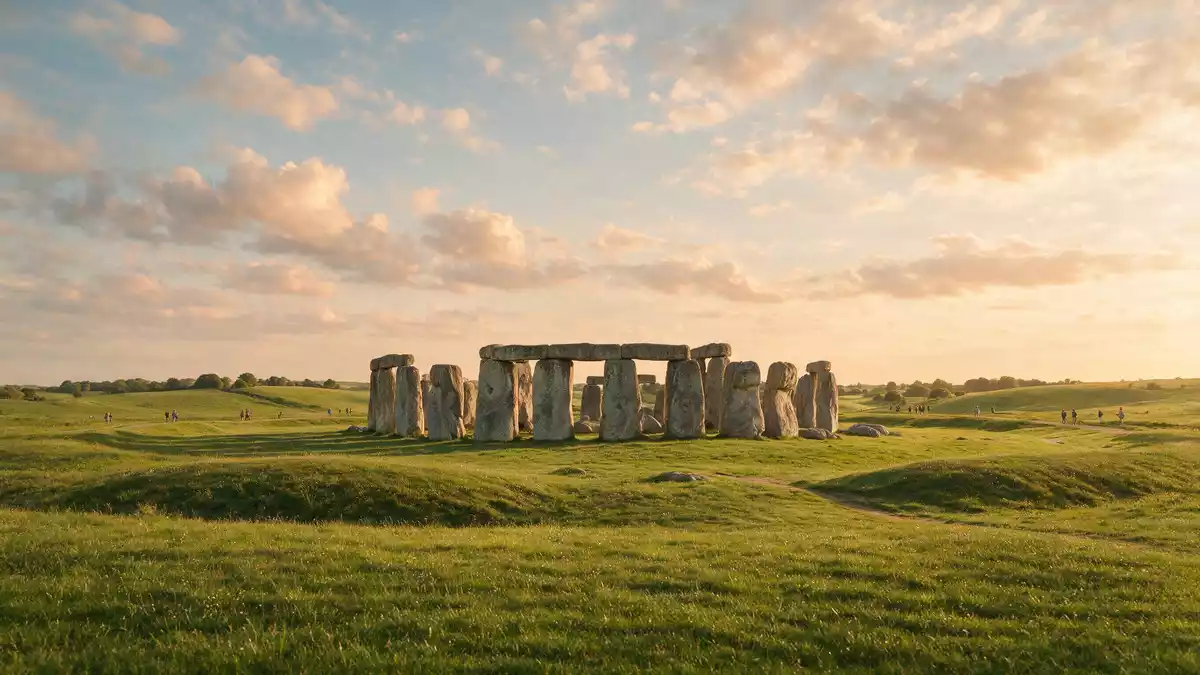
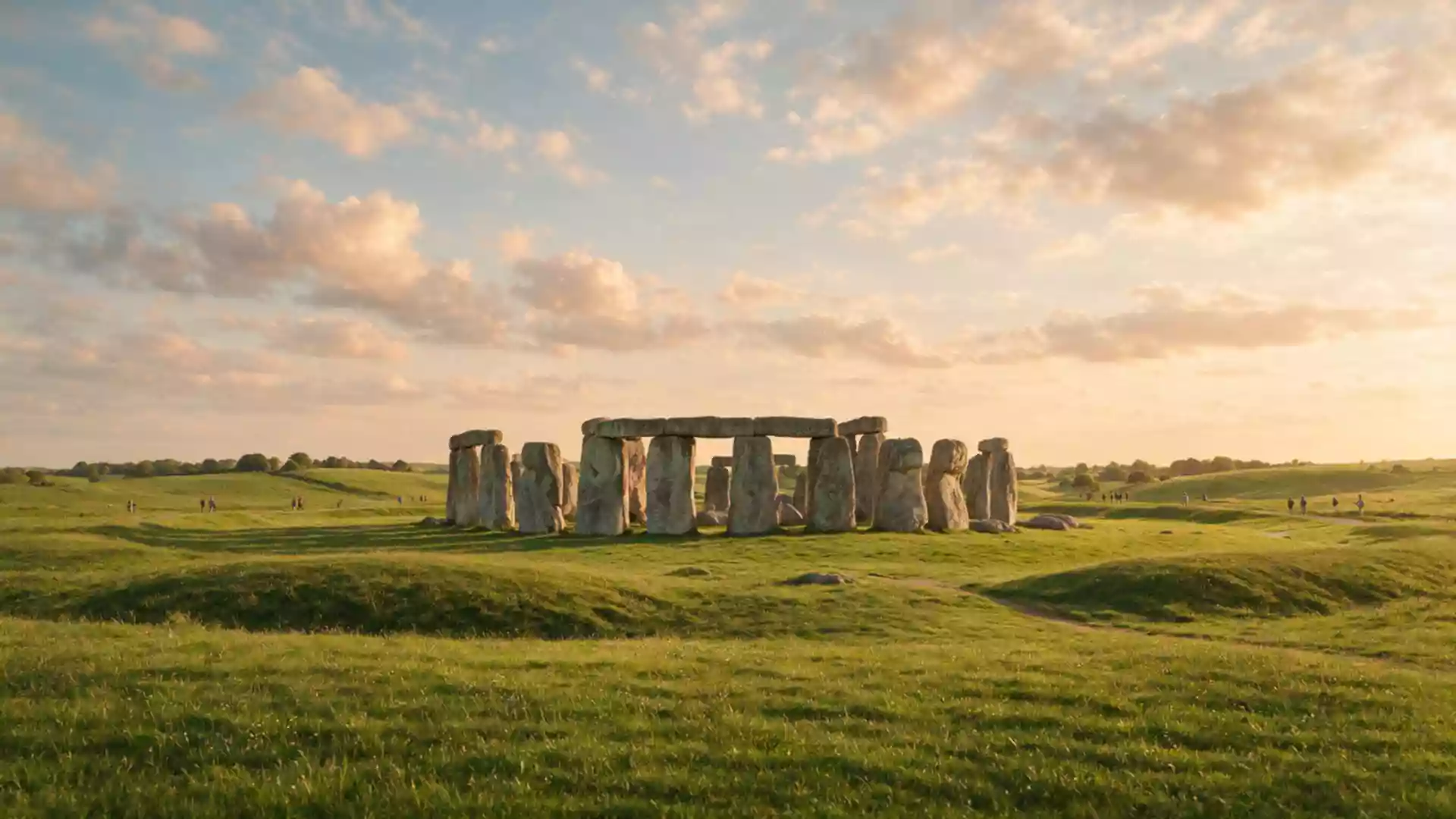
Stonehenge near Amesbury is a prehistoric stone circle made of great uprights and lintels. It sits within the Stonehenge, Avebury and Associated Sites, inscribed in 1986 as a World Heritage property.
Stone and lintels on Salisbury Plain
The monument is built from sarsen sandstone and bluestone, with horizontal lintels bridging the taller stones. That combination gives Stonehenge its most recognisable profile, one that reads at a glance as both circle and frame.
The surviving arrangement belongs to a long prehistoric sequence, and the stone circle dates from about 2500 BC. The wider monument complex belongs to the Neolithic and Bronze Age, with building and use extending across centuries.
A prehistoric landscape around the circle
Stonehenge does not stand alone. The surrounding landscape includes burial mounds, avenues and other prehistoric remains that form part of the same protected area.
The place has long attracted study because it combines precise stonework with a setting made of earthworks and aligned features. Its reputation rests on what can be seen: the mass of the stones, the careful joins and the wider ceremonial landscape.
From ancient monument to world heritage
Stonehenge belongs to the major ceremonial landscapes of prehistoric Britain. Its formal place in a UNESCO World Heritage property links it with Avebury and related sites across Wiltshire.
The monument is associated with Neolithic communities and with the Bronze Age landscape around it. The name Stonehenge has become shorthand for the monument itself and for the wider archaeological setting.
Visiting Stonehenge: what travellers from Western Europe should know
- The monument lies near Amesbury, Wiltshire, on Salisbury Plain. English Heritage operates the site near the A303, and the landscape opens out into open chalk country.
- The stones stand on level ground with no steep climb to the circle. The wider setting includes grassland, earthworks and open views across the plain.
- The official language is English and the currency is the pound sterling.
- Entry requirements depend on your nationality; UK travellers can check the FCDO travel advice at gov.uk/foreign-travel-advice, Irish travellers the Department of Foreign Affairs at ireland.ie.
Searching for Stonehenge on social platforms
These links open searches for Stonehenge on each platform.
Frequently asked questions about Stonehenge
Where is Stonehenge?
Stonehenge stands near Amesbury in Wiltshire, on Salisbury Plain in southern England. It forms part of a wider prehistoric landscape recognised as a World Heritage property.
What should a visit feel like?
The monument presents a ring of massive stones, with lintels bridging selected uprights. The surrounding ground is open and largely level, with earthworks and monuments spread across the landscape.
What makes Stonehenge distinctive?
Its combination of sarsen and bluestone, together with lintelled stone circles, gives it a form that is instantly recognisable. The UNESCO landscape around it adds scale and historical depth.