
Stone Town’s coral lanes and carved doors
Published on 09/09/2026 at 09:47 | Editorial responsibility: Rafael Müller, Editor-in-Chief AD HOC NEWS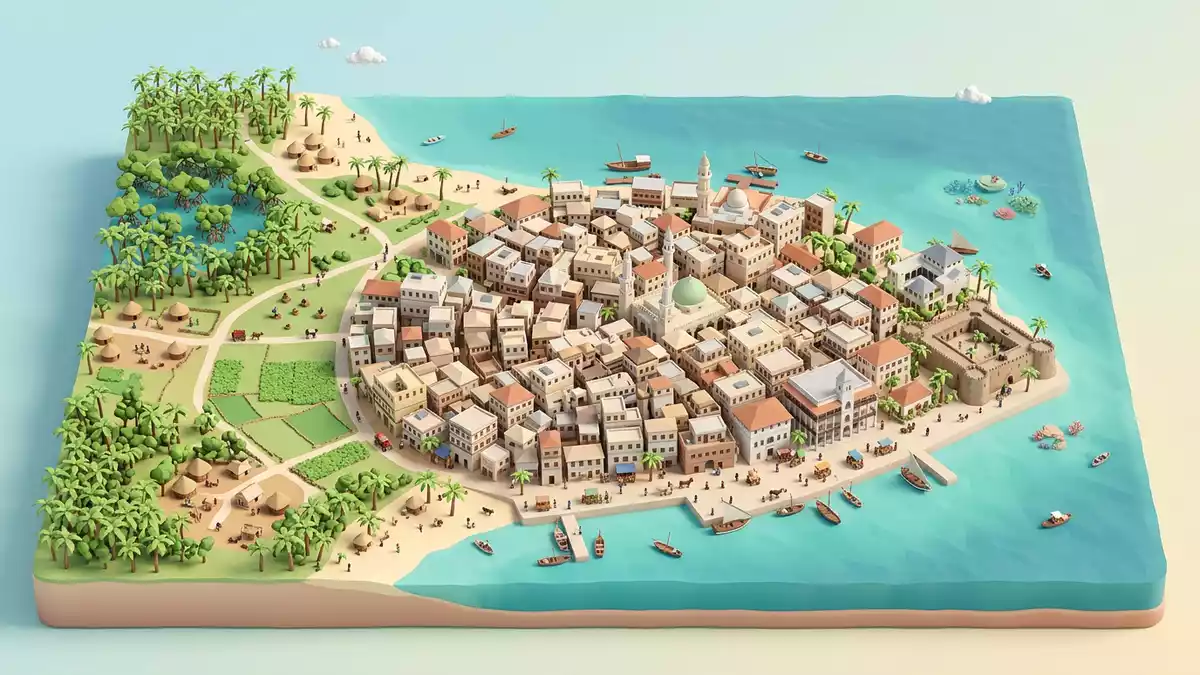
Stone Town is the old quarter of Zanzibar City in Sansibar, and its streets form a dense pattern of coral-stone houses, carved doors and narrow lanes. The place carries the imprint of Swahili trading culture, and UNESCO World Heritage status gives that urban fabric a formal frame.
Swahili streets and carved façades
Stone Town’s most striking feature is the way domestic buildings, shops and religious structures sit close together in a compact historic core. Many façades combine plain walls with heavy timber doors, balconies and deep recesses that create a strong street rhythm.
The built form reflects a long Indian Ocean trading world, and the mix of African, Arab, Indian and European elements is part of the town’s documented character. The conservation area was inscribed in 2000, which places the quarter among the best-known urban heritage sites in East Africa.
Unguja’s western promontory
The quarter lies on the western side of Unguja, the main island of the Zanzibar archipelago, on a promontory facing the Indian Ocean. That position gives the district a clear edge between sea and town, with the older streets gathered on the point and the water close at hand.
The settlement developed in the context of Zanzibar’s wider port history, and the name Stone Town marks the older urban centre rather than the larger city around it. A triangular promontory is a useful way to picture the site before any street-level detail is added.
A town shaped by trade and empire
The town’s heritage is tied to the centuries when Zanzibar stood within the traffic of the western Indian Ocean. Omani power, coastal Swahili practice and merchant communities from across the sea all left visible marks in the masonry, domestic layouts and public buildings.
Stone Town is also associated with the history of slavery in East Africa, and that memory forms part of its wider cultural meaning. The town was inscribed under the title The Stone Town of Zanzibar, a name that fixes the place within the island’s political and historical geography.
Visiting Stone Town: what travellers from Western Europe should know
- The quarter is in Zanzibar City on the island of Unguja, and it is reached through the city’s port area or by road from the airport side of town.
- The streets are narrow and irregular, with a dense historic grain that makes the district a place for walking rather than vehicles.
- Coral stone, plaster and timber dominate the building stock, and the carved doors are among the clearest recurring details.
- The official language is Swahili and the currency is the Tanzanian shilling.
Searching for Stone Town on social platforms
These links open searches for Stone Town on each platform.
Frequently asked questions about Stone Town
Where is Stone Town?
Stone Town is the historic core of Zanzibar City in Sansibar, on Unguja, the main island of the archipelago. It sits on the island’s western side facing the Indian Ocean.
What does a visit involve?
The experience centres on walking through narrow lanes, passing coral-stone buildings and looking at carved timber doors. The district’s compact plan makes the streets the main attraction.
What makes Stone Town distinctive?
Its heritage lies in the layered meeting of Swahili, Arab, Indian and European influences. The result is a historic urban quarter with a strong coastal trading character.


