
Stephansdom in Wien and its soaring Gothic silhouette
Published on 09/19/2026 at 07:53 | Editorial responsibility: Rafael Müller, Editor-in-Chief AD HOC NEWS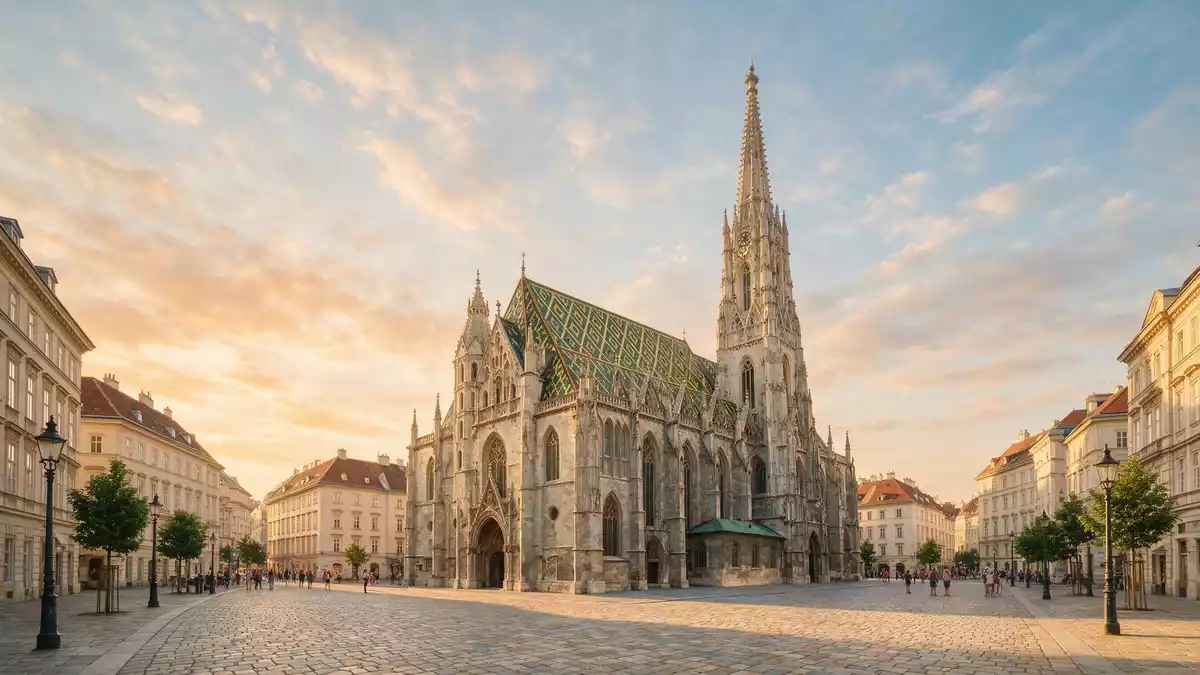
Stephansdom in Wien is the Roman Catholic cathedral that dominates the historic centre, its Gothic mass and tall south tower giving the city a distinctive stone landmark dating back to the Middle Ages.
A medieval cathedral shaped in stone and colour
Stephansdom stands on Stephansplatz in the Innere Stadt, the old core of Vienna laid out around narrow streets and enclosed courtyards. The cathedral’s exterior is built largely in limestone, a pale material that has darkened in places and carries elaborate sculptural detail along façades and portals.Limestone walls and Gothic style St Stephen’s Cathedral serves as the metropolitan church of the Archdiocese of Vienna and the seat of the Archbishop, placing it at the heart of Catholic life in Austria.Metropolitan church and cathedral
The building brings together Romanesque remains and later Gothic additions into a single structure. Earlier construction on the site is dated to the twelfth century, when a Romanesque parish church was consecrated in 1147 under Babenberg margrave Leopold IV and Bishop Reginmar of Passau.Romanesque church consecrated in 1147 Over the thirteenth and fourteenth centuries new work extended and transformed the church into the high and late Gothic building visible today, with a long nave, steeply pitched roofs and a tall spire that rise well above the surrounding blocks of the inner city.High and late Gothic building
The south tower and the patterned roof
The most striking single feature of Stephansdom is its south tower, a slender Gothic spire that reaches about 136 m (446 ft) and is visible from many streets and squares across the city centre.South tower height and dimensions Work on this tower began in the fourteenth century and it was completed in the fifteenth century, giving Vienna a vertical marker that rises from a relatively low urban fabric of houses and palaces. The tower is richly articulated with traceried openings, projecting elements and stone detail that reflect the ambition of Gothic designers working for the Habsburg duke Rudolf IV, who laid a cornerstone for the Gothic nave in 1359.Rudolf IV and Gothic nave
Above the nave and choir sits a steeply pitched roof covered in a coloured tile pattern that has become part of Vienna’s visual identity. The roof’s geometric arrangement reads clearly from higher viewpoints in the city, showing diagonal bands and heraldic motifs picked out in glazed tiles. Beneath this roof the plan stretches to around 107 m (351 ft) in length and 34 m (112 ft) in width, creating a long interior volume that runs west to east across Stephansplatz.Length and width of the cathedral At the western end the so?called Giant’s Door and the flanking towers known as the Heathen Towers preserve Romanesque fabric that predates the Gothic envelope, giving the façade a layered historical character with elements from different centuries side by side.Giant’s Door and Heathen Towers
From parish church to national symbol
Stephansdom originated as a parish church under the bishopric of Passau and later gained cathedral status when Vienna became a diocese in 1469. In 1723 the church was raised to the rank of metropolitan cathedral of the archdiocese, consolidating its role as the principal ecclesiastical building of the city and country.Diocese and metropolitan status The building’s long construction history spans from early foundations dated to 1137 through Gothic expansion and late medieval completion, with the north tower being capped in a Renaissance style in the sixteenth century when the Gothic building campaign came to an end.Founding year and completion
The cathedral suffered heavy damage in the twentieth century during the final stages of the Second World War, particularly to the roof and interior fittings. Post?war reconstruction returned the building to use, with partial reopening recorded in 1948 and complete reopening in 1952, and the work reinforced Stephansdom’s role as a symbol of Vienna’s resilience.Post?war reconstruction and reopening Inside, a mixture of Gothic structural elements and later Baroque altarpieces shows how liturgical furnishings and devotional art changed between the eighteenth century and the medieval core, giving visitors a view of several stylistic periods within a single interior.Baroque altarpieces within Gothic interior
Visiting Stephansdom: what travellers from Western Europe should know
- Stephansdom stands on Stephansplatz in the Innere Stadt of Vienna, directly above the U?Bahn interchange at Stephansplatz station on lines U1 and U3.
- The cathedral interior includes aisles, chapels and towers linked by stone floors and staircases, with tower climbs reached by narrow stairways that require steady footing.
- The official language is German and the currency is the euro.
Searching for Stephansdom on social platforms
These links open searches for Stephansdom on each platform.Frequently asked questions about Stephansdom
Where is Stephansdom located?
Stephansdom stands on Stephansplatz in the Innere Stadt district of Vienna, Austria, surrounded by historic streets and squares of the old city centre.
What should visitors expect inside Stephansdom?
Inside, visitors encounter a long Gothic nave with ribbed vaults, side aisles, chapels, stone columns and later Baroque altarpieces, all set beneath the steep tiled roof.
What makes Stephansdom distinctive among European churches?
The combination of a tall Gothic south tower, a patterned tile roof, Romanesque west front elements and its role as Vienna’s metropolitan cathedral makes Stephansdom distinctive.


