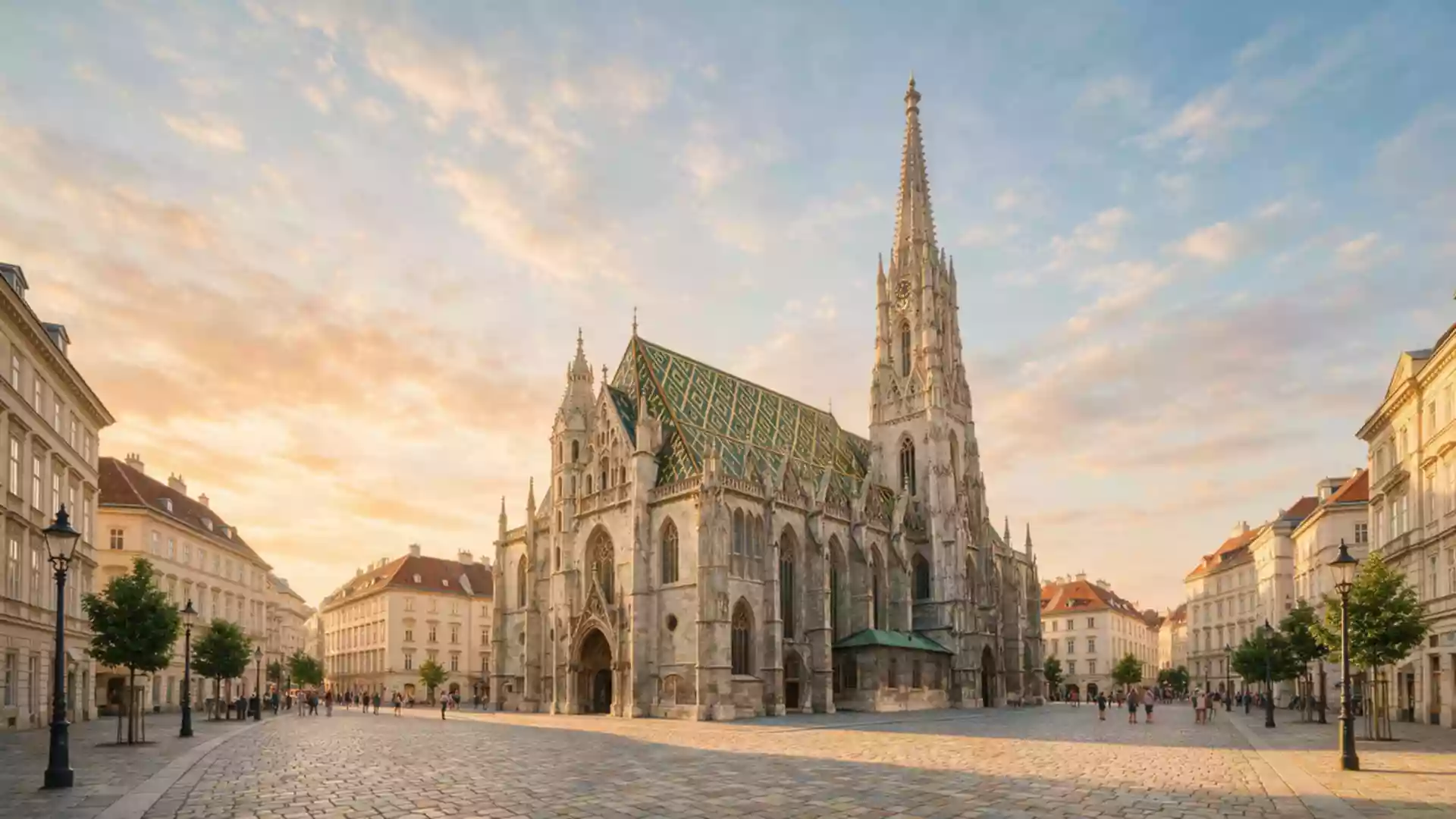
Stephansdom in Wien and its patterned Gothic roof
Published on 09/11/2026 at 20:40 | Editorial responsibility: Rafael Müller, Editor-in-Chief AD HOC NEWS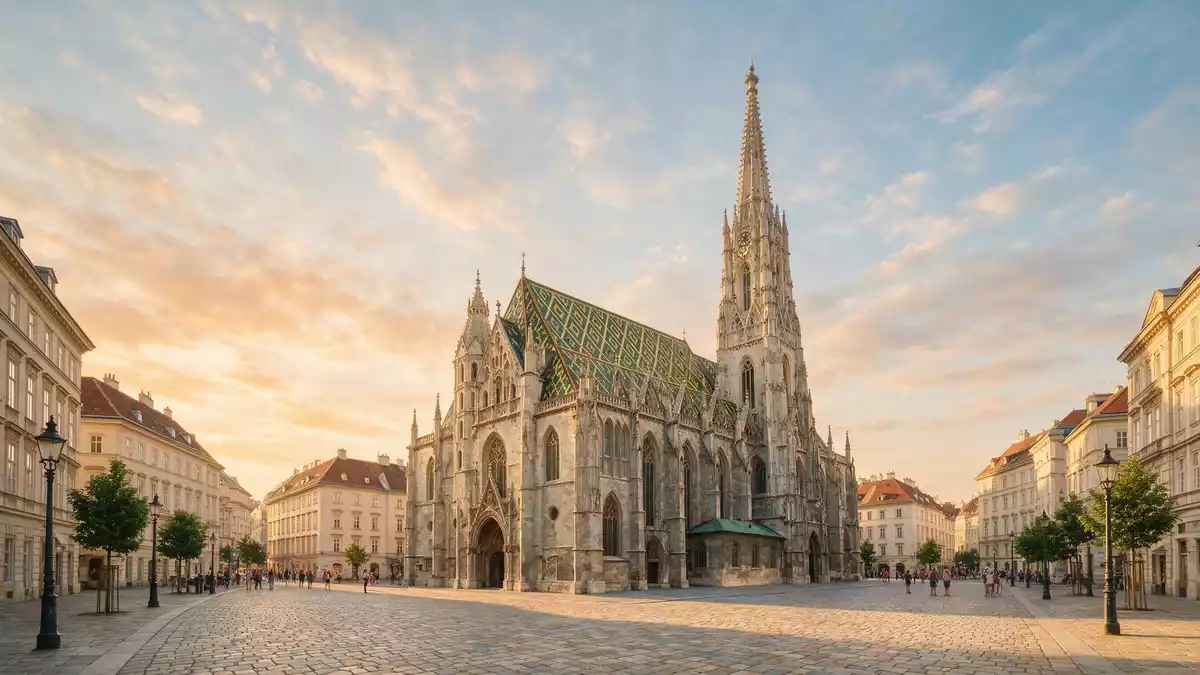
Stephansdom in Wien is a Gothic cathedral whose tall south tower and patterned roof of coloured tiles mark the centre of Austria’s capital and the heart of its historic street layout. Standing on Stephansplatz, it serves as the Roman Catholic cathedral of the Archdiocese of Vienna and has roots in the twelfth century, when a Romanesque parish church dedicated to St Stephen was consecrated on this site.
A Gothic landmark with a distinctive roof
Seen from many streets in the Innere Stadt, Stephansdom is defined by the contrast between its high stone tower and the sloping roof covered in coloured tiles laid in geometric patterns. The south tower, sometimes called the “Hoher Turm”, rises to around 136 m (about 446 ft) and was completed in the fifteenth century as part of the Gothic phase of construction that transformed the earlier Romanesque church into the cathedral visitors recognise today.height of the south tower The tiled roof itself forms strong zigzag bands in green, white, yellow and other colours, and one slope carries a mosaic rendering of the double-headed eagle associated with the Habsburg monarchy, making the roof a visible reminder of Vienna’s role as an imperial centre.tiled roof in a coloured zigzag pattern
The main body of the church combines elements from different periods. Earlier Romanesque fabric survives in the west end, where the so?called Giant’s Door and the pair of towers known as the Heathen Towers frame the entrance. Around them the nave and choir reflect the high and late Gothic style, with pointed arches, ribbed vaults and tall traceried windows forming a long interior space. The exterior length is a little over 100 m (about 330 ft) and the building has three naves, giving it the elongated plan that many visitors notice when they walk beside the north and south flanks of the cathedral.measures 107 metres long and three naves
Centuries of building on a medieval foundation
The origins of Stephansdom lie in the twelfth century, when a Romanesque parish church dedicated to St Stephen was consecrated in 1147 on a plot of land at the eastern edge of what would become the medieval city of Vienna.Romanesque parish church consecrated in 1147 Much of this early structure was affected by fire in the thirteenth century, and the present Gothic building took shape in stages from the fourteenth century onwards. A major step was the construction of the Gothic choir, known as the Albertine Choir, in the first half of the fourteenth century under Duke Albrecht II, which extended the church eastwards and set the stylistic tone for later additions.Gothic Albertine Choir added in the fourteenth century
The transformation of Stephansdom into a large Gothic cathedral continued under Duke Rudolf IV in the later fourteenth century, when the foundations for a more extensive choir and nave were laid and the building began to assume its familiar outline. The south tower reached completion in 1433 after decades of work, rising high above the surrounding streets and serving as a vertical marker that could be seen from far beyond the city walls.Stephansturm completed in 1433 In 1469 Vienna was granted the status of a diocese, and St Stephen’s became a cathedral, with its role later enhanced when it was raised to the rank of metropolitan church for the Archdiocese of Vienna in the eighteenth century.metropolitan church of the archdiocese since 1723
Interior space, towers and wartime reconstruction
Inside Stephansdom, the Gothic nave stretches west from the high altar, with clustered piers supporting ribbed vaults and side chapels opening off the aisles. The interior floor area is around 3,000 square metres (about 32,000 sq ft), making it one of the largest church interiors in Wien.interior spanning approximately 3,000 square meters Beyond the south tower, which serves as a bell tower with a set of large bells, the cathedral has other towers and architectural features, including the lower Heathen Towers flanking the west front and the shorter north tower, which was never completed to the same height and carries a later cupola.
The twentieth century brought serious damage to Stephansdom. In April 1945, during the final stages of the Second World War and the Battle of Vienna, the cathedral was burned out, leaving the interior charred and the roof destroyed.burned out in April 1945 Reconstruction began in the late 1940s, and a renewed roof with its colourful tile patterns was completed in the early 1950s, with the building reopened fully as a place of worship and a symbol of the city’s recovery by 1952.reconstructed and reopened by 1952 The restoration respected the Gothic character of the cathedral while introducing modern materials where necessary to stabilise the structure.
Visiting Stephansdom: what travellers from Western Europe should know
- Stephansdom stands on Stephansplatz in central Wien, and is directly reached by the city’s U?Bahn network at Stephansplatz station, where lines U1 and U3 meet.
- The cathedral’s south tower is climbed on foot via a narrow internal staircase with hundreds of steps, and some routes in the tower and roof areas involve confined passages and height exposure.
- The official language in Austria is German and the currency is the euro.
Searching for Stephansdom on social platforms
These links open searches for Stephansdom on each platform.
Frequently asked questions about Stephansdom
Where is Stephansdom located?
Stephansdom is located on Stephansplatz in the historic centre of Wien, Austria, and forms a focal point in the city’s Innere Stadt district.
What can visitors expect inside Stephansdom?
Inside, visitors encounter a long Gothic nave with ribbed vaults, stone piers, side chapels and an extensive interior floor area beneath the distinctive patterned roof.
What makes Stephansdom distinctive among European cathedrals?
Stephansdom is distinctive for its tall south tower, the coloured zigzag tile roof carrying heraldic motifs and the layered combination of Romanesque, Gothic and later elements.