
Stellenbosch Winelands and the mountain-ringed heart of South African wine
Published on 09/11/2026 at 06:53 | Editorial responsibility: Rafael Müller, Editor-in-Chief AD HOC NEWS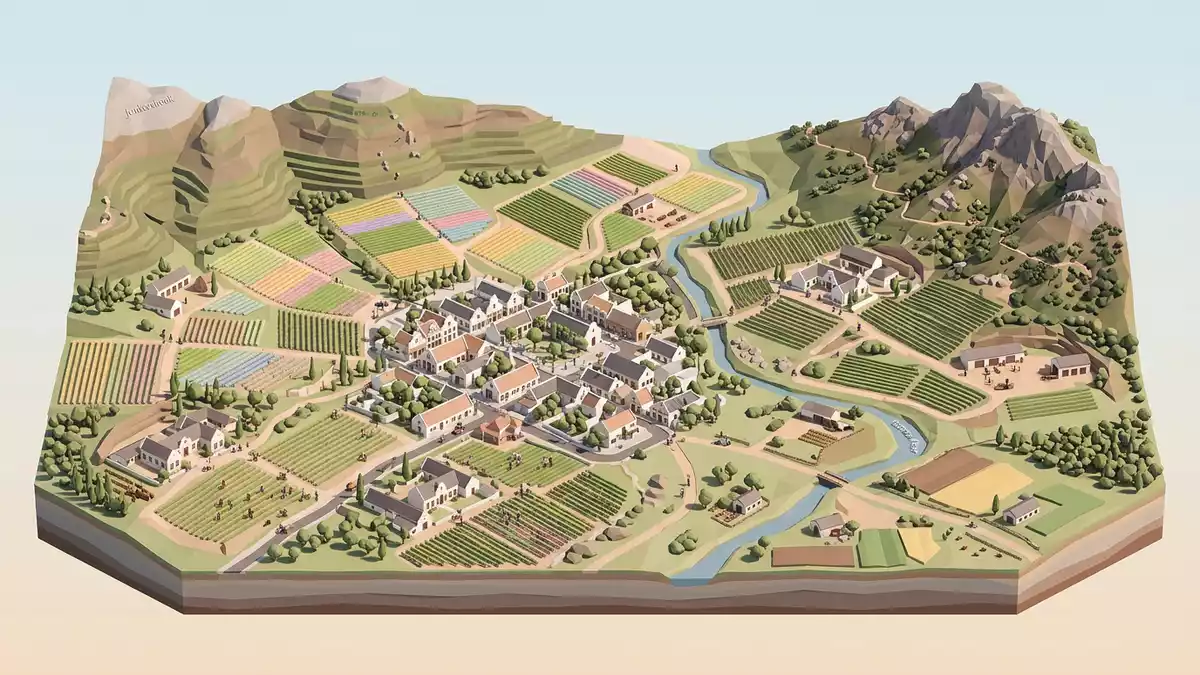
Stellenbosch Winelands describes the countryside of vineyards and estates surrounding Stellenbosch in South Africa’s Western Cape, where wine-growing landscapes meet rugged mountains within a single, formally recognised district. The area is framed by ranges such as the Stellenbosch, Jonkershoek, Drakenstein and Simonsberg mountains, creating a natural amphitheatre of slopes and valleys planted with vines.Stellenbosch wine region
Vineyards between granite slopes and valley floors
Stellenbosch Winelands occupies the countryside around Stellenbosch, east of Cape Town and inland from False Bay, where valleys of rolling hills give way to steeper mountain foothills planted with vines.Cape Winelands landscape Within the district, vineyard sites run from lower valley floors with alluvial and sandy soils to higher slopes dominated by decomposed granite and shale-derived soils, giving growers contrasting conditions for different grape varieties.granite and shale soils
The district is divided into several viticultural pockets recognised as wards under South Africa’s Wine of Origin system, among them Banghoek, Bottelary, Devon Valley, Jonkershoek Valley, Papegaaiberg, Polkadraai Hills, Simonsberg-Stellenbosch and Vlottenburg.Stellenbosch viticultural wards These wards reflect shifts in altitude, slope and exposure around the mountains, and they give Stellenbosch Winelands a structured geography that visitors encounter as they move from valley routes to hillier roads and farm tracks.
Three centuries of Stellenbosch wine-growing
The town of Stellenbosch itself was founded on the banks of the Eerste River in 1679 by Simon van der Stel, then Governor of the Cape Colony, who gave the settlement his name.Simon van der Stel founded Stellenbosch In the decades that followed, viticulture in the surrounding valleys developed strongly, helped by French Huguenot refugees arriving from around 1690 who planted vines and established estates that still form part of the Stellenbosch Winelands landscape.French Huguenot viticulture
Within South Africa’s Wine of Origin classification, Stellenbosch is recognised as a district within the wider Coastal Region, and it has become one of the country’s leading centres for viticulture and wine research.capital of South African wine industry The Stellenbosch Winelands district has been intensively planted with vineyards, and its mix of deep, well-drained yellow-brown and reddish foothill soils, along with Mediterranean-type conditions of warm summers and significant winter rainfall, support noble grape varieties and blended reds across the area.premier viticultural area
Stellenbosch Wine Routes and the organised wine landscape
A defining feature of Stellenbosch Winelands is the Stellenbosch Wine Routes network, founded on 17 April 1971 as South Africa’s first formal wine route.Stellenbosch Wine Route 1971 The initiative was led by Frans Malan of Simonsig, Niel Joubert of Spier and Spatz Sperling of Delheim, and it began with eleven founding members before expanding into a broader route covering a large share of the district’s vineyards.first wine route in Stellenbosch
The Stellenbosch Wine Routes network in Stellenbosch Winelands organises cellar doors and estates into five sub-routes: Bottelary Hills, Greater Simonsberg, Helderberg, Stellenbosch Valley and Stellenbosch Berg.five sub-routes Within the Wine of Origin classification, the routes and producers represented on them account for a large proportion of the vineyards in the Stellenbosch district, giving visitors structured access to different parts of the winelands and linking specific styles of wine to named pockets of terrain.Stellenbosch Winelands wine-producing region
Visiting Stellenbosch Winelands: what travellers from Western Europe should know
- Stellenbosch Winelands lies around Stellenbosch in South Africa’s Western Cape, inland from False Bay and east of Cape Town, reached by road routes crossing the Cape Winelands.
- The landscape combines valley floors, gently rolling hills and steeper mountain foothills, so visits to estates can involve short walks on uneven ground, farm tracks and slopes among the vines.
- Stellenbosch Winelands forms part of South Africa’s Cape Winelands, and English is widely used alongside Afrikaans; the national currency is the South African rand.
- Entry requirements depend on your nationality; UK travellers can check the FCDO travel advice at gov.uk/foreign-travel-advice, Irish travellers the Department of Foreign Affairs at ireland.ie.
Searching for Stellenbosch Winelands on social platforms
These links open searches for Stellenbosch Winelands on each platform.
Frequently asked questions about Stellenbosch Winelands
Where are the Stellenbosch Winelands located?
Stellenbosch Winelands surrounds Stellenbosch in South Africa’s Western Cape, inland from False Bay and east of Cape Town, within the broader Cape Winelands region.
What can visitors expect during a visit?
Visitors encounter a landscape of vineyards, farm estates and cellar doors spread across valleys and foothills, with roads and farm tracks linking different wards and sub-routes.
What makes Stellenbosch Winelands distinctive among South African wine regions?
The district combines a long-established wine-growing history, a formally structured network of wine routes and mountain-framed terrain with varied soils that support many grape varieties.


