
Stari most: the stone arch binding Mostar across the Neretva
Published on 09/10/2026 at 16:41 | Editorial responsibility: Rafael Müller, Editor-in-Chief AD HOC NEWS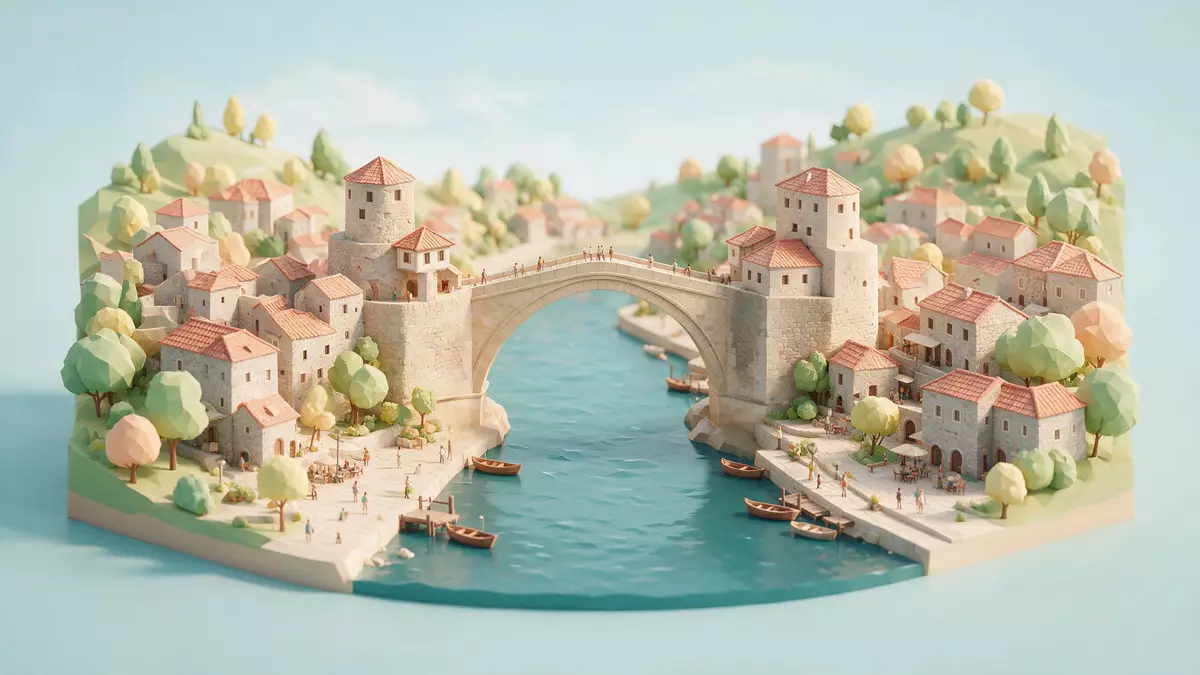
Stari most in Mostar is a single stone arch bridge from the Ottoman period, rebuilt after wartime destruction and today forming the historic spine of the town across the Neretva river in Bosnia and Herzegovina.
An Ottoman stone arch over the Neretva
The Old Bridge, known locally as Stari most, carries a pale stone arch across the Neretva, linking the two banks of Mostar’s old town in one continuous curve. It stands in southern Bosnia and Herzegovina and gives the city its name, derived from the bridge keepers who once guarded this crossing.single stone arch bridge The bridge is built of dressed stone, forming a pronounced hump so that the roadway rises towards the middle before dropping back down to street level on either side.
Construction of Stari most dates to the sixteenth century, under the rule of the Ottoman sultan Suleiman the Magnificent, replacing an earlier wooden suspension bridge at the same point on the river.commissioned by Suleiman the Magnificent The bridge is associated with the Ottoman architect Mimar Hayruddin, a pupil of the renowned imperial architect Mimar Sinan, and forms part of a broader ensemble of Ottoman urban fabric in Mostar’s historic core.constructed in 1566 by Mimar Hajruddin
Destruction, reconstruction and UNESCO recognition
For centuries Stari most stood as a stone link between the riverbanks until it collapsed under artillery fire during the conflicts of the 1990s, its arch breaking and falling into the Neretva. The loss of the bridge was widely seen as a symbolic blow to the historic cityscape of Mostar, as the crossing had long been associated with the town’s identity and daily life.destroyed on 9 November 1993 In the early 2000s a major international reconstruction project used traditional techniques and, where possible, original materials to rebuild the stone arch on its original abutments.
The rebuilt bridge was reopened in 2004 and forms the heart of the “Old Bridge Area of the Old City of Mostar”, which is inscribed on UNESCO’s World Heritage List as a cultural site.Old Bridge Area of the Old City of Mostar The inscription recognises both the original sixteenth-century Ottoman structure and the careful reconstruction following its destruction, with the bridge flanked by fortified towers that once formed part of the town’s riverfront defences.flanked by the Halebija and Tara towers
Stari most in the urban fabric of Mostar
Stari most sits within a compact old town of narrow streets, stone houses and riverside terraces, with the Neretva running beneath the arch and steep banks rising on both sides. The bridge’s humpbacked profile lifts pedestrians above the water and creates a clear visual focus from many points in the surrounding neighbourhoods.hump-backed stone arch bridge On each side of the river, approaches to the bridge pass through streets lined with small shops and cafés, reflecting the historic role of this crossing as a commercial and social axis.
The structure itself is relatively narrow, paved with stone slabs and edged by low parapet walls from which visitors can look down to the Neretva and upstream or downstream along the valley. The surrounding urban ensemble includes riverside fortifications, the Halebija and Tara towers at either end of the span, and a concentration of Ottoman-era houses and religious buildings that frame views of the bridge from different angles.namensgebende Wahrzeichen der Stadt Mostar
Visiting Stari most: what travellers from Western Europe should know
- Stari most crosses the Neretva in the centre of Mostar’s historic district in southern Bosnia and Herzegovina; it is reached on foot through the old town streets from surrounding neighbourhoods.
- The bridge surface is paved with stone and rises in a pronounced hump, with short flights of steps at either end and a noticeable gradient over the arch, so footwear with good grip is advisable.
- The Neretva flows through a deep channel beneath the bridge, with steep banks and stone terraces near the water that are accessible only by stairways from the riverside streets.
- The official language is Bosnian, Croatian and Serbian and the currency is the convertible mark (BAM).
- Entry requirements depend on your nationality; UK travellers can check the FCDO travel advice at gov.uk/foreign-travel-advice, Irish travellers the Department of Foreign Affairs at ireland.ie.
Searching for Stari most on social platforms
These links open searches for Stari most on each platform.
Frequently asked questions about Stari most
Where is Stari most located?
Stari most spans the Neretva river in the old town of Mostar, a city in southern Bosnia and Herzegovina.
What can visitors expect when crossing the bridge?
Visitors follow a stone-paved path that rises over the humpbacked arch, with parapet walls and views along the Neretva and into the surrounding historic streets.
What makes Stari most distinctive among European bridges?
Its sixteenth-century Ottoman stone arch, wartime destruction and careful reconstruction, together with UNESCO inscription, give Stari most a rare combination of historic depth and symbolic weight.


