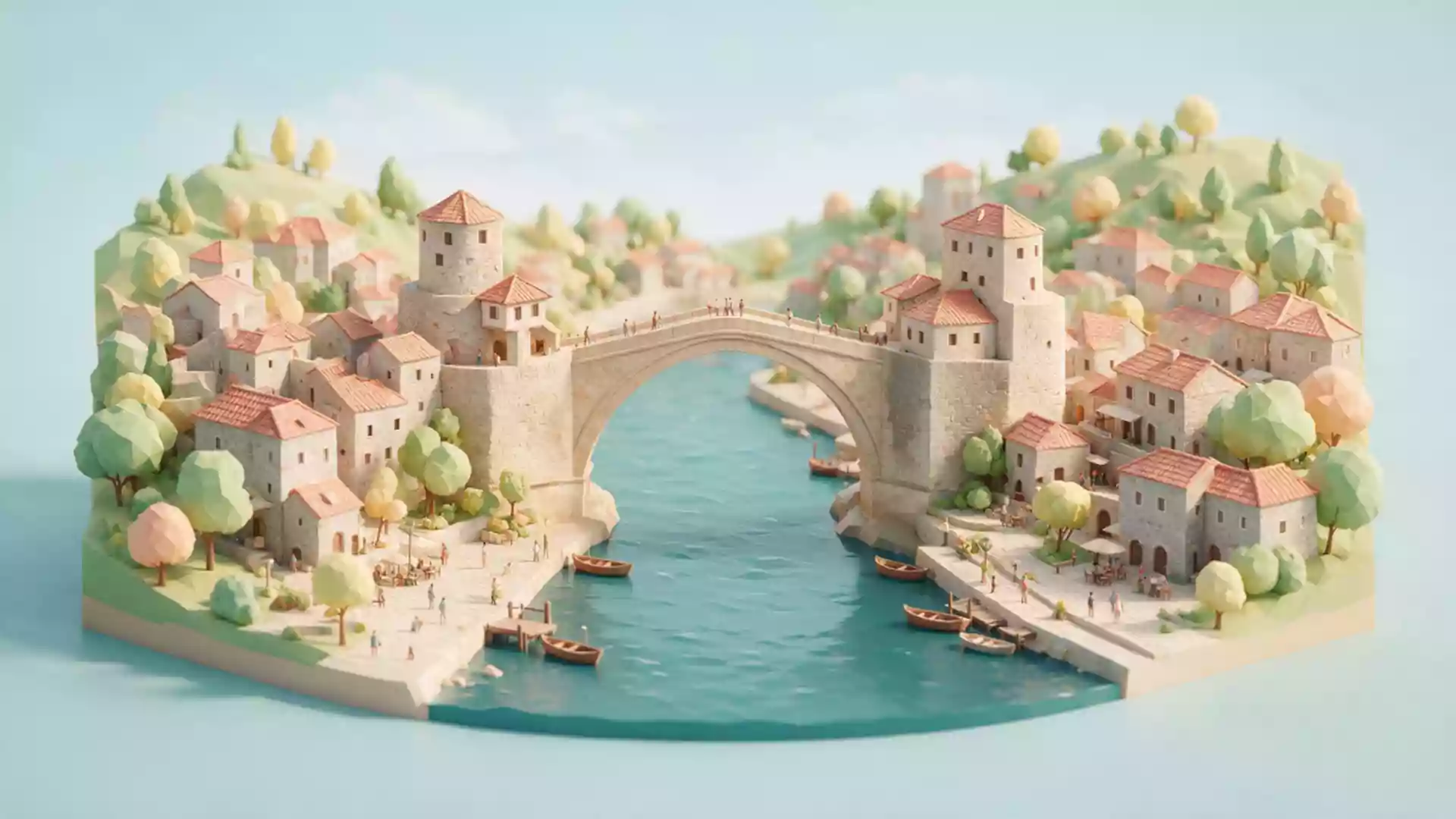
Stari most, the stone arch binding Mostar across the Neretva
Published on 08/31/2026 at 21:06 | Editorial responsibility: Rafael Müller, Editor-in-Chief AD HOC NEWS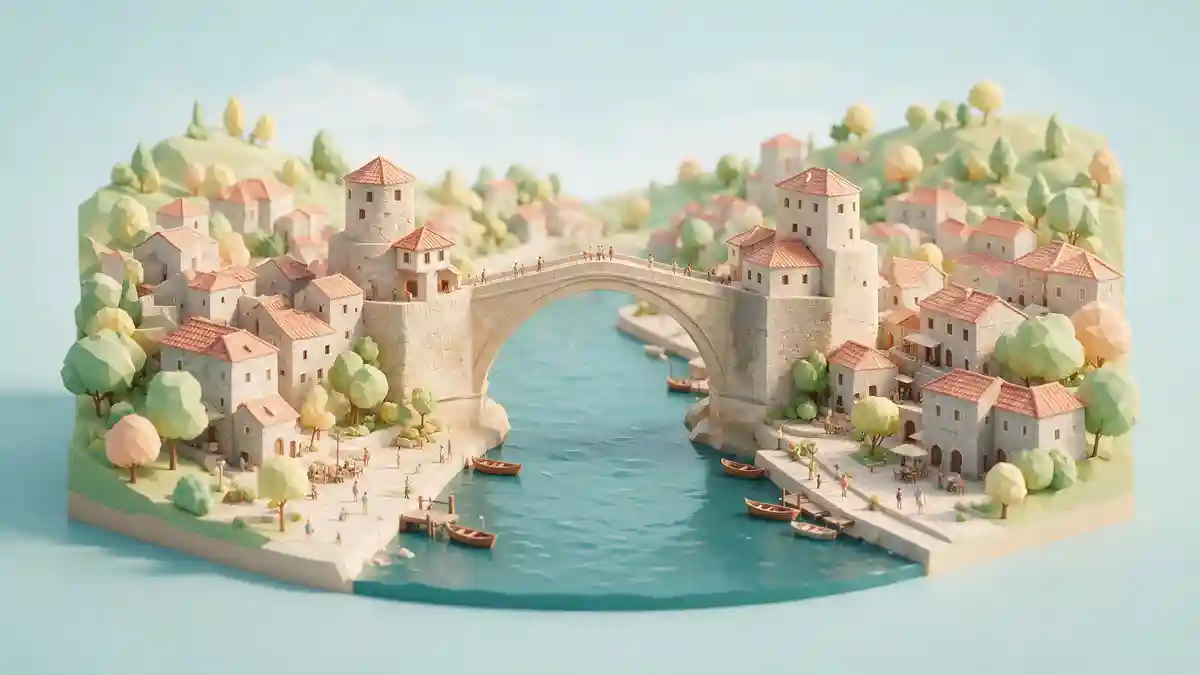
Stari most, the Old Bridge of Mostar in Bosnia and Herzegovina, is a slender stone arch spanning the Neretva River and binding the city’s two banks into a single urban whole. Built in the sixteenth century under Ottoman rule and rebuilt in the early twenty?first century after its destruction in the Bosnian War, it stands as a permanent crossing and as the defining landmark of Mostar’s historic core.
An Ottoman stone arch over the Neretva
The bridge known as Stari most carries a single stone arch across the Neretva River at the narrowest point of the gorge where Mostar first grew.The Old Bridge connects the two banks of the river and joins the historic neighbourhoods on the eastern and western sides into one continuous townscape.Stari Most crosses the river Neretva and has long been the focus of Mostar’s urban life.
Construction belongs firmly to the Ottoman imperial period: the project was commissioned by Sultan Suleiman the Magnificent in 1557 and entrusted to the architect Mimar Hayruddin, a student of the celebrated Ottoman master Sinan.Suleiman the Magnificent commissioned the bridge and Hayruddin prepared its plans and oversaw work that ran for about nine years until completion in 1566.Mimar Hajruddin constructed the bridge in 1566 in stone, creating a masonry arch that carried foot traffic between the two sides of Mostar for centuries.
Destruction and reconstruction of the Old Bridge
For more than four centuries the original sixteenth?century Stari most stood above the Neretva before being deliberately destroyed during the conflicts of the 1990s.The original bridge stood for 427 years until it fell on 9 November 1993 under shelling during the Croat–Bosniak War, a theatre within the wider Bosnian War.The bridge was destroyed on 9 November 1993 and its collapse turned into one of the most widely recognised images of the Yugoslav wars.
After the war an international reconstruction effort raised Stari most again on its original abutments, using local tenelija limestone and traditional building techniques.Between 2001 and 2004 a coalition led by UNESCO rebuilt the Old Bridge stone by stone, recovering fallen blocks from the riverbed and cutting fresh material from the historic quarry to recreate the single?span arch as it had stood in the sixteenth century.Reconstruction was completed and reopened on 23 July 2004 and the rebuilt bridge resumed its role as a lived crossing within the urban fabric rather than a closed monument.
World Heritage and the surrounding old town
Stari most sits at the centre of Mostar’s Old Town, surrounded by cobbled streets, Ottoman?era houses and small riverside terraces that look towards the arch and the water below.The Old Bridge area, with its pre?Ottoman, eastern Ottoman, Mediterranean and western European architectural features forms a compact, multicultural historic quarter along the Neretva valley.Stari most is the eponymous landmark of Mostar, linking neighbourhoods that historically had different religious and cultural profiles.
The bridge and its immediate urban surroundings hold formal recognition as a UNESCO World Heritage Site under the inscription “Old Bridge Area of the Old City of Mostar”, added to the list in 2005.After reconstruction the bridge was inscribed on the World Heritage List as a symbol of reconciliation and coexistence in a town marked by war damage.The bridge’s rebuilding and World Heritage status underline its significance not only as an engineering work but also as a cultural and historical monument.
Visiting Stari most: what travellers from Western Europe should know
- Stari most crosses the Neretva River in the city of Mostar in southern Bosnia and Herzegovina, with the historic Old Town stretching along both banks around the bridge.
- The bridge deck rises above the river on a pronounced stone arch, reached from the old streets by short but steep approaches paved in stone, which can be uneven underfoot.
- The surrounding quarter consists of narrow lanes, small squares and riverside viewpoints, so a visit commonly involves walking across the bridge and through the adjacent streets on either side.
- The official language is Bosnian and the currency is the Bosnia and Herzegovina convertible mark.
- Entry requirements depend on your nationality; UK travellers can check the FCDO travel advice at gov.uk/foreign-travel-advice, Irish travellers the Department of Foreign Affairs at ireland.ie.
Searching for Stari most on social platforms
These links open searches for Stari most on each platform.
Frequently asked questions about Stari most
Where is Stari most and what does it cross?
Stari most stands in the city of Mostar in southern Bosnia and Herzegovina and carries a single stone arch over the Neretva River between the two historic banks.
What can a visitor expect when walking across the bridge?
A visit involves approaching the stone arch through narrow streets, stepping onto the rising deck and crossing between the eastern and western sides of the Old Town with views along the river valley.
What makes Stari most distinctive among European bridges?
Its sixteenth?century Ottoman origin, destruction in 1993 and UNESCO?supported reconstruction completed in 2004 combine with the elegant single stone span to give the bridge a rare blend of engineering, historical and symbolic significance.