
Stari Grad Dubrovnik and the stone ring of its city walls
Published on 08/16/2026 at 14:01 | Editorial responsibility: Rafael Müller, Editor-in-Chief AD HOC NEWS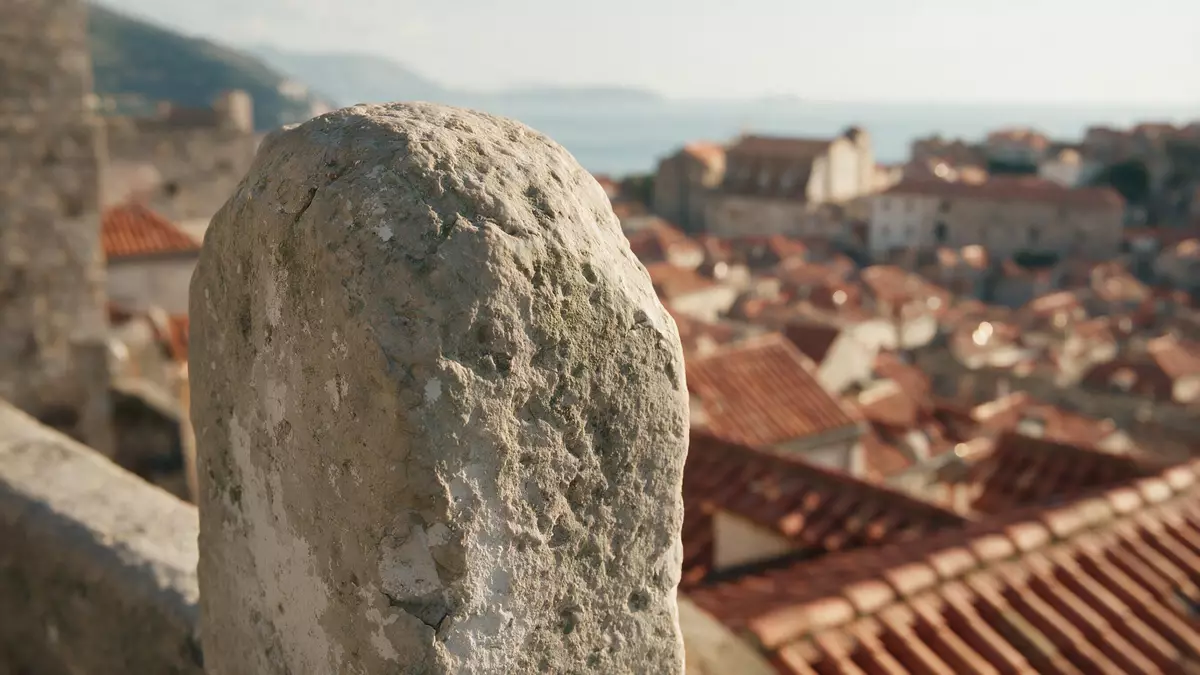
Stari Grad Dubrovnik, the Old City of Dubrovnik in Croatia, is a dense stone quarter enclosed by a continuous ring of medieval and early modern fortifications. Within that ring, limestone streets, churches and palaces trace the story of a maritime republic that took shape between the Middle Ages and the early modern period.
Stone walls encircling the Old City
The defining feature of Stari Grad Dubrovnik is the circuit of defensive walls that surrounds the historic centre on its rocky promontory above the Adriatic Sea. The walls in their present scope were shaped in the thirteenth century and strengthened into the seventeenth century as the city developed as the Republic of Ragusa.the Dubrovnik walls was shaped in the 13th century Built in local limestone, they form an unbroken loop that follows the outline of the Old City and separates it from the newer districts beyond.
The fortifications reach an average height of around 24 m (79 ft), rising higher at certain points, and extend for close to 1,940 m (6,365 ft) around Stari Grad Dubrovnik.uninterrupted length of 1,940 meters Towers, bastions and separate forts are built into the circuit, giving the ring a varied skyline when seen from the sea and from the outer slopes above the city.sixteen towers, three fortresses, six bastions
From medieval settlement to walled republic
The origins of Stari Grad Dubrovnik lie on a small islet called Laus, where fortifications in limestone began to appear in the late eighth century under early rulers.limestone fortifications were constructed during the 8th century During the ninth and tenth centuries, the eastern part of the growing town was drawn inside new defensive lines, while a sea channel still separated the settlement from the mainland.the eastern section was included within the defensive walls
By the thirteenth century the walls enclosed the whole medieval city, coinciding with the period in which Dubrovnik evolved into the independent Republic of Ragusa.constructed mainly during the 13th–17th centuries The fifteenth and sixteenth centuries, often described as a Golden Age for Ragusa, brought extensive strengthening of the defences, including square forts and more massive walls facing the land.the peak of construction lasted from the beginning of the 15th century In that era, Stari Grad Dubrovnik became a compact capital protected on all sides by stone.
Inside the limestone maze
Within the fortifications, Stari Grad Dubrovnik is laid out as a network of narrow streets paved in pale limestone and lined with houses and public buildings rebuilt in Baroque forms after the seventeenth century earthquake.the city was rebuilt in the Baroque style The main longitudinal street, known as Placa or Stradun, runs west to east and links two principal gateways in the walls at Pile and Plo?e.the main street — “The Placa” Smaller lanes rise steeply towards the northern walls, passing churches, small squares and flights of steps.
The Old City is recognised internationally as a cultural monument and forms part of the Old City of Dubrovnik inscription on the UNESCO World Heritage List.Old City of Dubrovnik - UNESCO World Heritage Within that protected area lie monasteries, civic palaces and marketplaces that reflect the centuries in which Dubrovnik traded across the Adriatic and the Mediterranean. Above them, the ring of walls gives constant views out to sea and back across the rooftops.
Visiting Stari Grad Dubrovnik: what travellers from Western Europe should know
- Stari Grad Dubrovnik occupies the historic peninsula at the south-eastern edge of Dubrovnik, in southern Croatia, and is reached through gates such as Pile and Plo?e in the surrounding city walls.
- Within the Old City, streets are predominantly paved and many routes towards the northern walls involve staircases and sloping lanes, so walking often includes climbing steps.
- The walled centre stands beside the Adriatic Sea, with views to offshore islands and to the harbour districts beyond the fortifications.
- The official language is Croatian and the currency is the Croatian kuna.
Searching for Stari Grad Dubrovnik on social platforms
These links open searches for Stari Grad Dubrovnik on each platform.
Frequently asked questions about Stari Grad Dubrovnik
Where is Stari Grad Dubrovnik located?
Stari Grad Dubrovnik is the historic walled Old City of Dubrovnik, on a coastal promontory in southern Croatia on the Adriatic Sea.
What should visitors expect inside the Old City?
Visitors encounter limestone streets, stepped lanes and enclosed squares surrounded by houses, churches and palaces rebuilt largely in Baroque forms.
What makes Stari Grad Dubrovnik distinctive among Adriatic towns?
The continuous stone ring of medieval and early modern walls, combined with the compact urban fabric inside, gives the Old City a strongly defined outline and character.


