
Stari Grad Dubrovnik and the stone maze of the old city walls
Published on 09/07/2026 at 07:30 | Editorial responsibility: Rafael Müller, Editor-in-Chief AD HOC NEWS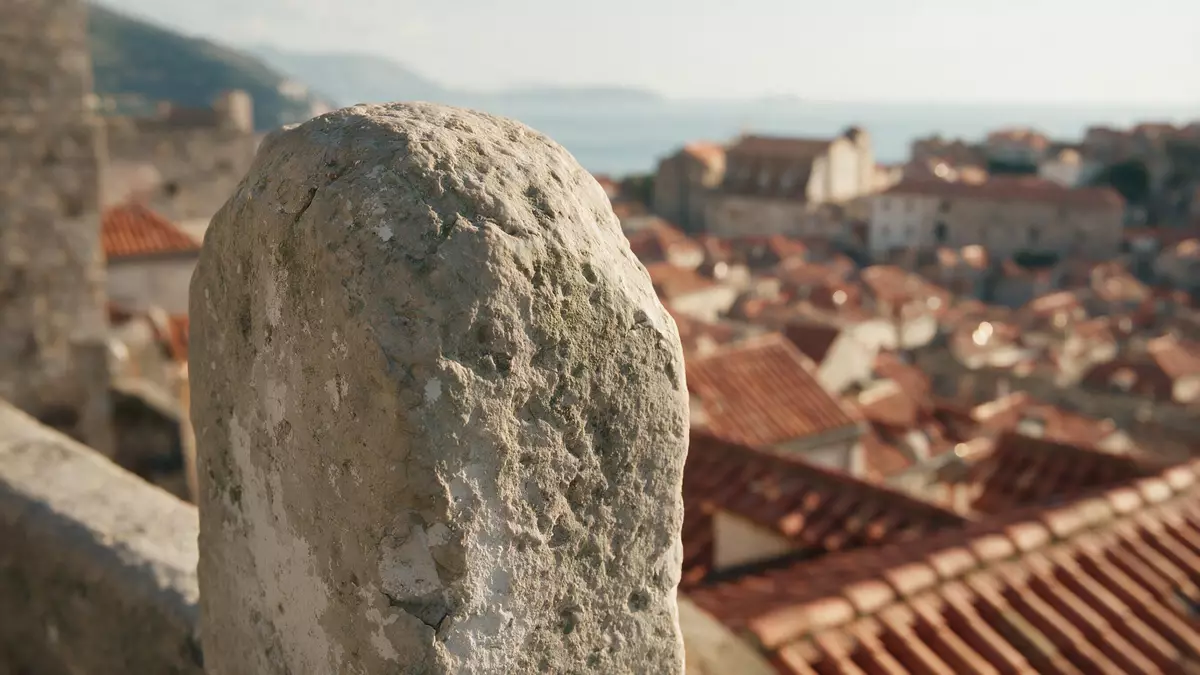
Stari Grad Dubrovnik, the historic core of Dubrovnik, is enclosed by a continuous ring of limestone walls that took shape between the thirteenth and seventeenth centuries. Within this compact area the street grid, churches and palaces reflect the long life of the Republic of Ragusa, the maritime city-state that governed the town for centuries.
Stone defences shaping the old town
The dominant feature of Stari Grad Dubrovnik is the circuit of fortifications that wrap tightly around the old streets and harbour. The main wall, flanked by towers and bastions, was largely formed from the thirteenth century onwards, with substantial building and strengthening work continuing into the seventeenth century as new military needs arose.constructed between the thirteenth and seventeenth centuries The walls are built of local limestone, a material that gives the town its pale colour and survives weather and salt air robustly.limestone fortifications
Over this long building period the defensive system expanded from simple ramparts into a sophisticated ensemble with towers, corner forts and gatehouses integrated into the city fabric. By the end of the thirteenth century the whole medieval town was encircled by stone walls that followed the line of the shoreline and the slopes behind the port.completely surrounding the city by the thirteenth century Later additions consolidated this belt of stone and fixed the overall extent of the old town, so that the area known as Stari Grad Dubrovnik remains closely defined by its fortifications.
Ragusa, a maritime republic inside the walls
The historic centre grew as Ragusa, the name used for Dubrovnik in Latin and Italian sources, developed into an independent maritime republic. From the fifteenth century onwards, Ragusa traded widely around the Mediterranean and maintained a high degree of autonomy through careful diplomacy and its strong defensive works.Republic of Ragusa The wealth generated by maritime commerce is reflected in the stone palaces, noble houses and religious buildings clustered inside Stari Grad Dubrovnik, many of them rebuilt in Baroque style after a devastating earthquake in 1667 reshaped the townscape.Baroque buildings after the 1667 earthquake
The city’s status as a self-governing republic ended in the early nineteenth century when Napoleonic forces entered Dubrovnik through the Pile Gate, bringing the long Ragusan era to a close.Napoleon marched through Pile Gate in 1806 Yet the core layout of streets, squares and religious complexes remained within the shelter of the walls, and subsequent changes respected the tight medieval footprint. Walking through Stari Grad Dubrovnik today still means traversing a network laid out under the republic, framed at every turn by limestone façades and glimpses of towers and battlements above.
UNESCO recognition and the living city
The old town of Dubrovnik, including Stari Grad Dubrovnik and its city walls, is inscribed on the World Heritage List as the “Old City of Dubrovnik”, recognising its outstanding medieval and Baroque townscape and the completeness of its fortifications.Old City of Dubrovnik World Heritage listing This designation reflects the survival of the continuous wall system, the major churches and monasteries and the grid of streets that still follow historic lines.
Within the walls, Stari Grad Dubrovnik functions as a lived-in urban quarter, with homes, small hotels and public buildings occupying the same plots as their medieval predecessors. One example is Hotel Stari Grad, a boutique property in a historic house on Od Sigurate Street, which illustrates how older dwellings have been adapted for contemporary use while keeping their scale aligned with surrounding structures.Hotel Stari Grad in the old town The mix of residential lanes, religious complexes and commercial premises gives the quarter a compact feel, with the walls acting as a visible boundary between the dense historic fabric and the newer districts beyond.
Visiting Stari Grad Dubrovnik: what travellers from Western Europe should know
- Stari Grad Dubrovnik occupies the walled historic centre on the Adriatic coast in southern Croatia, with the main approach for visitors passing the Pile Gate entrance to the walls.
- The terrain within the old town consists of narrow streets and stepped lanes paved in stone, with level stretches along the main thoroughfares and steeper climbs towards the higher parts near the landward walls.
- Stari Grad Dubrovnik lies opposite the small island of Lokrum across the water, and the harbour quarter opens directly onto the Adriatic, so sea views appear frequently along the edge of the old town.
- The official language is Croatian and the currency is the Croatian kuna.
Searching for Stari Grad Dubrovnik on social platforms
These links open searches for Stari Grad Dubrovnik on each platform.
Frequently asked questions about Stari Grad Dubrovnik
Where is Stari Grad Dubrovnik located?
Stari Grad Dubrovnik is the historic walled centre of Dubrovnik on the Adriatic coast in southern Croatia, enclosed by a continuous circuit of stone fortifications.
What should visitors expect inside the old town walls?
Visitors encounter narrow stone-paved streets, churches, monasteries and palaces rebuilt in Baroque style after the 1667 earthquake, all contained within the dense grid of the medieval maritime republic.
What makes Stari Grad Dubrovnik distinctive among Adriatic towns?
Its defining feature is the intact belt of limestone walls shaped between the thirteenth and seventeenth centuries, combined with a compact urban fabric recognised as the Old City of Dubrovnik on the World Heritage List.


