
Stari Grad Dubrovnik and its encircling stone walls
Published on 09/14/2026 at 22:30 | Editorial responsibility: Rafael Müller, Editor-in-Chief AD HOC NEWS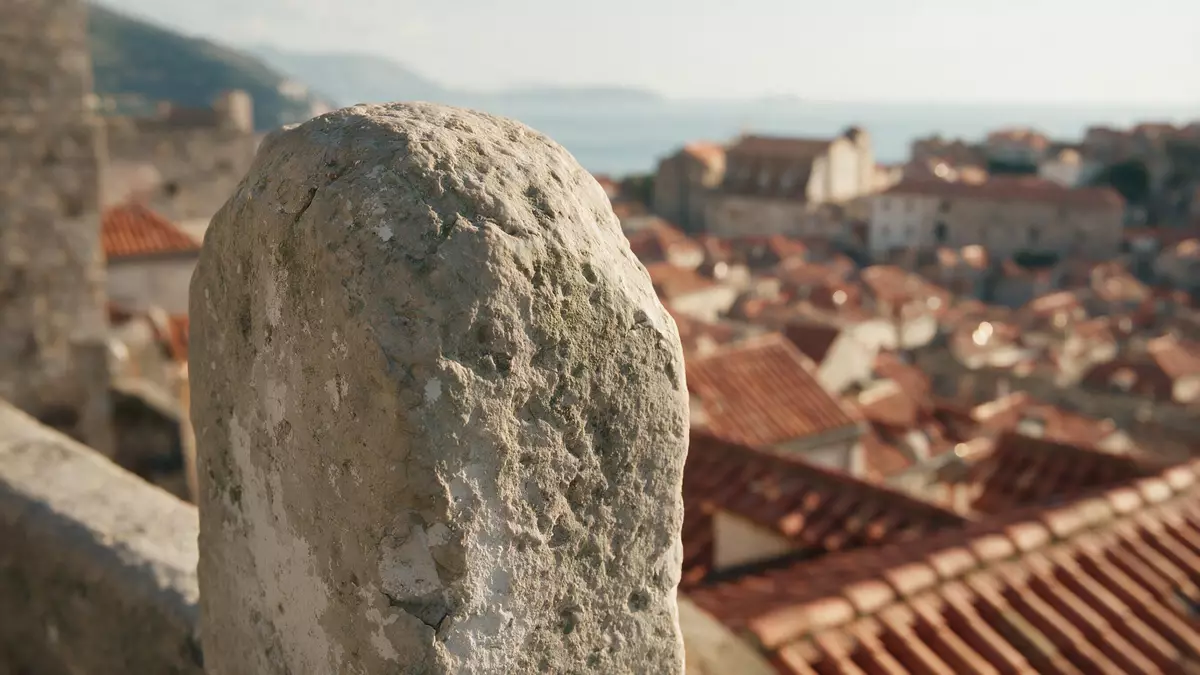
Stari Grad Dubrovnik, the walled old town of Dubrovnik on Croatia’s Adriatic coast, is a compact historic centre where massive stone fortifications shape the entire urban scene. Encircled by medieval and Renaissance walls that reached their present extent between the thirteenth and seventeenth centuries, the old town stands on a rocky peninsula projecting into the sea and remains a carefully preserved ensemble of lanes, squares and churches within stone ramparts.
Stone walls wrapped around a peninsula of streets
The defining feature of Stari Grad Dubrovnik is the continuous ring of defensive walls that surround almost all of the old town, tracing an uninterrupted course of about 1,940 m (6,360 ft) around its perimeter.uninterrupted course of approximately 1,940 metres The fortifications follow the edges of a limestone promontory, so that streets and houses inside rise gently from the harbour side towards the landward ramparts.lies on a rocky peninsula projecting into the Adriatic From outside, the old town appears as a compact mass of pale stone walls and towers above the sea.
The walls themselves are constructed from local limestone blocks and vary in thickness depending on whether they face land or water. On the landward side they reach several metres in width, while the stretches facing the Adriatic are slimmer but still substantial.walls are 1.5–3 metres thick facing the sea and 4–6 metres thick facing the land In places the ramparts climb to about 25 m (82 ft), creating a high stone barrier that still dominates views from the harbour and from newer districts beyond.walls reach an average height of around 25 metres
From medieval republic to Baroque streets
The fortifications around Stari Grad Dubrovnik developed over many centuries, with the main circuit shaped between the thirteenth and seventeenth centuries as the maritime Republic of Ragusa consolidated its independence.existing city walls were constructed mainly during the 13th–17th centuries Earlier defences on the islet of Laus gave way to stronger limestone walls once the settlement expanded across the peninsula, and the present layout follows a city plan dating from 1292, when the port town was rebuilt after a major fire.current extent of the walls was created in the second half of the 13th century The main phase of construction continued into the fifteenth and sixteenth centuries, a period often described as Dubrovnik’s “Golden Age”.
Within the walls, the architectural character of Stari Grad Dubrovnik reflects both its long history and an abrupt turning point. Much of the visible townscape dates from reconstruction in the Baroque style after the earthquake of 1667, which destroyed many earlier Gothic and Renaissance buildings.old town is predominantly Baroque, rebuilt after the 1667 earthquake Surviving elements from earlier centuries, such as the cloister of the Franciscan Monastery and the Sponza Palace, sit alongside later churches and palaces, all framed by the enduring stone circuit of the city walls.
Gates, towers and UNESCO recognition
Stari Grad Dubrovnik is entered through a series of historic gates cut into the surrounding walls, some overlooking the harbour and others facing inland across bridges and former moats. Around the circuit stand towers, bastions and integrated fortresses that give the fortifications their distinctive outline, including strongholds at the corners and above the approaches from land.walls consist of the main city wall, towers, fortresses and bastions From the ramparts, views open across the tiled roofs of the old town, the harbour basin and the offshore islands of the Adriatic.
The historic core enclosed by these walls is recognised internationally for its cultural value. Dubrovnik’s old town, including Stari Grad Dubrovnik and its fortifications, has been inscribed as a UNESCO World Heritage Site since 1979, reflecting both the integrity of the medieval urban fabric and the importance of the city in Adriatic maritime history.Dubrovnik Old Town as a UNESCO World Heritage Site Within this setting, churches, monasteries, civic palaces and arcaded squares line the main street and smaller alleys, all contained within the continuous stone shell of the walls.
Visiting Stari Grad Dubrovnik: what travellers from Western Europe should know
- Stari Grad Dubrovnik occupies the old town peninsula on the southern edge of Dubrovnik, reached from the modern districts by road and by local buses that stop near the main landward gate.
- Inside the walls, streets are paved with stone and many routes involve steps or gentle gradients, so walking around the old town requires steady footing on sometimes polished surfaces.
- The historic harbour lies on the seaward side of the old town, with quays and jetties below the walls where small craft and excursion boats moor close to the city centre.
- The official language is Croatian and the currency is the Croatian kuna.
Searching for Stari Grad Dubrovnik on social platforms
These links open searches for Stari Grad Dubrovnik on each platform.
Frequently asked questions about Stari Grad Dubrovnik
Where is Stari Grad Dubrovnik located?
Stari Grad Dubrovnik forms the historic walled old town on a rocky peninsula at the southern side of Dubrovnik on Croatia’s Adriatic coast.
What should visitors expect inside the old town?
Visitors encounter paved stone streets, churches, monasteries, palaces and squares enclosed by high medieval and Renaissance walls and approached through historic gates.
What makes Stari Grad Dubrovnik distinctive?
The old town’s defining feature is its continuous ring of limestone city walls, up to about 25 m (82 ft) high, which still encircle nearly all of the historic centre.


