
Stare Miasto w Warszawie and the art of a rebuilt Old Town
Published on 09/15/2026 at 15:01 | Editorial responsibility: Rafael Müller, Editor-in-Chief AD HOC NEWS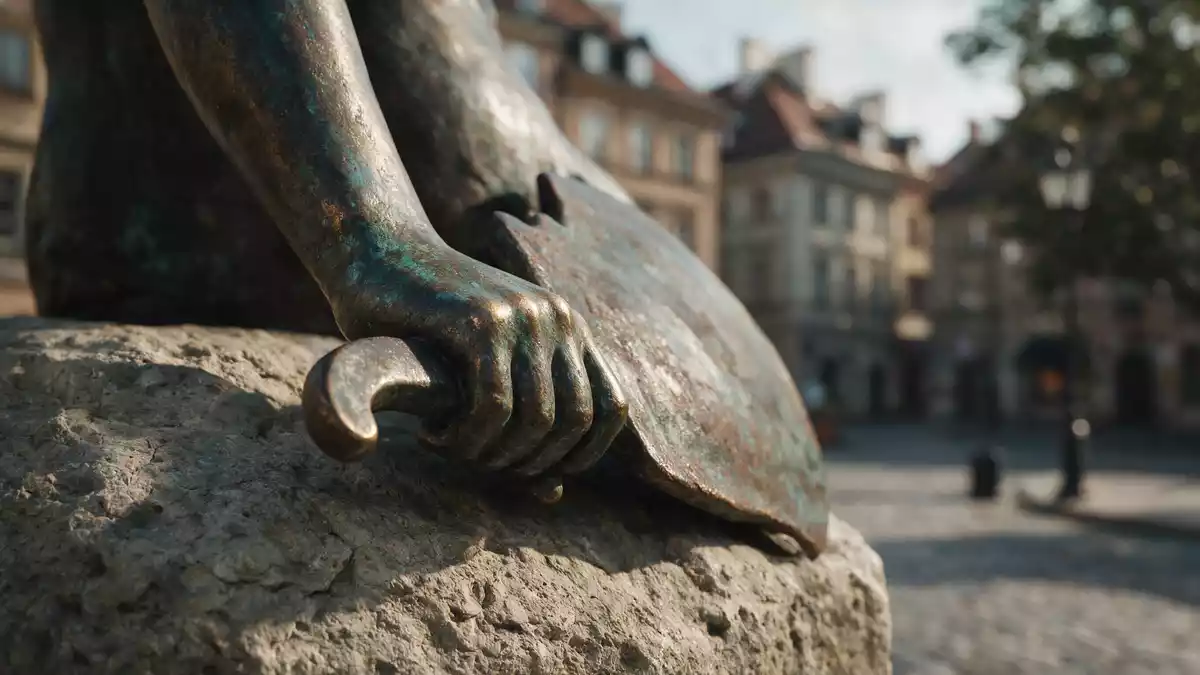
Stare Miasto w Warszawie, the Old Town of Warsaw, condenses centuries of urban history into a compact district where reconstructed façades line medieval streets and a castle square crowns the river escarpment. Listed as the Historic Centre of Warsaw on the UNESCO World Heritage List in 1980, it is a rare example of a historic core rebuilt so completely after wartime destruction and restored to the city as a lived-in neighbourhood.Historic Centre of Warsaw
From medieval stronghold to royal cityscape
The story of Stare Miasto w Warszawie begins in the Middle Ages, when the first town took shape on the high escarpment above the Vistula in what became the Mazovian duchy. A compact urban layout developed around a central market square, framed by burgher houses and protected by brick defensive walls added between the fourteenth and sixteenth centuries.zespó? architektury zabytkowej The narrow plots and irregular street grid still follow that medieval pattern, even where the buildings themselves belong to later centuries.
From the seventeenth century, Stare Miasto w Warszawie was dominated by the Royal Castle and the ceremonial space of Castle Square, which formed the political and symbolic heart of the Polish–Lithuanian Commonwealth.Royal Castle and Castle Square The facades around the Old Town Market Square show a blend of Baroque and later classicising styles, reflecting rebuilding after fires and the changing tastes of wealthy townspeople. Churches such as the Archcathedral of St John the Baptist and the Jesuit church add Gothic and Baroque forms to the compact skyline, their towers rising above the tiled roofs.
War, destruction and meticulous reconstruction
During the Second World War, particularly after the Warsaw Uprising of 1944, Stare Miasto w Warszawie suffered catastrophic damage, with most of its buildings reduced to rubble. In response, Polish planners and conservators embarked on an ambitious reconstruction campaign under the Warsaw Reconstruction Office, established on 14 February 1945 to coordinate the rebuilding of the capital.Warsaw Reconstruction Route Reconstruction of the Old Town began in 1949, guided by archival drawings, historic photographs and paintings, including works by the Italian-born painter Bernardo Bellotto, known as Canaletto.
The rebuilt Old Town aimed to restore the seventeenth- and eighteenth-century appearance of the district while integrating modern infrastructure, and the first stage of reconstruction was ceremonially handed over in the early 1950s.Destruction and Reconstruction of the Old Town Only a portion of the masonry is original Gothic or Renaissance fabric, but the overall skyline, street layout and key monuments were re-created with notable care. In 1980, UNESCO recognised this achievement by inscribing the Historic Centre of Warsaw on the World Heritage List as an outstanding example of the reconstruction of a historic city centre spanning the thirteenth to the twentieth century.World Heritage inscription in 1980
Squares, monuments and views towards the Vistula
Visitors crossing into Stare Miasto w Warszawie encounter a sequence of distinct open spaces, each anchored by specific landmarks. Castle Square spreads out at the southern edge, dominated by the red-brick Royal Castle and the tall Sigismund’s Column, which commemorates King Sigismund III Vasa, the monarch who moved the Polish capital to Warsaw in 1596.Castle Square and Sigismund’s Column From there, streets such as ?wi?toja?ska and Kanonia lead towards the Old Town Market Square, where townhouse facades in pastel colours present a carefully composed historical streetscape.
Along the northern edge, the remains of the city walls and the rounded Barbican structure mark the line where medieval fortifications once faced the north. To the east, viewpoints on the Vistula escarpment open towards the river, while narrow lanes step down towards the lower terraces. Within the Old Town blocks, courtyards and small passages provide quieter corners behind the main routes, linking churches, the Museum of Warsaw and memorials such as the Little Insurgent Monument devoted to the youngest participants of the Warsaw Uprising.mapa i gotowa trasa zwiedzania
Visiting Stare Miasto w Warszawie: what travellers from Western Europe should know
- Stare Miasto w Warszawie lies within the ?ródmie?cie district of Warsaw, on the high Vistula escarpment above the river, north of the Royal Route and close to the modern city centre.
- The terrain rises and falls noticeably, with cobbled streets, short ramps and stairways linking the upper Old Town to lower streets and river-level paths.
- Major landmarks in and around the Old Town include the Royal Castle, the Archcathedral of St John the Baptist and the Barbican, all within walking distance of one another.
- Warsaw’s official language is Polish and the currency is the Polish z?oty.
- Entry requirements depend on your nationality; UK travellers can check the FCDO travel advice at gov.uk/foreign-travel-advice, Irish travellers the Department of Foreign Affairs at ireland.ie.
Searching for Stare Miasto w Warszawie on social platforms
These links open searches for Stare Miasto w Warszawie on each platform.
Frequently asked questions about Stare Miasto w Warszawie
Where is Stare Miasto w Warszawie located?
Stare Miasto w Warszawie forms part of the ?ródmie?cie district of Warsaw in Poland, on the high escarpment above the Vistula river at the eastern edge of the historic centre.
What can visitors expect when exploring Stare Miasto w Warszawie?
Visitors encounter reconstructed historic townhouses, churches, defensive walls and squares such as Castle Square and the Old Town Market Square, all arranged along narrow cobbled streets.
What makes Stare Miasto w Warszawie distinctive among historic city centres?
Stare Miasto w Warszawie stands out for the way its medieval layout and seventeenth- and eighteenth-century appearance were reconstructed after wartime destruction and recognised collectively as the Historic Centre of Warsaw on the UNESCO World Heritage List.


