
Stanley Park and the forested edge of Vancouver
Published on 08/27/2026 at 18:45 | Editorial responsibility: Rafael Müller, Editor-in-Chief AD HOC NEWS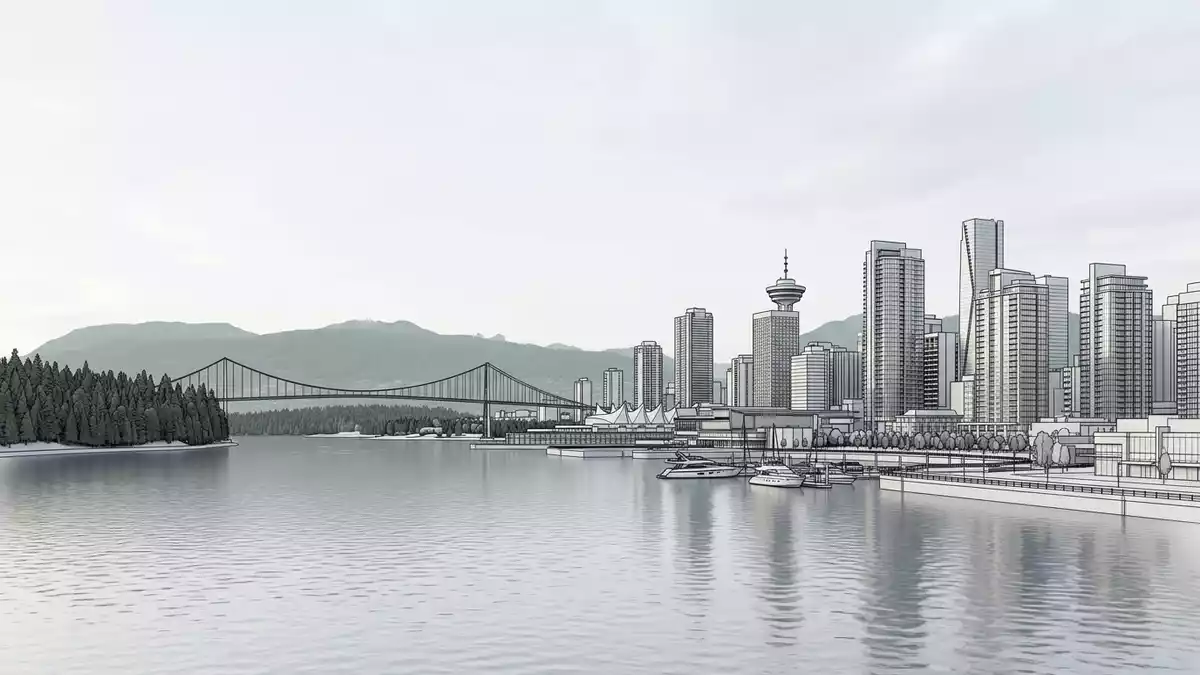
Stanley Park is Vancouver’s great green peninsula, a 405-hectare park edged by Burrard Inlet and English Bay. Its defining feature is the mix of dense forest, water, and built landmarks such as the Vancouver Seawall and Brockton Point.
Stanley Park’s forested peninsula
The park occupies the northwestern half of Vancouver’s downtown peninsula and reaches out between harbour waters and city streets. It has been a public park since 1888, and it is designated a National Historic Site of Canada.
The landscape is broad rather than formal. Forest, beaches, lakes and roads sit alongside gardens, monuments and sports facilities, with the tall trees giving the park a wooded character uncommon in a central city setting.
Landmarks, water and stone
Several named places give Stanley Park its structure. Lost Lagoon, Prospect Point, Siwash Rock, Beaver Lake, the Hollow Tree and the Brockton Point totem poles all belong to the park’s established landscape of landmarks.
The rock outcrop at Siwash Rock and the old cedar stump known as the Hollow Tree show two very different forms of presence: one geological, one botanical. The park also contains the 9 O’Clock Gun, the Brockton Point Lighthouse and the waterfront route of the seawall.
A park shaped by use over time
Stanley Park opened under Lord Stanley in the late nineteenth century, and the site later took on additional layers of civic and recreational use. The park’s historic character lies in that overlap between woodland, designed landscape and public amenities.
Its heritage value also includes the work of figures such as W.S. Rawlings and Thomas Mawson, whose names are attached to the park’s developed landscape. Their contributions sit within a broader setting that includes gardens, paths, causeway works and rustic stone details.
Visiting Stanley Park: what travellers from Western Europe should know
- The park sits beside Vancouver’s downtown core, with access from the West End and Coal Harbour. Lions Gate Bridge connects the park to the North Shore.
- The seawall runs around the waterfront edge, while forest trails cut through the interior. Some routes include grades, steps and narrow sections near rock and shoreline.
- Lost Lagoon lies near the Georgia Street entrance, and Brockton Point marks the eastern side of the park. Prospect Point sits higher within the park and looks out towards the harbour.
- English is the main language in Vancouver, and the currency is the Canadian dollar. Entry requirements depend on your nationality; UK travellers can check the FCDO travel advice at gov.uk/foreign-travel-advice, Irish travellers the Department of Foreign Affairs at ireland.ie.
Searching for Stanley Park on social platforms
These links open searches for Stanley Park on each platform.
Frequently asked questions about Stanley Park
Where is Stanley Park?
Stanley Park is in Vancouver, British Columbia, on a peninsula beside the downtown core. It is bordered by Burrard Inlet and English Bay.
What does a visit involve?
The park combines waterfront paths, forest trails, lakes, beaches and monuments. The seawall and the interior routes give it two distinct ways to move through the same landscape.
What makes Stanley Park distinctive?
Its mix of wooded land, shoreline and heritage features defines it. The park’s most recognisable elements include the seawall, Lost Lagoon, the totem poles and Siwash Rock.


