
Stanley Park and its seawall ring around Vancouver’s downtown
Published on 09/22/2026 at 02:06 | Editorial responsibility: Rafael Müller, Editor-in-Chief AD HOC NEWS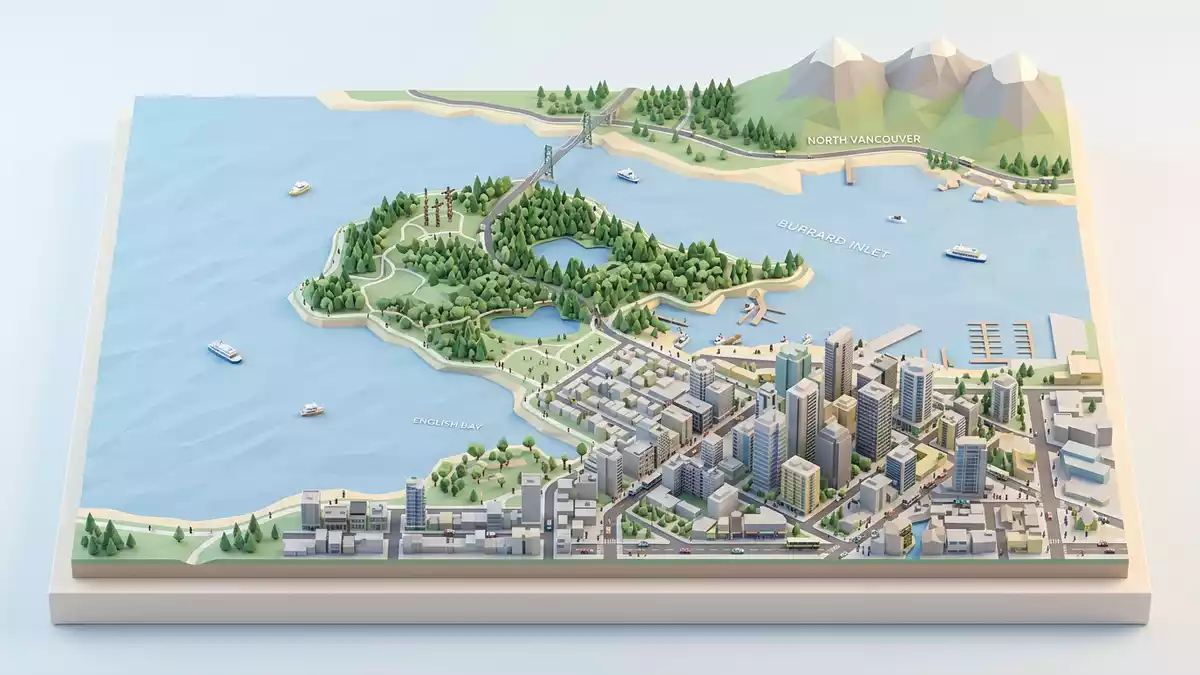
Stanley Park in Vancouver is a forested peninsula park where tall coniferous trees and saltwater views meet an encircling seawall route along the harbour edge. The park occupies several hundred hectares of land at the entrance to Burrard Inlet and has become one of the defining green spaces of this Pacific coast city, with a paved waterfront loop tracing the shoreline and linking viewpoints, beaches and cultural landmarks.
A nineteenth-century park on a coastal peninsula
Stanley Park occupies a large part of the downtown peninsula that projects into Burrard Inlet and English Bay, separated from the surrounding water only by its perimeter road and the stone seawall beneath it.occupies some 1,000 acres Its landscape combines second-growth temperate rainforest with open lawns, ornamental gardens and sports fields, threaded by a network of roads and footpaths. Many of the largest trees are Douglas firs and western red cedars, giving the interior trails the feeling of a woodland walk even though the park lies beside a major city.
The park is named after Frederick Arthur Stanley, governor general of Canada, who opened it to the public in the late nineteenth century after the city council designated the area as a municipal park.opened the park for the public That period established Stanley Park as a place where formal features such as gardens and commemorative monuments exist alongside traces of earlier forest use. The combination of a relatively rugged shoreline, interior lakes such as Beaver Lake and access to viewpoints looking out over the Lions Gate Bridge and the North Shore mountains has shaped its character as an urban park with varied terrain and long perspectives.
The stone seawall and the waterfront route
One of the most distinctive features of Stanley Park is the stone seawall that runs around its outer edge, carrying a waterfront route used by walkers, runners, cyclists and inline skaters.stone wall constructed around the perimeter Construction of the seawall began in 1917, and the Stanley Park loop was completed in stages over much of the twentieth century.construction of the 8.8-km seawall The route hugs the shoreline, passing exposed rock, low cliffs and beaches, and provides a continuous paved surface that traces the outline of the peninsula.
The seawall itself is built largely of stone masonry and retains sections of the shoreline against the tides and waves of Burrard Inlet and English Bay.iconic 8.8km pathway that wraps around the park Along parts of the Coal Harbour side the route is accompanied by balustrades and masonry walls, while other stretches are set directly against rock faces where the path has been cut into the base of the cliffs.stone balustrade along a stretch of the shore From the path there are uninterrupted views across the water to container terminals, mountains and the city’s glass towers, making the circuit a way to understand Vancouver’s geography in a single walk or ride.
Cultural landmarks, forest trails and First Nations art
Within Stanley Park’s interior, a dense network of trails branches away from the seawall and the perimeter road, leading past lakes, gardens and viewpoints. Features such as Beaver Lake, Lost Lagoon and viewpoints around Prospect Point add variety to the terrain, with some paths passing close to sheer rock and others threading between tall trees and ferns.Beaver Lake, Deadman’s Island, Siwash Rock On the western side, beaches face English Bay, while near the park’s south-eastern edge stands the Vancouver Aquarium, housed in a dedicated building amid the trees.large public aquarium
One of the most recognisable cultural elements in Stanley Park is the group of totem poles at Brockton Point, a collection of carved cedar poles by artists from several First Nations, including communities from Vancouver Island, Haida Gwaii and the central coast.First Nations art and totem poles The collection began in the 1920s and has been expanded over the decades, with a pole carved by Robert Yelton of the Squamish Nation added in 2009. Elsewhere in the park, monuments and sculptures mark historical events and figures, while viewpoints near Brockton Point and Prospect Point offer long views of shipping lanes, bridges and mountains, placing the park within its wider coastal setting.
Visiting Stanley Park: what travellers from Western Europe should know
- Stanley Park lies immediately north-west of downtown Vancouver on a peninsula between Burrard Inlet and English Bay, reached by city streets, bus routes and cycle paths crossing Coal Harbour.
- The terrain includes paved seawall sections, forest trails and interior roads; some routes follow gradients beside rock faces and there are staircases and slopes near viewpoints and beaches.
- Within the park, landmarks such as Brockton Point, Prospect Point and the Vancouver Aquarium are signposted along the main roads and paths, making it possible to combine shoreline sections with interior walks.
- The official language is English and the currency is the Canadian dollar.
- Entry requirements depend on your nationality; UK travellers can check the FCDO travel advice at gov.uk/foreign-travel-advice, Irish travellers the Department of Foreign Affairs at ireland.ie.
Searching for Stanley Park on social platforms
These links open searches for Stanley Park on each platform.
Frequently asked questions about Stanley Park
Where is Stanley Park located in Vancouver?
Stanley Park occupies a large peninsula immediately north-west of downtown Vancouver, between Burrard Inlet and English Bay, at the harbour entrance.
What can visitors expect when exploring Stanley Park?
Visitors encounter a mix of forest trails, interior lakes, gardens, beaches and a paved seawall route that traces the shoreline, with viewpoints over the harbour and mountains.
What makes Stanley Park distinctive among urban parks?
Stanley Park is distinctive for its combination of temperate rainforest, extensive waterfront seawall loop and cultural landmarks such as the Brockton Point totem poles and the Vancouver Aquarium.


