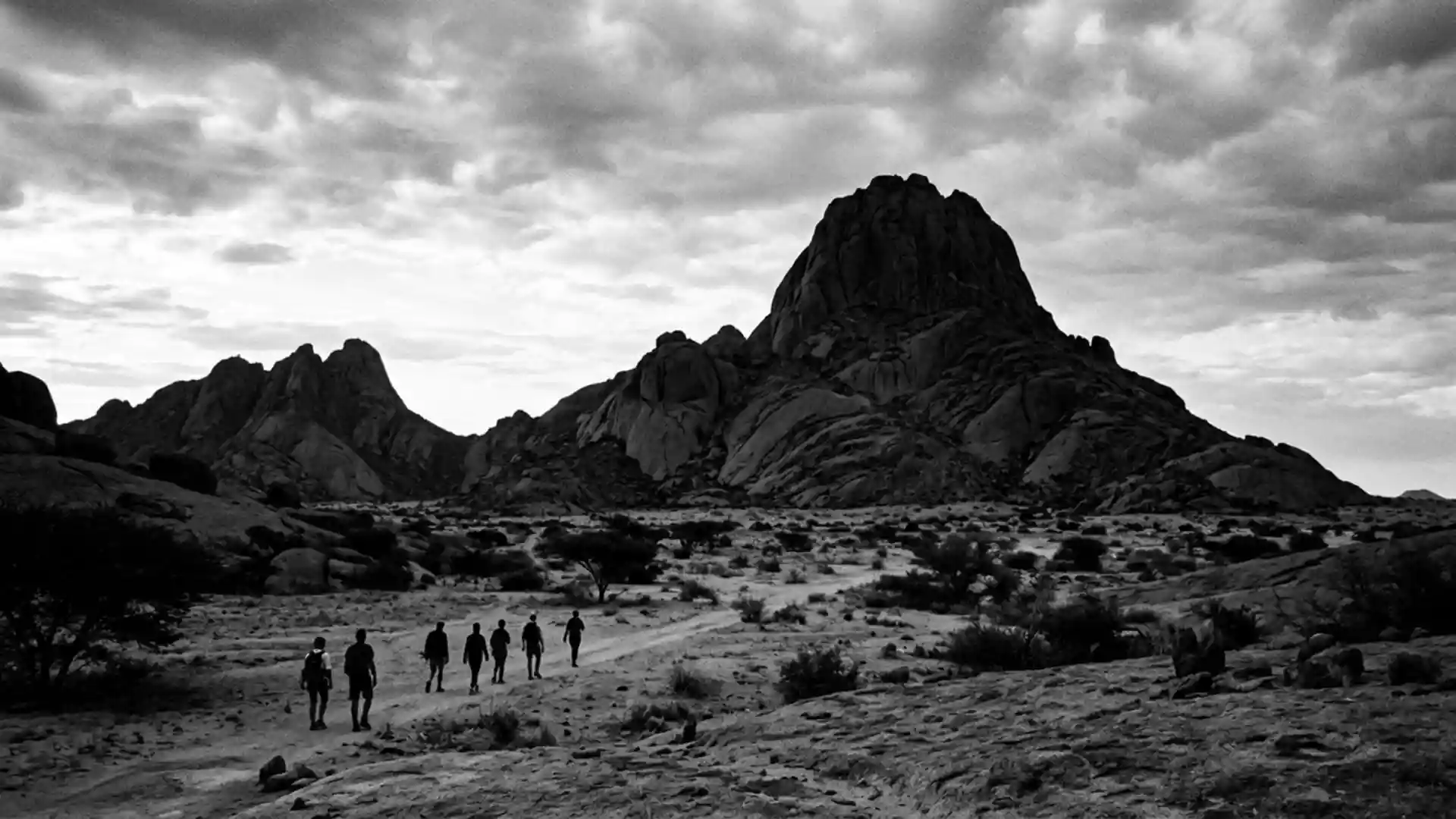
Spitzkoppe’s granite domes above Usakos
Published on 09/11/2026 at 11:54 | Editorial responsibility: Rafael Müller, Editor-in-Chief AD HOC NEWS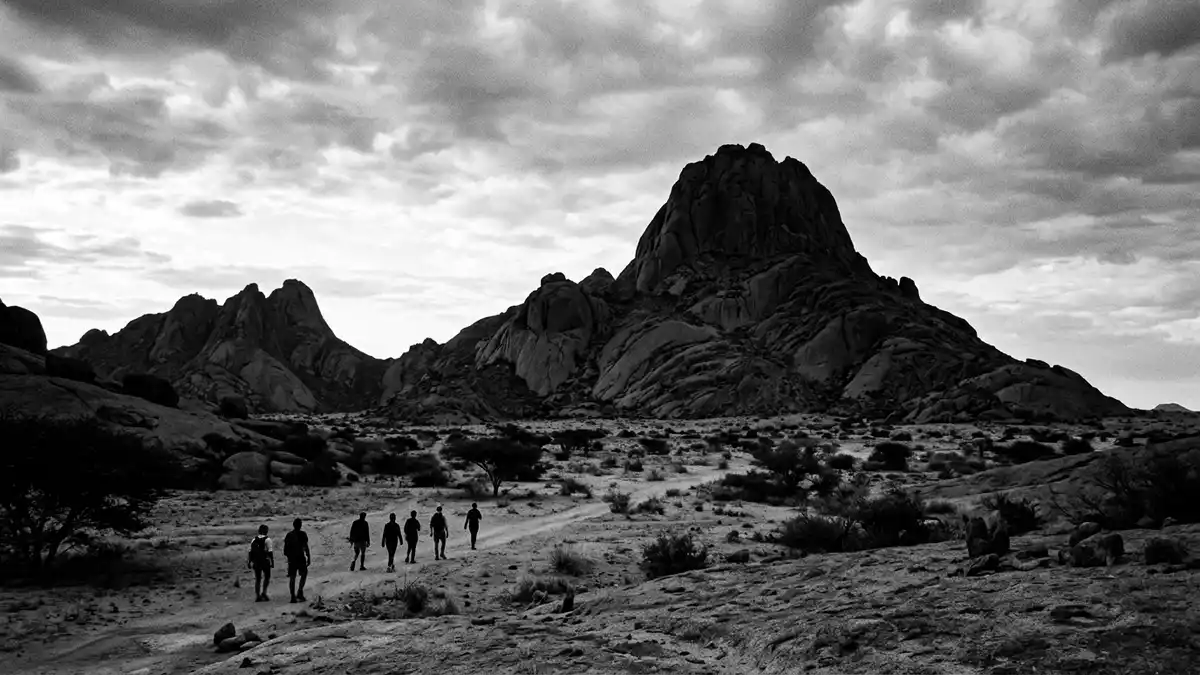
Spitzkoppe rises between Usakos and Swakopmund as a cluster of bare granite inselbergs in Namibia’s Namib Desert. Its main summit reaches 1,728 m (5,669 ft), and the rock is more than 120 million years old.
Granite domes between Usakos and Swakopmund
The formation is a group rather than a single peak, with rounded domes, isolated blocks and steep faces set above a flat plain. The English nickname “Matterhorn of Namibia” is attached to the place, though the profile is broader than that comparison suggests.
group of bald granite peaks and the summit height are the clearest anchors for the site. The same granite landscape also includes the Pontok Mountains, which extend the rocky forms beyond the main outcrops.
Rock art, overhangs and sheltered stone
San rock paintings appear in sheltered places around the massif, giving the mountain group a cultural layer alongside its geology. The visible setting is still dominated by granite, but the overhangs and darker recesses break the larger forms into smaller spaces.
rock art sites are part of the wider Spitzkoppe area, and the same government geology publication places the granite stocks in the early Cretaceous. Another technical study dates the Gross and Klein Spitzkoppe granites to about 125 Ma, linking the visible domes to the Cretaceous igneous belt of central Namibia.
about 125 Ma is the age given for the Gross Spitzkoppe granite stock, while the same source places the broader Damaraland intrusive complexes in the same magmatic episode. The result is a landscape that reads as both geological outcrop and historical surface.
Granite, minerals and desert form
The granite is coarse, pale and fractured, with surfaces that alternate between smooth domes and broken blocks. Around the base, the rock changes into boulders, ledges and narrow gaps that give the massif a varied outline.
Petrological work describes the Spitzkoppe granites as topaz-bearing A-type granites, with Gross Spitzkoppe and Klein Spitzkoppe both part of the same intrusive family. The name of Gross Spitzkoppe stock is tied to the largest granite body, while Klein Spitzkoppe lies nearby in the same district. Those names matter because the place is a cluster of separate granite masses, not a single summit.
Visiting Spitzkoppe: what travellers from Western Europe should know
- Spitzkoppe lies in central-western Namibia, between Usakos and Swakopmund. Road access crosses the Namib Desert, and the granite mass is visible from the plain.
- The terrain is exposed granite, with uneven ground, boulders and steep rock faces. Climbing involves open rock and a high, isolated summit.
- Rock shelters and painted surfaces appear in parts of the massif. The site combines geology with San art.
- The official language is English and the currency is the Namibian dollar. Entry requirements depend on your nationality; UK travellers can check the FCDO travel advice at gov.uk/foreign-travel-advice, Irish travellers the Department of Foreign Affairs at ireland.ie.
Searching for Spitzkoppe on social platforms
These links open searches for Spitzkoppe on each platform.
Frequently asked questions about Spitzkoppe
Where is Spitzkoppe?
It lies in Namibia, between Usakos and Swakopmund, within the Namib Desert. The setting is a granite cluster rising above flat desert ground.
What does a visit involve?
The place centres on exposed rock, boulders and open desert approaches. Rock art shelters add an archaeological layer to the landscape.
What makes Spitzkoppe distinctive?
Its profile comes from isolated granite domes and steep faces rising from a plain. The combination of Cretaceous granite and San rock paintings gives it a clear identity.