
Spitzkoppe’s granite domes above Usakos
Published on 09/08/2026 at 13:40 | Editorial responsibility: Rafael Müller, Editor-in-Chief AD HOC NEWS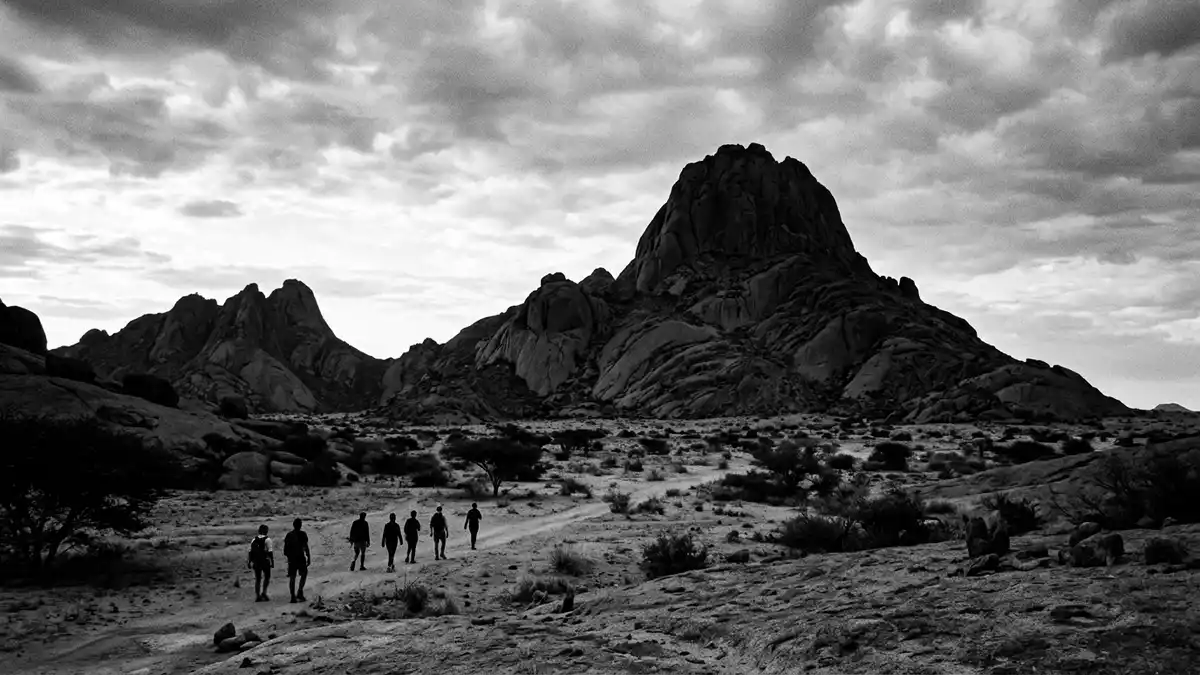
Spitzkoppe is a cluster of bare granite peaks rising abruptly from the gravel plains near Usakos in western Namibia, forming one of the most recognisable rock landscapes on the central route between Windhoek and the Atlantic coast.granite peaks or inselbergs The main summit reaches around 1,728 m (5,669 ft) above sea level, lifting desert rock into steep domes and faces that catch the light from dawn to nightfall.overall height of 1728 m
Granite domes in the Namib Desert
Spitzkoppe stands in the Erongo region of western Namibia, between the inland town of Usakos and the coastal city of Swakopmund, on the edge of the Namib Desert’s gravel plains.located between Usakos and Swakopmund The massif is not a single peak but a group of inselbergs, with rounded domes, isolated blocks and steep rock faces set above largely flat terrain.Granit-Inselberg im Westen Namibias
The main peak, often called Groot Spitzkoppe, reaches about 1,728 m (5,669 ft), while nearby domes such as Klein Spitzkoppe and the Pontok range rise to slightly lower elevations.granite inselberg group on the central Namibian plain From the surrounding desert floor the rock lifts by several hundred metres, giving the peaks a pronounced relief that is visible from far along the B2 highway and from the surrounding plains.
An ancient granite inselberg landscape
The rock of Spitzkoppe is granite, intruded as molten material into older formations during a long phase of volcanic activity in what is now western Namibia.granite approximately 120 million years old The granite is more than 100 million years old, and weathering has stripped away softer surroundings so that the harder rock remains as isolated hills rising from the plain.Gestein Granit, Inselberg vulkanischer Ursprung
Fractures within the granite and the way the rock breaks along them give Spitzkoppe its mixture of rounded domes, vertical faces and freestanding blocks. On the lower slopes, large boulders show smooth surfaces where thin sheets have flaked away, a process known as exfoliation that is characteristic of granite exposed to strong temperature changes.rounded domes, vertical faces, isolated spires Together the main peak, the smaller neighbouring domes and the Pontok Mountains to the east form a compact landscape of rock over several square kilometres, surrounded on all sides by desert plains.
Rock art and desert night skies
San rock paintings are preserved in several sheltered overhangs and shallow caves among the boulders of Spitzkoppe, adding a cultural layer to the geological setting.San rock paintings in sheltered overhangs Figures and animals appear in red and white mineral pigments on the granite surfaces, and the paintings are thought to date from periods ranging from a few centuries to several thousand years, reflecting long use of the area by hunter-gatherer communities.
Because Spitzkoppe stands far from major towns and rises above an open plain, the domes form a foreground to a wide desert sky. When the sun drops behind the Namib Desert’s horizon, the granite peaks shift in colour and then fade into silhouettes against a dense field of stars, giving the inselberg a second character distinct from the daytime view. Climbers, walkers and campers share the same granite landscape, moving between rock corridors, open slabs and sandy patches that link the different domes.
Visiting Spitzkoppe: what travellers from Western Europe should know
- Spitzkoppe lies in the Erongo region of western Namibia, roughly between Usakos on the inland route and the coastal city of Swakopmund along the B2 highway.
- The terrain consists of steep granite slopes, boulder fields and sandy patches between the domes, with approaches on foot over uneven ground and some areas of exposed rock.
- The Erongo region is arid, with desert conditions across much of the year, so sun exposure on the open plain and rock surfaces is a permanent feature of a visit.
- The official language is English and the currency is the Namibian dollar.
- Entry requirements depend on your nationality; UK travellers can check the FCDO travel advice at gov.uk/foreign-travel-advice, Irish travellers the Department of Foreign Affairs at ireland.ie.
Searching for Spitzkoppe on social platforms
These links open searches for Spitzkoppe on each platform.Frequently asked questions about Spitzkoppe
Where is Spitzkoppe in Namibia?
Spitzkoppe stands in the Erongo region of western Namibia, between the inland town of Usakos and the coastal city of Swakopmund on the central route between Windhoek and the Atlantic.
What can visitors expect at Spitzkoppe?
Visitors encounter steep granite domes, boulder fields, desert plains and San rock paintings in sheltered overhangs, with walking and climbing routes weaving through the inselberg landscape.
What makes Spitzkoppe distinctive among Namibian landscapes?
Its cluster of high granite peaks rising hundreds of metres from flat desert, combined with very old rock and preserved rock art, gives Spitzkoppe a strong profile among Namibia’s inland landmarks.


