
Spitzkoppe’s granite domes above Usakos
Published on 09/07/2026 at 22:02 | Editorial responsibility: Rafael Müller, Editor-in-Chief AD HOC NEWS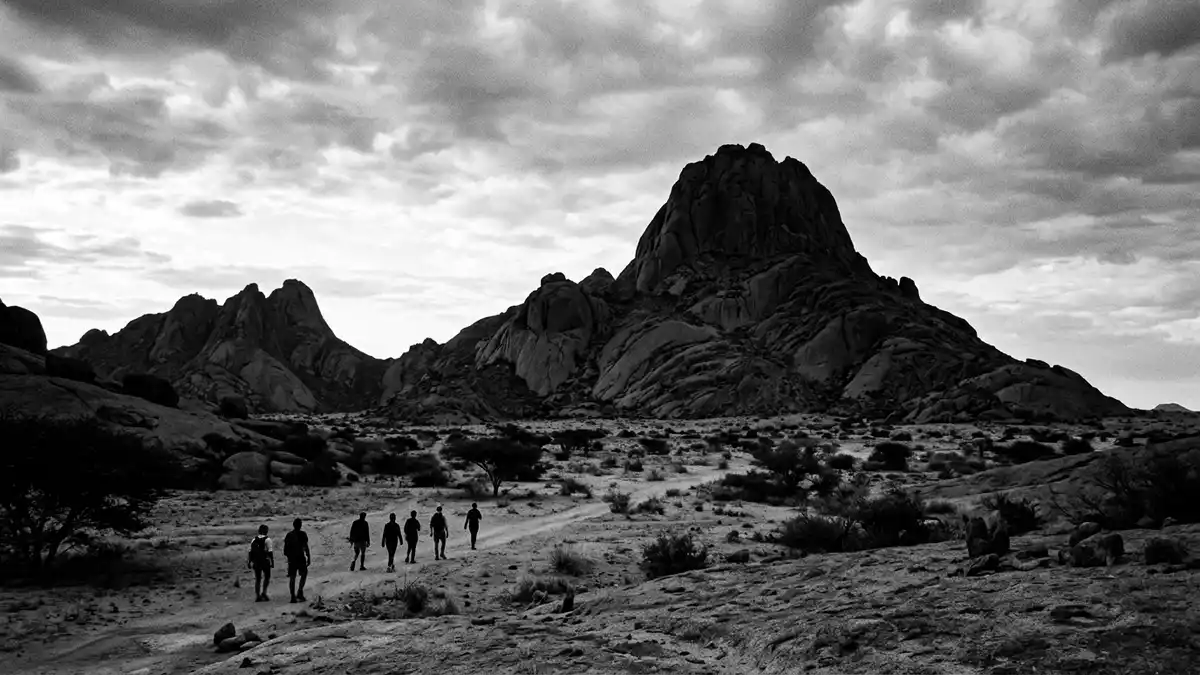
In the gravel plains north of Usakos, Spitzkoppe lifts a group of bare granite domes out of the Namib Desert, a compact massif that has become one of Namibia’s most recognisable natural landmarks. The formation lies in the Erongo Region between Usakos and Swakopmund, and its granite, intruded deep underground during Mesozoic volcanic activity, is more than 100 million years old in its present formbald granite peaks.
Granite inselbergs on the Namibian plain
Spitzkoppe is an inselberg massif: a cluster of isolated rocky hills rising abruptly from a much lower surrounding plain, with domes and spires rather than a single summitgranite inselberg group. The highest outcrop of the group, commonly called Groot Spitzkoppe, reaches about 1,728 m (5,669 ft) above sea level and towers hundreds of metres above the desert floorabout 1,728 metres above sea level. Smaller domes such as Little Spitzkoppe stand nearby, with a scatter of additional prominences stretching out into what is known as the Pontok MountainsLittle Spitzkoppe and the Pontok Mountains.
The massif sits on arid gravel plains in central-western Namibia, inland from the Atlantic coast yet within reach of the main road linking Windhoek to Swakopmundcentral route between Windhoek and the coast. From the plains, the granite rises in steep sweeps of weathered rock, with rounded domes, isolated blocks and pronounced faces that catch the low desert light. The main peaks rise roughly 700 m (2,297 ft) above their surroundings, making them visible from far across the Erongo Regionabout 700 metres above the surrounding plain.
Ancient rock, weathering and desert ecology
The granite at Spitzkoppe belongs to a wider set of intrusions in the Erongo area that were emplaced during a period of volcanic activity associated with the break-up of the Gondwana supercontinentgranite intruded during volcanic activity. Coarse-grained and composed mainly of feldspar, quartz and mica, it has been sculpted over tens of millions of years by weathering and erosion into the present assemblage of domes, towers and boulderscoarse-grained granite composed of feldspar, quartz and mica. On many faces the outer surface shows orange-brown rinds from iron oxidation, while exfoliation has left smooth, rounded boulders at the foot of the slopes.
Within this rocky framework, specialised desert life takes hold where there is shelter and a little moisture. Lichens spread across shaded granite surfaces, shrub and grass communities root in sand-filled crevices, and small ephemeral pools form in natural basins after rain. The surrounding plains carry sparse desert vegetation adapted to low rainfall, with the massif standing as both a geological feature and a small ecological island amid the wider Namib Desertarid plains within the Namib Desert.
San rock art and human presence
Long before road travellers began using the Erongo route between Windhoek and the coast, hunter-gatherer communities left traces in the sheltered overhangs and caves within the Spitzkoppe boulder fieldSan rock paintings in sheltered overhangs. San rock paintings, applied in red and white mineral pigments, depict human and animal figures and abstract forms on protected rock surfaces. They are thought to date from a span reaching back several hundred to several thousand years and link Spitzkoppe to a wider tradition of rock art across Namibia and southern Africa.
In addition to paintings, paths and simple shelters around the massif show how later visitors have used the rocky ground for movement, grazing and small-scale settlement. The main massif stands some distance from the nearest town, Usakos, which functions as a service centre on the B2 highway that passes south of the peaksnearest town is Usakos. A gravel road branches off this route towards the inselbergs, running north across the plains to reach the cluster of granite domessignposted gravel road off the B2 highway.
Visiting Spitzkoppe: what travellers from Western Europe should know
- Spitzkoppe lies in the Erongo Region of western Namibia between Usakos and Swakopmund, inland within the Namib Desert and reached by a gravel road that leaves the B2 highway near Usakos.
- The massif rises steeply from flat gravel plains, and approaches on foot involve walking over uneven rocky ground, low steps and sloping granite surfaces rather than formed pavements.
- Spitzkoppe stands on arid desert terrain, and daylight brings strong sun exposure with little natural shade away from the rock faces, while nights on the plains can feel markedly cooler.
- The official language is English and the currency is the Namibian dollar; entry requirements depend on your nationality, UK travellers can check the FCDO travel advice at gov.uk/foreign-travel-advice, Irish travellers the Department of Foreign Affairs at ireland.ie.
Searching for Spitzkoppe on social platforms
These links open searches for Spitzkoppe on each platform.
Frequently asked questions about Spitzkoppe
Where is Spitzkoppe in relation to Usakos and the Namib Desert?
Spitzkoppe stands on gravel plains within the Namib Desert in the Erongo Region of western Namibia, roughly north of Usakos and between that town and Swakopmund.
What should travellers expect when visiting Spitzkoppe?
Travellers encounter a compact group of granite domes rising sharply from flat desert terrain, with approaches over rocky ground, strong sun exposure during the day and cooler air after dark.
What makes Spitzkoppe distinctive among Namibian landscapes?
Its cluster of high granite inselbergs, the marked height difference from the surrounding plain and the presence of San rock paintings in sheltered overhangs together give Spitzkoppe a distinctive character.


