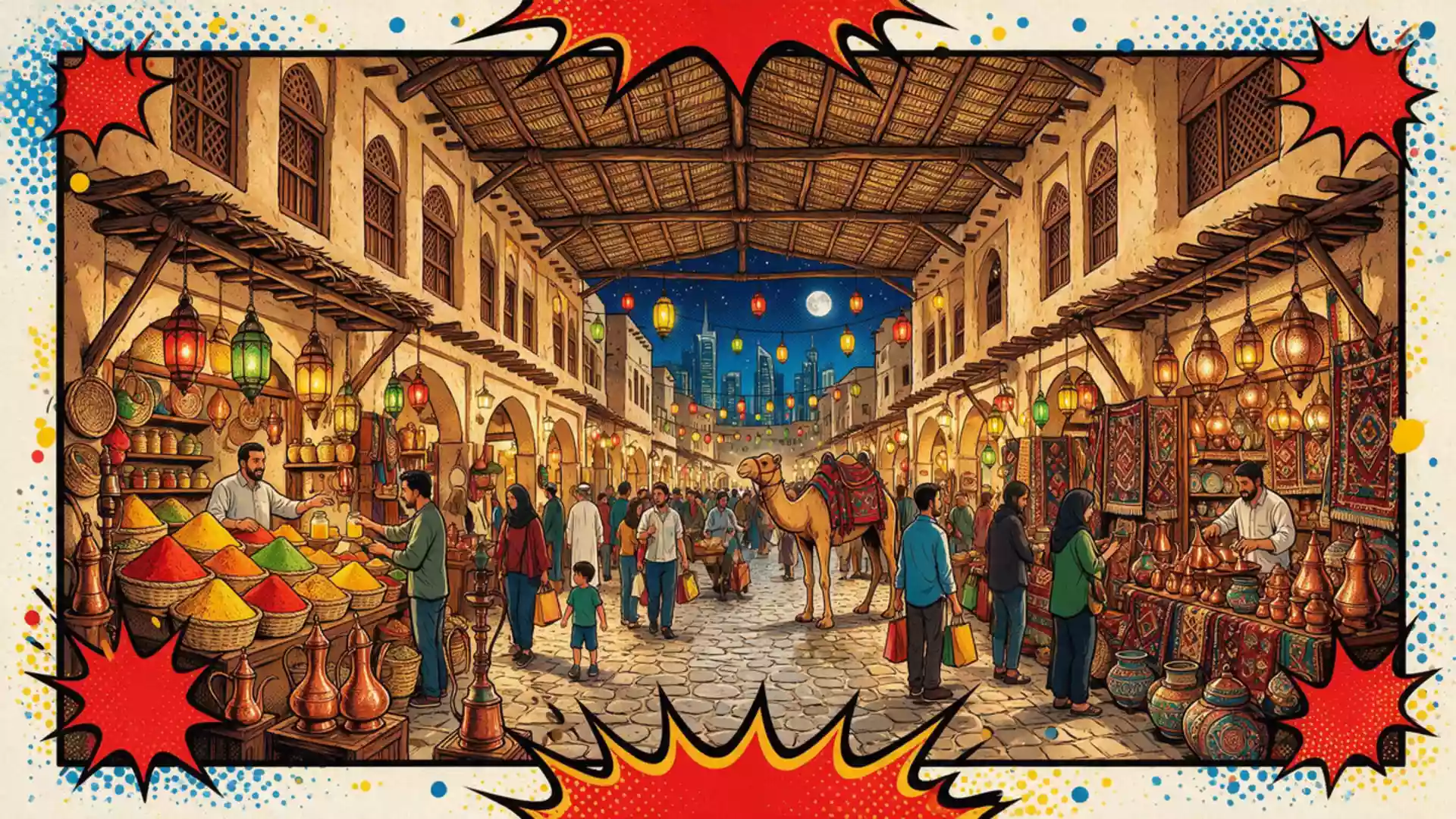
Souq Waqif in Doha: a rebuilt standing market of sand-coloured lanes
Published on 09/14/2026 at 19:37 | Editorial responsibility: Rafael Müller, Editor-in-Chief AD HOC NEWS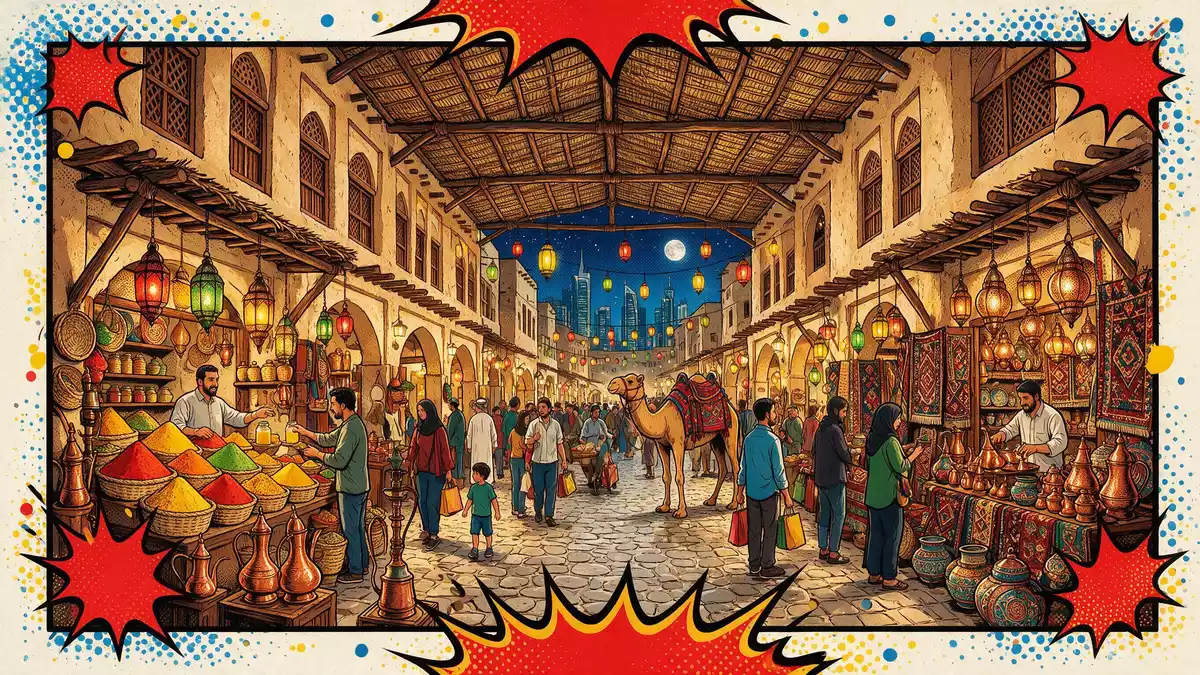
Souq Waqif in Doha is Qatar’s restored traditional bazaar, rebuilt with sand-coloured alleys and timber beams on an old market site near Wadi Musheireb. This marketplace, whose Arabic name refers to traders standing to sell their goods, sits in central Doha and has been reshaped through a major conservation project in the early twenty-first century.
A century-old market rebuilt in the twenty-first century
Souq Waqif occupies the site of a historic market that developed when Doha was still a modest Gulf port town, long before the city’s skyline of glass towers took shape.The original market is traditionally dated to the late nineteenth or early twentieth centuries, emerging near the dry riverbed known as Wadi Musheireb.The souq’s name derives from the Arabic word “waqif”, meaning “standing”, a reference to how merchants once stood by simple stalls in a low-lying, flood-prone stretch of ground to conduct trade.
The marketplace fell into decline in the late twentieth century as air-conditioned malls and wide highways spread across Doha, and in 2003 a fire destroyed large parts of the old souq.A government-led restoration programme began in 2006, guided by Qatari cultural authorities who aimed to conserve the traditional architectural character rather than replace the area with high-rise development.Designers rebuilt shops using traditional local building techniques, creating a souq that recalls pre-oil Doha while functioning as a modern marketplace.
Traditional Qatari architecture in sand-coloured lanes
Visitors walking through Souq Waqif encounter low-rise, sand-coloured buildings that follow the proportions and materials of traditional Qatari architecture.Thick walls and narrow alleys are arranged to provide shade along the passages, while projecting timber beams known locally as danjals punctuate plastered façades above doorways and shopfronts. Many buildings are rendered in mud or whitewash, creating a muted palette that contrasts with the glass towers visible beyond the district.
The roofs of the restored souq draw directly on older construction methods.Mangrove or other timber elements are combined with bamboo poles and layers of clay and straw, providing insulation against heat while giving the interiors a hand-built character. Arcades with shaded colonnades line some main passages, and side alleys branch from them to clusters of shops, small courtyards and service spaces. The resulting pattern is a compact urban fabric where commercial spaces, cafes and lodging sit within walking distance of each other.
A working bazaar near the Corniche and Msheireb
Souq Waqif functions as an open-air bazaar, with rows of shops selling textiles, spices, perfumes, household goods and regional handicrafts, echoing the goods once traded here by Bedouin and coastal merchants.Historical accounts describe traders bringing livestock, fish, pearls and everyday wares to this market site more than a century ago, and the restored souq keeps that mercantile layout with long corridors of shopfronts opening onto covered walkways. At its edges, newer buildings have been designed to align with the same height and material language, so that hotels and restaurants sit within structures that resemble older houses.
The market occupies the Al Souq district in central Doha, close to the city’s waterfront Corniche and within reach of the Museum of Islamic Art and the Msheireb Downtown redevelopment.From parts of Souq Waqif, the skyline and the bay are visible beyond the roofs, reinforcing the sense of an older trading quarter embedded within a contemporary city. Public squares and open spaces inside the souq act as gathering points, with surrounding façades retaining the small-scale rhythm of traditional shopfronts.
Visiting Souq Waqif: what travellers from Western Europe should know
- Souq Waqif lies in the Al Souq district of central Doha, a short distance inland from the Corniche and within walking range of the Museum of Islamic Art and Msheireb Downtown.
- The market’s streets are paved and largely level, but many alleys are narrow, with occasional steps between different courtyard and passage levels and shaded arcades that can feel enclosed.
- The site stands close to Doha’s harbour-front Corniche and is part of the older urban core, so road access passes through city traffic and parking is distributed around the edges of the district.
- The official language is Arabic and the currency is the Qatari riyal.
- Entry requirements depend on your nationality; UK travellers can check the FCDO travel advice at gov.uk/foreign-travel-advice, Irish travellers the Department of Foreign Affairs at ireland.ie.
Searching for Souq Waqif on social platforms
These links open searches for Souq Waqif on each platform.
Frequently asked questions about Souq Waqif
Where is Souq Waqif located in Doha?
Souq Waqif is in the Al Souq district of central Doha, close to the waterfront Corniche and near landmarks such as the Museum of Islamic Art and Msheireb Downtown.
What can visitors expect on a visit to Souq Waqif?
Visitors walk through narrow, sand-coloured lanes lined with traditional-style shops, cafes and small hotels, experiencing a restored bazaar built with timber beams, mud-rendered walls and shaded passages.
What makes Souq Waqif distinctive among Doha’s districts?
Souq Waqif is distinctive for its reconstruction using traditional Qatari architectural techniques on the site of a century-old market, creating a compact trading quarter that contrasts with Doha’s glass and steel skyline.