
Sirmione on Lake Garda’s slender peninsula
Published on 09/18/2026 at 22:50 | Editorial responsibility: Rafael Müller, Editor-in-Chief AD HOC NEWS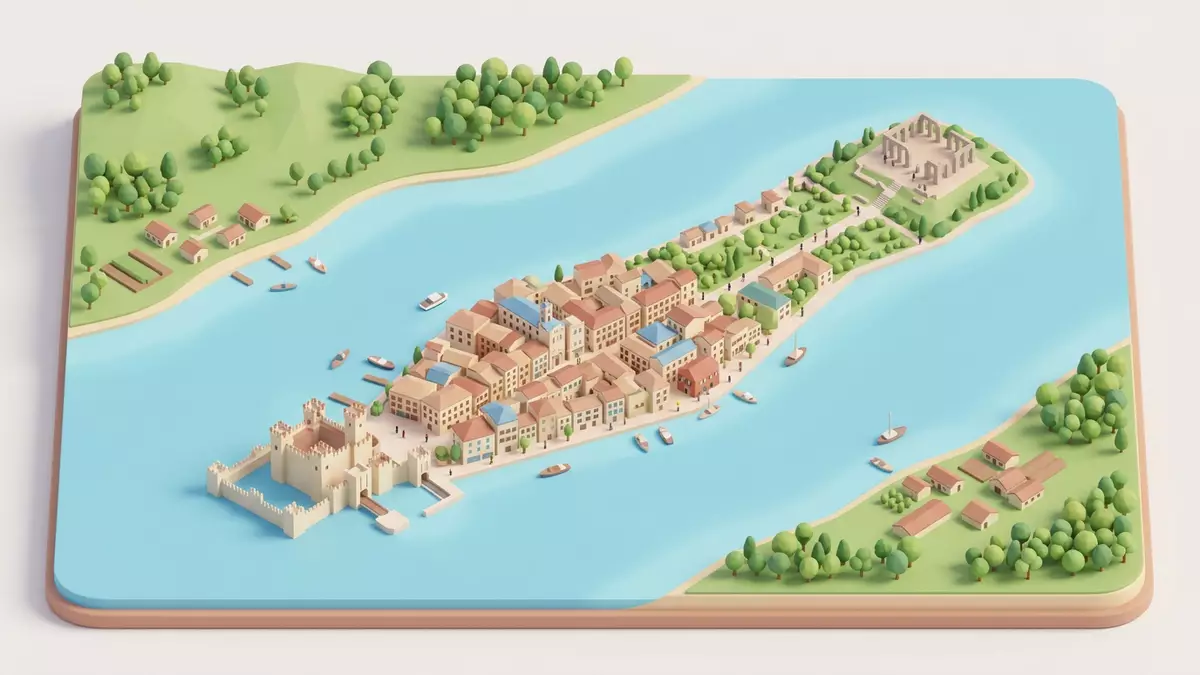
Sirmione sits on a narrow peninsula in Lake Garda, with water on both sides and historic layers at each end. The town is framed by the Rocca Scaligera and the Roman remains of the Grotte di Catullo. It is a compact place, but its outline gives it a long, unmistakable profile on the lake.
The castle at the entrance
The Rocca Scaligera, also called Scaligero Castle, marks the landward approach to the historic centre. It belongs to the period of the della Scala family in Verona, and its medieval profile remains part of the town’s identity.
The castle’s harbour side is unusual for a fortress, with water enclosed inside the walls. That mix of gatehouse, moat and harbour makes the first view of Sirmione sharply different from the rest of the peninsula.
Roman stone at the tip
At the far end of the peninsula lie the Grotte di Catullo, the remains of a large Roman villa from the Augustan age. The archaeological area includes a museum and ruins that spread across terraces above the lake.
The villa is linked with the Roman poet Catullus in the site’s long-standing name, although the remains belong to a later Roman building phase. The ruins present walls, open spaces and fragments of domestic architecture rather than a single intact house.
A town between water and ruins
Between castle and villa, Sirmione is a small town of lanes, stone fronts and lake views. Its position on the peninsula makes the built fabric feel stretched between two historical poles.
The place also carries the name of the Scaligeri, the Verona dynasty tied to the castle, and of Augustan-era Sirmione, the Roman setting at the tip. Those two names give the town its historical range: medieval power at one end, Roman aristocratic life at the other.
Visiting Sirmione: what travellers from Western Europe should know
- Sirmione lies at the southern end of Lake Garda in Lombardy. The historic centre is reached by the road that crosses the peninsula.
- The castle, the town core and the Roman ruins form a sequence along the spine of the peninsula. The walk to the Grotte di Catullo follows the length of the old settlement.
- The archaeological site at the tip lies on elevated ground above the lake. Its terraces and stone remains make the terrain part of the experience of the place.
- The official language is Italian and the currency is the euro.
- Entry requirements depend on your nationality; UK travellers can check the FCDO travel advice at gov.uk/foreign-travel-advice, Irish travellers the Department of Foreign Affairs at ireland.ie.
Searching for Sirmione on social platforms
These links open searches for Sirmione on each platform.
Frequently asked questions about Sirmione
Where is Sirmione?
Sirmione is on a peninsula in Lake Garda, in Lombardy, northern Italy. The town stretches between a medieval castle and Roman ruins.
What should a visitor expect?
The place combines a compact town centre, lakeside views and an archaeological site at the tip of the peninsula. The setting is defined by stone, water and a strong historical outline.
What makes Sirmione distinctive?
Its shape gives it a clear sequence of landmarks, from the Rocca Scaligera to the Grotte di Catullo. The contrast between the medieval castle and the Roman villa remains is the town’s most immediate feature.


