
Sirmione and the peninsula of Garda
Published on 09/22/2026 at 06:22 | Editorial responsibility: Rafael Müller, Editor-in-Chief AD HOC NEWS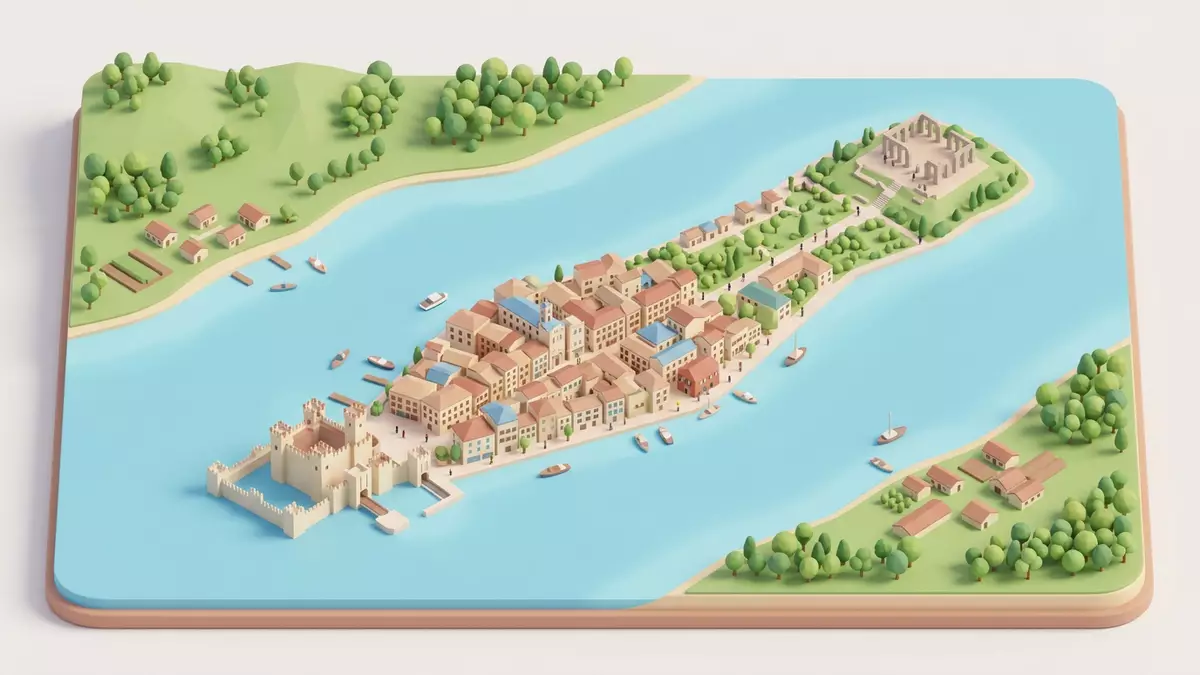
Sirmione is a peninsula projecting into the southern basin of Lake Garda in Lombardy, northern Italy. Its compact historic centre combines lake views, medieval fortifications, Roman remains and thermal waters within a landscape shaped by the meeting of land and lake.
Sirmione between lake and peninsula
The town occupies a narrow tongue of land reaching into Lake Garda. Water appears along much of the approach, while cypress, olive trees and stone buildings frame the route towards the old centre. The peninsula broadens towards its northern end, where the archaeological area of the Grotte di Catullo occupies a high position above the lake.
Sirmione belongs to the province of Brescia and lies on the southern shore of Lake Garda. The lake links the Alpine landscape to the north with the plains of Lombardy and the Veneto. Sirmione’s setting therefore brings together a historic settlement, a long peninsula and a large inland lake without separating them into different sights.
Scaliger Castle and the medieval centre
The Rocca Scaligera stands beside the water at the entrance to the historic centre. Its stone walls, towers, battlements and enclosed harbour form a fortified complex associated with the Scaliger family, the medieval rulers of Verona. Construction belongs to the thirteenth century, with later additions shaping the castle seen today.
A moat surrounds the fortress, and bridges connect its entrance with the town. Inside, stairs rise through the defensive structures, while the walls frame views across the lake and towards the peninsula. The castle is not an isolated monument: it forms the threshold between Sirmione’s narrow streets and the open water around them.
The Scaliger name links Sirmione with a wider network of castles around Lake Garda and the neighbouring territories. Medieval power is visible here through masonry, towers and controlled access, while the town beyond the fortress contains houses, shops, churches and lanes gathered around the shoreline.
The Roman remains at the peninsula’s northern end
The Grotte di Catullo are the remains of a large Roman villa complex at the northern end of Sirmione. The ruins stand among olive trees above the lake, with fragments of walls, terraces and vaulted structures spread across the archaeological area.
The name refers to the poet Catullus, who wrote about Sirmio in the first century BC. The connection between the poet and the surviving villa is part of the place’s cultural identity, but the ruins themselves provide the clearest evidence: Roman masonry, elevated terraces and broad views over Garda.
The complex is traditionally dated to the first century BC and the early Roman imperial period. Its position places ancient domestic architecture beside a landscape that remains central to Sirmione’s character. Stone remains, vegetation and lake water form a continuous sequence along the northern peninsula.
Visiting Sirmione: what travellers from Western Europe should know
- Sirmione lies on Lake Garda in Lombardy, south of the lake’s central basin. Road links connect the town with Desenzano del Garda and Peschiera del Garda, while railway services use stations in those neighbouring towns.
- The historic centre is reached through narrow streets and pedestrian routes. The castle contains stairs, and the archaeological area at the peninsula’s northern end includes uneven ground and sloping paths.
- The town’s setting is defined by water on both sides of the peninsula. The Grotte di Catullo lies beyond the medieval centre, among olive trees and exposed Roman masonry.
- The official language is Italian and the currency is the euro.
Searching for Sirmione on social platforms
These links open searches for Sirmione on each platform.Frequently asked questions about Sirmione
Where is Sirmione?
Sirmione is a town on a peninsula extending into the southern part of Lake Garda in Lombardy, northern Italy. It belongs to the province of Brescia.
What can visitors expect in Sirmione?
The historic centre contains the Rocca Scaligera, narrow pedestrian streets and waterside views. The Grotte di Catullo adds a Roman archaeological site among olive trees at the peninsula’s northern end.
What makes Sirmione distinctive?
Its principal sights occupy the same peninsula. Medieval fortifications, Roman villa remains, lake water and thermal springs appear within one compact setting.


