
Simien Mountains National Park’s basalt cliffs above Debark
Published on 08/26/2026 at 20:50 | Editorial responsibility: Rafael Müller, Editor-in-Chief AD HOC NEWS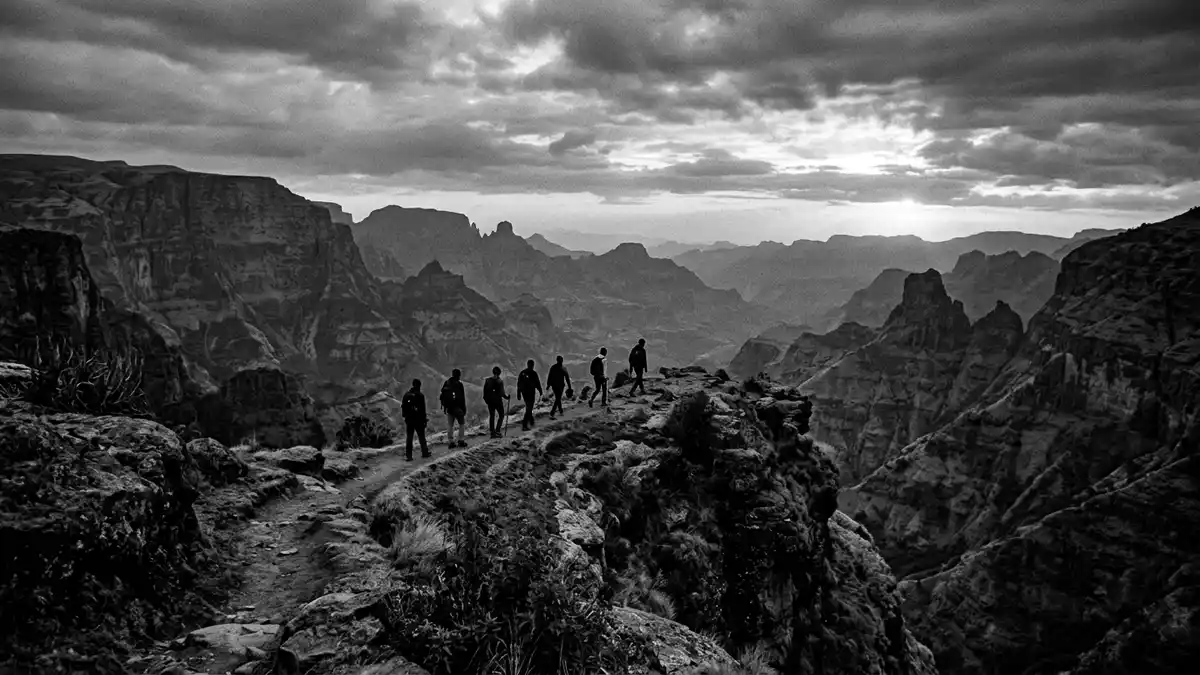
Simien Mountains National Park climbs above the small town of Debark in northern Ethiopia, where a high basalt plateau breaks into a vast amphitheatre of cliffs and peaks. Declared a UNESCO World Heritage Site in 1978, it protects one of Africa’s most dramatic highland landscapes and some of Ethiopia’s most distinctive wildlife.
A basalt fortress of the Ethiopian Highlands
The park occupies the northern edge of the Ethiopian Highlands in the Amhara Region, in a section of the range known as the Simien Mountains. Massive erosion of thick basalt layers has carved the plateau into jagged summits, deep valleys and escarpments that fall hundreds of metres towards the lowlands.Simien National Park in northern Ethiopia lies north-east of the historic city of Gondar and uses Debark as its main access town.The North Gondar Zone of the Amhara Region forms the wider setting.
The plateau carries a series of high summits, including Ras Dashen, recognised as the highest mountain in Ethiopia at about 4,550 m (14,928 ft) above sea level.Ras Dashen in the Simien Mountains rises above a landscape where many peaks reach over 4,000 m (13,123 ft), creating a skyline of serrated ridges. The cliffs and buttresses are largely formed from dark volcanic rock, giving the escarpment a stark contrast with the cultivated highland fields near Debark.
UNESCO World Heritage and conservation history
Simien Mountains National Park gained formal protection in the twentieth century, with management structures introduced in the 1940s and the park officially established in 1966.The park was legally gazetted in 1969 under Ethiopian law. In 1978 it became one of the first natural properties inscribed on the UNESCO World Heritage List, recognised under natural criteria vii and x for its outstanding scenery and biodiversity.The Simien National Park inscription in 1978 placed it alongside a small group of early World Heritage sites.
The World Heritage designation highlights the combination of geological drama and rare species that characterises the park. The cliffs and gorges expose the structure of the Ethiopian basalt plateau, while high-altitude grasslands, shrublands and remnants of forest provide habitat for specialised plants and animals. Conservation efforts focus on maintaining this mosaic, managing grazing and settlement pressures and keeping migration routes open for wildlife along the escarpment.
Endemic wildlife on the high plateau
The park is particularly associated with three mammals found only in Ethiopia: the Walia ibex, the gelada and the Ethiopian wolf. The Walia ibex is a wild goat with long, heavily curved horns that lives on the steep basalt cliffs of the high escarpment.The Walia ibex population in the Simien Mountains represents the last stronghold of this species. Geladas, sometimes called bleeding-heart monkeys for the red patch on their chests, graze the highland grasslands in large groups, using the cliff edges as resting places.
The Ethiopian wolf, also known as the Simien fox, hunts small mammals across the afro-alpine moorlands and is among the world’s rarest canids.The Ethiopian wolf in the Semien Mountains shares the plateau with endemic rodents and a variety of bird species adapted to high altitudes. The combination of highland habitat, restricted ranges and long conservation history gives Simien Mountains National Park a particular significance for biologists and conservation planners.
Visiting Simien Mountains National Park: what travellers from Western Europe should know
- Simien Mountains National Park lies in the Amhara Region of northern Ethiopia, with Debark acting as the main gateway town for access to the highland plateau. The park is reached overland from larger centres such as Gondar.
- The terrain combines a high plateau with steep escarpments, so many routes involve walking on uneven paths near cliff edges and at altitudes that rise above 3,000 m (9,843 ft).
- Weather conditions in the highlands can bring strong sun by day and low temperatures at night, and trails may cross exposed sections with little shelter from wind or rain.
- The official language is Amharic and the currency is the Ethiopian birr. Entry requirements depend on your nationality; UK travellers can check the FCDO travel advice at gov.uk/foreign-travel-advice, Irish travellers the Department of Foreign Affairs at ireland.ie.
Searching for Simien Mountains National Park on social platforms
These links open searches for Simien Mountains National Park on each platform.
Frequently asked questions about Simien Mountains National Park
Where is Simien Mountains National Park?
Simien Mountains National Park is in the Amhara Region of northern Ethiopia, above the town of Debark and north-east of Gondar, within the Ethiopian Highlands.
What should visitors expect on a visit?
Visitors encounter high-altitude terrain, basalt cliffs and views across deep valleys, along with the chance to see endemic species such as geladas and Walia ibex on the plateau.
What makes Simien Mountains National Park distinctive?
The combination of jagged basalt escarpments, Ethiopia’s highest peak Ras Dashen and endemic mammals such as the Ethiopian wolf gives the park a character that defines this section of the Ethiopian Highlands.


