
Sigiriya and the palace above Sri Lanka’s plains
Published on 09/23/2026 at 10:38 | Editorial responsibility: Rafael Müller, Editor-in-Chief AD HOC NEWS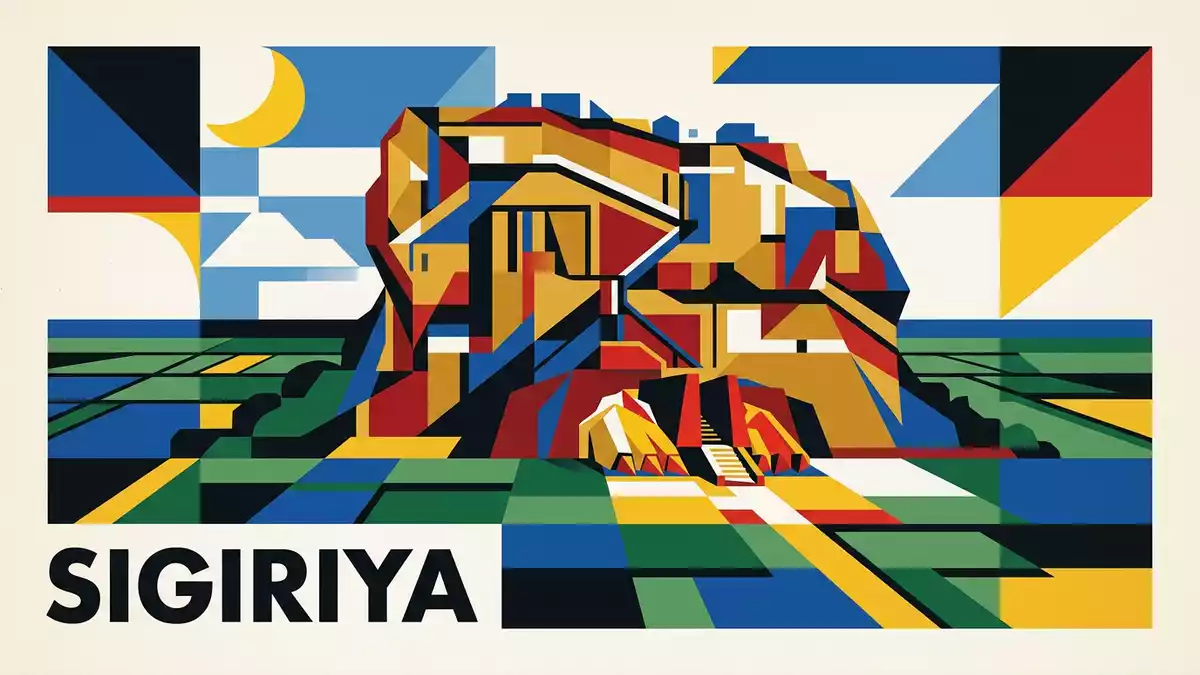
Sigiriya rises from Sri Lanka’s central plains as a granite rock crowned by the remains of a royal palace. The summit, gardens, stairways and paintings form a single archaeological landscape shaped during the reign of King Kashyapa I in the fifth century.
Sigiriya’s granite summit and royal capital
The rock reaches about 180 m (590 ft) above the surrounding landscape. Its upper surface carries the ruins of a palace complex, while terraces and defensive remains extend across the slopes and plain.
King Kashyapa I ruled from 477 to 495 CE, the period most closely associated with the royal city at Sigiriya. The granite peak and royal ruins belong to an archaeological setting that combines architecture, gardens and rock formations.
Water gardens, galleries and the Lion Gate
The approach crosses formal gardens, pools, moats and landscaped terraces. Channels and reservoirs form part of the hydraulic system, with masonry remains marking the planned character of the lower complex.
Higher on the rock, stairways pass the Mirror Wall and painted galleries. The final ascent runs between the surviving lion paws, remnants of a monumental entrance associated with the name Sigiriya, or Lion Rock. The lion paws at Sigiriya remain among the site’s most recognisable architectural fragments.
From royal stronghold to Buddhist monastery
Sigiriya functioned as a royal capital during Kashyapa’s reign. After 495 CE, the complex became a Buddhist monastery, and monastic use continued for centuries before the site was abandoned.
The surviving paintings, brickwork, plaster surfaces and inscriptions preserve several layers of cultural history. Sigiriya entered the UNESCO World Heritage List in 1982 as the Ancient City of Sigiriya, with its value linked to ancient urban planning, landscape design and artistic achievement.
Visiting Sigiriya: what travellers from Western Europe should know
- Sigiriya lies in Sri Lanka’s Central Province, near the town of Dambulla. Road journeys from Dambulla and other towns in the Cultural Triangle reach the archaeological area.
- The ascent includes exposed stairways, narrow passages and a substantial climb over the rock. The route moves from landscaped ground to steep stone and metal steps.
- The summit contains uneven archaeological remains, cisterns, walls and open terraces. The climb and upper plateau require attention to heat, height and changing surfaces.
- The official language is Sinhala and Tamil, and the currency is the Sri Lankan rupee.
- Entry requirements depend on your nationality; UK travellers can check the FCDO travel advice at gov.uk/foreign-travel-advice, Irish travellers the Department of Foreign Affairs at ireland.ie.
Searching for Sigiriya on social platforms
These links open searches for Sigiriya on each platform.
Frequently asked questions about Sigiriya
Where is Sigiriya?
Sigiriya is in Sri Lanka’s Central Province, near Dambulla. The rock rises from the interior plains within the island’s Cultural Triangle.
What can visitors see at Sigiriya?
The archaeological landscape includes water gardens, terraces, stairways, painted galleries, the Mirror Wall and summit ruins. The climb ends among the remains of the former palace complex.
What makes Sigiriya distinctive?
Sigiriya combines a granite rock about 180 m high with a fifth-century royal capital, formal gardens, surviving paintings and a lion-paw entrance.


