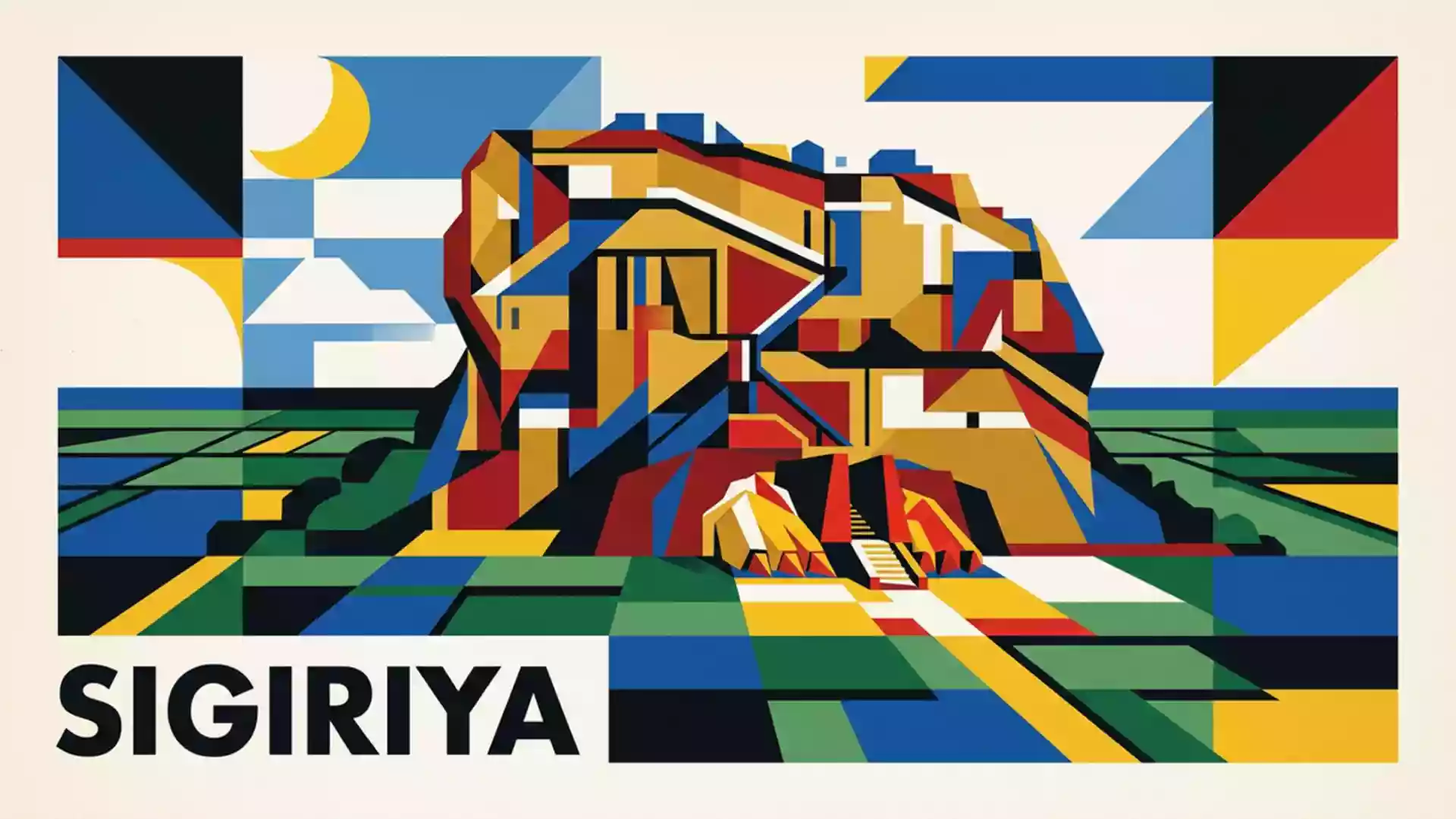
Sigiriya and the lion rock fortress above Sri Lanka’s plains
Published on 09/03/2026 at 13:13 | Editorial responsibility: Rafael Müller, Editor-in-Chief AD HOC NEWS
Sigiriya in central Sri Lanka is dominated by a vast rock fortress, where a granite monolith carries the remains of a fifth?century royal citadel high above the surrounding plains. Built during the reign of King Kashyapa I in the late fifth century, the site combines palaces, gardens and waterworks in a dense ensemble that has earned it recognition as the Ancient City of Sigiriya on the UNESCO World Heritage List.
A royal citadel on Lion Rock
The core of Sigiriya is a pillar of rock rising from the flatlands of Sri Lanka’s Central Province, its summit reshaped into a fortified palace during the reign of King Kashyapa I between 477 and 495 CE.late 5th century palace The official World Heritage description records the ruins of this capital lying on the steep slopes and at the top of a granite peak known as Lion’s Rock, which stands prominently above the forest in every direction.Lion’s Rock granite peak Approaching the rock, visitors first encounter the foundations of the lower city, where brick and stone structures are interlaced with pools and channels that indicate a carefully planned royal centre.
Climbing towards the summit, the path narrows as it reaches the lion terrace, where the staircase once rose between colossal carved paws that gave Sigiriya its name as “Lion Rock”.monumental lion paws Above this terrace the upper palace occupies the flattened crown of the rock, with the remains of walls, cisterns and terraces set against wide views over the forests and lakes of the Cultural Triangle. Even in ruin, the geometry of platforms and retaining walls makes clear that this summit was shaped as the focal point of Kashyapa’s short?lived capital.
Gardens, waterworks and painted rock faces
At the foot of the rock, Sigiriya presents an intricate system of gardens and water features, laid out with an axial symmetry that has drawn comparison with other royal complexes of the first millennium. The Sri Lanka Tourism authorities describe elaborately planned urban spaces around the base of the rock, combined with sophisticated engineering and irrigation works reaching up to the summit palace.complex urban planning and irrigation Rectangular pools, stone?lined channels and terraces step up towards the boulder gardens, where natural rock outcrops are integrated into the circulation routes.
Halfway up the western face of the rock, a protected ledge shelters the famous frescoes of Sigiriya, showing figures interpreted as celestial beings or courtly women, painted in vivid pigments on the sheer surface.rock paintings of apsaras From this gallery, a narrow path runs along a masonry wall known as the Mirror Wall, whose polished surface once reflected both light and inscriptions. Higher still, the summit preserves water tanks hewn into the rock and the outlines of audience halls and courtyards, linking the hydraulic works of the lower city with those at the top. Taken together, these elements have led local heritage authorities to describe Sigiriya as a masterpiece of urban planning, hydraulic engineering and landscape architecture.masterpiece of planning and engineering
From royal stronghold to World Heritage site
Sigiriya’s origins as a royal stronghold lie in the political struggles of the fifth century, when King Kashyapa I shifted his capital to this defensible rock in Sri Lanka’s central Matale District.capital in the Matale District Historical summaries note that the royal palace complex on Lion’s Rock was occupied only for a few decades before the king’s defeat, after which the site ceased to function as the main seat of royal power.brief reign of King Kashyapa The stone and brick remains at the summit date from this phase, while traces of earlier occupation survive in the rock shelters around the base, where monks used caves as dwellings.
Later, the rock fortress became a Buddhist monastery complex and retained religious significance until about the fourteenth century, before eventually falling into disuse and obscurity.monastery use until the 14th century In the twentieth century, archaeological work and historical research brought Sigiriya back into focus as a major heritage site. In 1982 the Ancient City of Sigiriya was inscribed on the UNESCO World Heritage List as a cultural site under criteria ii, iii and iv, recognising its combination of architecture, gardens, art and town planning.UNESCO inscription in 1982 Subsequent conservation efforts have stabilised the rock paths, preserved the frescoes and clarified the layout of the lower city, making the ensemble legible for visitors.
Visiting Sigiriya: what travellers from Western Europe should know
- Sigiriya lies in Sri Lanka’s Central Province, in the Matale District near the town of Dambulla, and is reached by road from other parts of the island.
- The ascent to the summit runs along stairways and metal walkways attached to the rock face, with numerous flights of steps and exposed sections.
- The lower city includes landscaped gardens and pools set on level ground, while the boulder gardens and upper paths involve uneven surfaces and short climbs across rock.
- The official language is Sinhala and the currency is the Sri Lankan rupee.
- Entry requirements depend on your nationality; UK travellers can check the FCDO travel advice at gov.uk/foreign-travel-advice, Irish travellers the Department of Foreign Affairs at ireland.ie.
Searching for Sigiriya on social platforms
These links open searches for Sigiriya on each platform.
Frequently asked questions about Sigiriya
Where is Sigiriya located in Sri Lanka?
Sigiriya is in Sri Lanka’s Central Province, in the Matale District near Dambulla, within the area often described as the country’s Cultural Triangle.
What should visitors expect during a visit to Sigiriya?
Visitors encounter landscaped gardens, archaeological remains of a royal city and a sustained climb using stairways and walkways that lead to the summit ruins on Lion’s Rock.
What makes Sigiriya distinctive among historic sites?
Sigiriya combines a fifth?century palace complex, integrated gardens, rock paintings and hydraulic works on and around a single towering granite monolith recognised as a UNESCO World Heritage site.