
Sigiriya and its lion rock fortress in Sri Lanka
Published on 09/16/2026 at 13:22 | Editorial responsibility: Rafael Müller, Editor-in-Chief AD HOC NEWS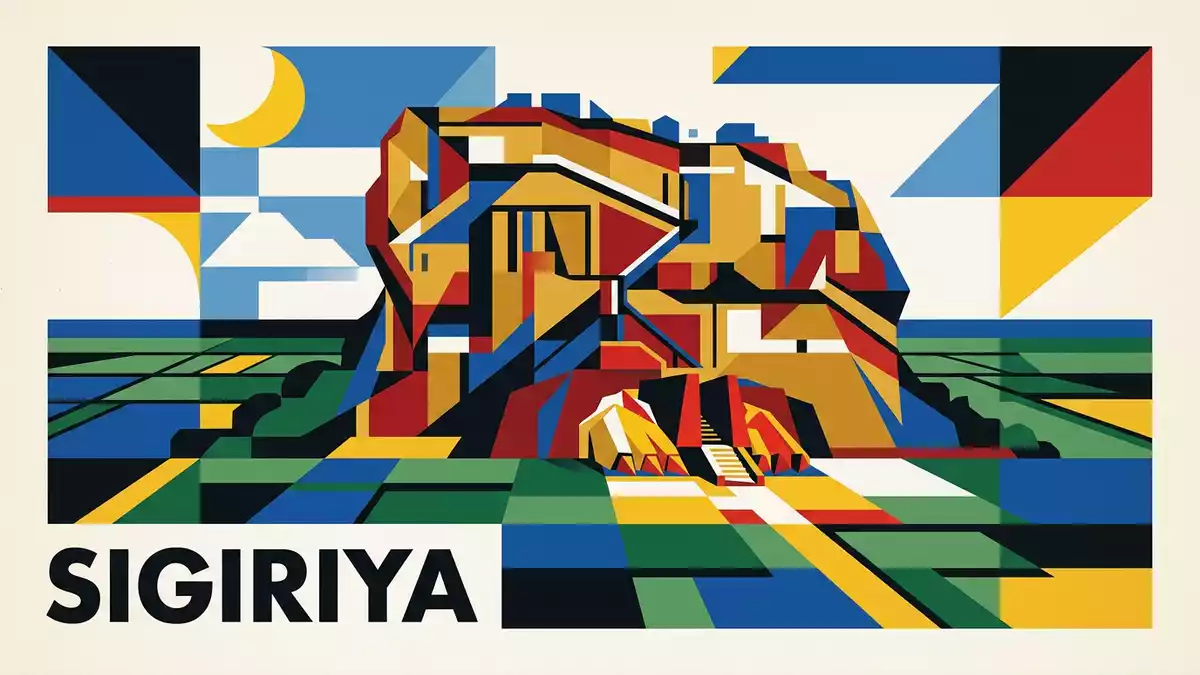
Sigiriya in central Sri Lanka is dominated by a massive rock fortress where King Kashyapa I created a royal palace complex in the late fifth century CE. The site, recognised as the Ancient City of Sigiriya and inscribed as a UNESCO World Heritage Site in 1982, combines monumental architecture with landscaped gardens and cliff-side art on and around a single granite monolith.
The lion rock and its royal summit
The defining feature of Sigiriya is a steep-sided rock pillar rising about 180 to 200 m (590 to 656 ft) above the surrounding plain, its upper surface levelled to form the platform for a palace and defensive stronghold built by Kashyapa I, who reigned from 477 to 495 CE.King Kassapa I (477–95) The flat-topped summit holds the remains of walls, pools and foundations that mark the footprint of this royal residence and its associated structures.ruins of an ancient stronghold
The rock is known in both Sinhala and English as Lion Rock or Lion Mountain, a name tied to the sculpted lion gateway on its northern side. At the base of the upper stairway stand enormous stone and brick lion paws that frame the main flight of steps to the summit, recalling descriptions of a lion-shaped entrance used in the period when the palace was occupied.monumental pair of lion paws From this point the ascent continues along staircases attached to the rock face, eventually emerging onto the summit terrace where the plan of the palace is raised above the forests of the Central Province.
Gardens, water and the Mirror Wall
At the foot of Lion Rock spreads a complex of gardens and water features laid out along a formal axis, regarded as a sophisticated example of urban planning and landscape design from the first millennium CE.Sigiriya is considered to be one of the most important urban planning sites The approach to the rock leads visitors through symmetrical pools, channels and island-like platforms that form the lower city, a planned environment combining hydraulic engineering with ornamental planting within the wider woodland.
Midway up the western face of the rock runs the Mirror Wall, a plastered surface that was once polished so highly that it reflected the king and his surroundings.Mirror Wall Over centuries this wall became a writing surface for visitors, and preserved inscriptions from around the eighth to eighteenth centuries record poetry and short observations in early Sinhalese, offering one of the earliest sustained corpora of vernacular graffiti in Sri Lanka.ancient texts in the Sinhalese language The combination of engineered gardens below and inscribed wall above makes the climb as much a passage through cultural history as a physical ascent.
Frescoes on the western rock face
Sigiriya is also renowned for its cliff paintings of female figures, preserved in a rock shelter on the western side of Lion Rock and along parts of the adjacent wall. These frescoes, created in the fifth century on a prepared plaster surface, depict richly adorned women in energetic poses, carrying flowers and jewellery against a coloured background.Sigiriya Maidens frescoes Early accounts speak of a vast painted gallery stretching across the entire western face, and measurements in modern studies refer to a painted zone roughly 140 m (460 ft) long and 40 m (130 ft) high.western face of the rock, an area 140 m long and 40 m high
Only a small proportion of the original figures survives, protected from weathering by the overhang of the rock. The surviving group, numbering around twenty-one to twenty-two painted women, has drawn comparisons with depictions of apsaras, the celestial singers and dancers of South Asian tradition, and is regarded as a central work in the history of Sri Lankan painting.rock paintings of apsaras Seen in relation to the palace remains above and the gardens below, the frescoes reinforce the sense of Sigiriya as an integrated composition of architecture, landscape and visual art assembled around one dominant rock.
Visiting Sigiriya: what travellers from Western Europe should know
- Sigiriya lies in the northern part of the Matale District in Sri Lanka’s Central Province, near the town of Dambulla, with road connections to other centres in the Cultural Triangle.
- The climb to the summit involves a long series of metal stairways and stone steps attached to the rock face, including confined sections and exposed terraces at significant height above the ground.
- The Central Province has a tropical climate, and the open ascent on Lion Rock leaves visitors exposed to sun and occasional rainfall without shelter for extended stretches.
- The official language is Sinhala and the currency is the Sri Lankan rupee.
- Entry requirements depend on your nationality; UK travellers can check the FCDO travel advice at gov.uk/foreign-travel-advice, Irish travellers the Department of Foreign Affairs at ireland.ie.
Searching for Sigiriya on social platforms
These links open searches for Sigiriya on each platform.
Frequently asked questions about Sigiriya
Where is Sigiriya and what kind of place is it?
Sigiriya is an archaeological site in Sri Lanka’s Central Province, centred on a granite rock supporting the ruins of a fifth-century royal fortress and palace complex.
What should visitors expect on a visit to Sigiriya?
A visit combines walking through formal water gardens, ascending stairways on and within the rock, passing the Mirror Wall and frescoes, and exploring palace remains on the summit terrace.
What makes Sigiriya distinctive among Sri Lanka’s heritage sites?
Sigiriya stands out for the way its UNESCO-listed ancient city unites monolithic geology, planned gardens, hydraulic engineering and figurative frescoes around a single lion-themed rock stronghold.


