

Sigiriya and its lion rock fortress in Sri Lanka
Published on 08/22/2026 at 19:57 | Editorial responsibility: Rafael Müller, Editor-in-Chief AD HOC NEWS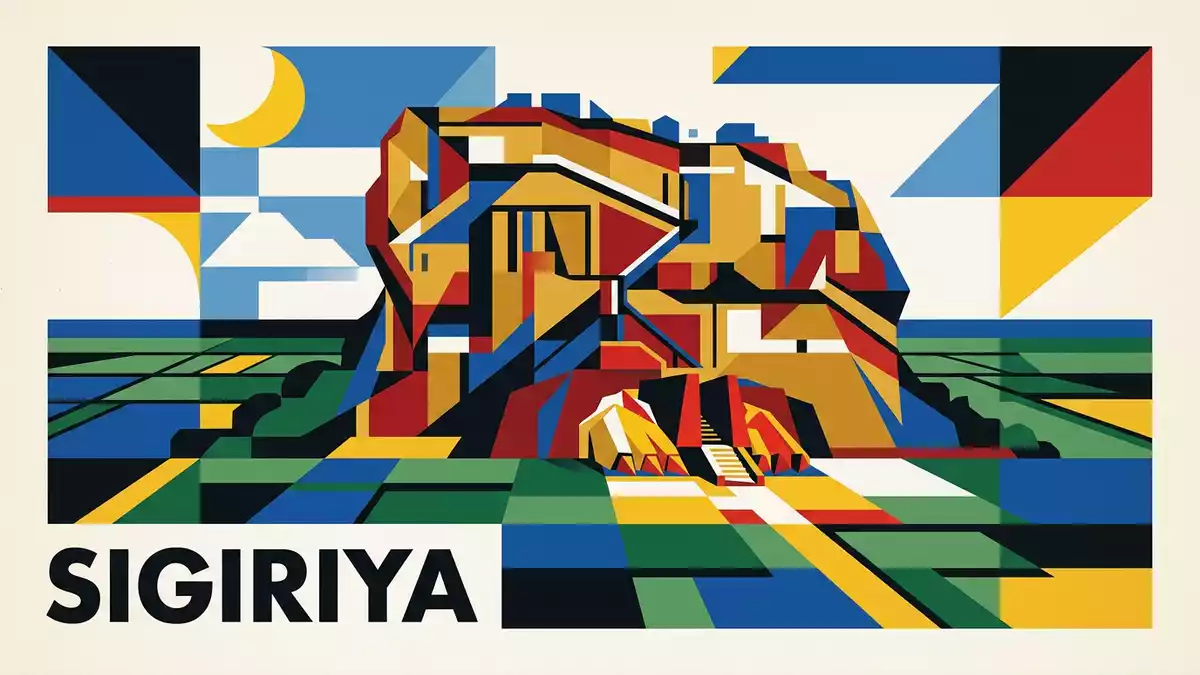
Sigiriya in central Sri Lanka is dominated by a vast column of rock that carries the remains of a fifth-century royal fortress and palace on its summit. This “Lion Rock” landscape, created under King Kashyapa I between 477 and 495 CE, combines architecture, water gardens and cliff-side frescoes in a single planned complex that later became an important Buddhist monastery.King Kashyapa I
The lion rock and its ancient city plan
The defining feature of Sigiriya is the monolithic rock pillar that rises above the surrounding plain, forming the high platform for a royal palace and stronghold in the late fifth century CE.rock pillar stronghold The rock, often described as a lion because of the monumental sculpted form at its base, dominates the remains of an ancient city laid out around its slopes and foothills.
At the foot of the rock, visitors encounter the foundations of a carefully planned urban layout, including symmetric gardens aligned on axial paths and pools. Sigiriya is recognised as an example of sophisticated early first-millennium urban planning, with an integrated system of terraced gardens, water features and routes leading towards the ascent of the rock.urban planning site
Kashyapa’s fifth-century fortress and palace
Sigiriya’s most intensive phase of construction took place under the Sinhalese king Kashyapa I, whose reign from 477 to 495 CE saw the transformation of the rock into a fortified royal residence.Kashyapa I 477–495 CE Kashyapa shifted the capital from Anuradhapura and developed Sigiriya as his citadel, placing a palace and defensive structures on the summit and creating elaborate gardens and approaches below.
The ascent to the summit runs through a sequence of built elements that reflect this royal programme: landscaped water gardens, boulder gardens among natural rock formations and galleries that approach the lion-shaped entrance to the upper palace. On the upper surface of the rock, traces of residential buildings, pools and platforms indicate a planned palace complex laid out to occupy the limited area, with stone and brick structures following the contours of the summit.ancient city of Sigiriya
Frescoes, the Mirror Wall and the monastic years
One of Sigiriya’s distinctive features lies on the western rock face, where surviving frescoes depict female figures painted directly onto the cliff surface. These paintings formed part of a larger sequence created during Kashyapa’s time and became a focus for visitors in subsequent centuries, with poetry and commentary later inscribed nearby.frescoes and poetry
Below the frescoes, a rock face section known as the Mirror Wall carries graffiti from travellers between about the eighth and tenth centuries, recording impressions of the paintings and the site. After Kashyapa’s death in 495 CE, Sigiriya ceased to function as a royal capital and took on a new role as a Buddhist monastery complex, with monastic use continuing for several centuries before the city was eventually abandoned and reclaimed by forest.monastery until the fourteenth century
Visiting Sigiriya: what travellers from Western Europe should know
- Sigiriya lies in the Central Province of Sri Lanka, near the town of Dambulla in the Matale District, reached overland from other parts of the island.
- The approach to the summit involves stairways and galleries on the rock, including sections of narrow steps that gain significant height from the base to the palace area.
- The site forms part of Sri Lanka’s so?called Cultural Triangle, with other historic centres such as Anuradhapura and Polonnaruwa within the broader region.
- The official language is Sinhala and the currency is the Sri Lankan rupee.
- Entry requirements depend on your nationality; UK travellers can check the FCDO travel advice at gov.uk/foreign-travel-advice, Irish travellers the Department of Foreign Affairs at ireland.ie.
Searching for Sigiriya on social platforms
These links open searches for Sigiriya on each platform.
Frequently asked questions about Sigiriya
Where is Sigiriya and what kind of site is it?
Sigiriya is an ancient rock fortress and palace complex in Sri Lanka’s Central Province, centred on a high monolithic rock and its surrounding archaeological remains.ancient rock fortress
What should visitors expect on a visit to Sigiriya?
A visit involves exploring garden remains and archaeological structures at ground level, then ascending stairways and galleries on the rock to reach the summit ruins and viewing points.
What makes Sigiriya distinctive among historic sites?
Sigiriya combines a fifth-century royal palace on a high rock, planned water and boulder gardens, and cliff-side frescoes and inscriptions within one integrated archaeological landscape.Sigiriya World Heritage


