
Sigiriya and its lion rock fortress in central Sri Lanka
Published on 09/09/2026 at 11:35 | Editorial responsibility: Rafael Müller, Editor-in-Chief AD HOC NEWS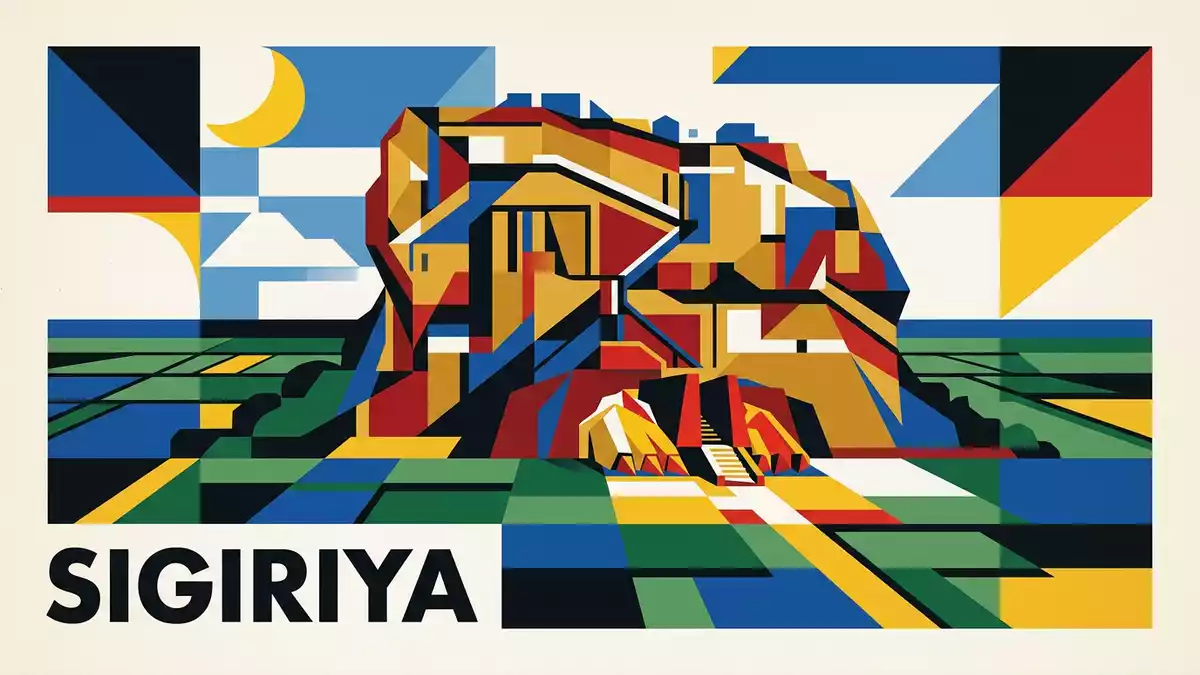
Sigiriya in central Sri Lanka is defined by a vast freestanding rock pillar that carries the ruins of a fifth?century royal complex high above the surrounding plains. The ancient fortress and palace on its summit, the formal gardens at its base and the celebrated rock paintings on its western face together form one of South Asia’s most distinctive archaeological landscapes.
A royal stronghold on a granite monolith
Sigiriya, also known as Lion Rock, rises from the plains of the Matale District in Sri Lanka’s Central Province near the town of Dambulla. The rock is a massive column of granite that reaches about 200 m (656 ft) above the surrounding land, with its flat-topped summit forming the natural platform for the ruins of an upper palace complex.massive column of granite
The site is traditionally dated to the reign of King Kassapa I in the late fifth century CE, when the rock became the centre of a new royal residence and fortress.King Kassapa I The ruins on the summit preserve the outlines of palace foundations, terraces and pools, while the steep approaches up the rock are marked by defensive walls, gateways and long flights of masonry steps cut into or built against the cliff.
Gardens, waterworks and the lion gateway
At the foot of the rock, Sigiriya is framed by an elaborate system of gardens laid out on largely level ground, extending away from the base in a geometric pattern. These gardens combine earthworks, pools and channels and are recognised as an early example of sophisticated landscape design in Sri Lanka, including axial pathways that lead towards the rock and water features that mark key alignments.garden and water features
The ascent towards the upper levels passes through what is known as the Lion Gate, where the remains of monumental lion paws flank the start of a narrow stairway rising up the rock face.lion structure Higher up, a polished wall section called the Mirror Wall lines part of the path, once reflecting visitors and decorated by ancient inscriptions. From there, the route continues along galleries and stairways that cling to the cliff before reaching the summit plateau and the palace ruins.
Frescoes, inscriptions and World Heritage status
One of Sigiriya’s most striking features is the series of paintings of female figures on a sheltered western rock face, often interpreted as celestial beings or courtly women. These frescoes, executed in mineral pigments on plastered rock, form part of a picture gallery that once extended over a wide area and demonstrate a refined artistic tradition of the Anuradhapura period.rock paintings of women
Below the paintings, the Mirror Wall carries a long record of visitors’ verses and comments incised into its surface, giving insight into how the site was perceived in medieval centuries. Sigiriya’s archaeological remains, together with its integrated gardens and hydraulic works, led to its inscription as the Ancient City of Sigiriya on the UNESCO World Heritage List in 1982.UNESCO World Heritage List in 1982
Visiting Sigiriya: what travellers from Western Europe should know
- Sigiriya lies in Sri Lanka’s Central Province, in the Matale District near Dambulla, reached overland from other parts of the country by road transport.
- The climb from the base gardens to the summit involves long stretches of steps and metal stairways attached to the rock, with significant height gain.
- The surrounding terrain is largely lowland plain with scattered forest, so exposed sections of the ascent can feel hot under strong sun.
- The official language is Sinhala and the currency is the Sri Lankan rupee.
- Entry requirements depend on your nationality; UK travellers can check the FCDO travel advice at gov.uk/foreign-travel-advice, Irish travellers the Department of Foreign Affairs at ireland.ie.
Searching for Sigiriya on social platforms
These links open searches for Sigiriya on each platform.
Frequently asked questions about Sigiriya
Where is Sigiriya located?
Sigiriya is in the Matale District of Sri Lanka’s Central Province, on a granite outcrop near the town of Dambulla.
What should visitors expect on a visit to Sigiriya?
Visitors encounter formal gardens at the base, a steep ascent using stairways and galleries, rock paintings on the western face and palace ruins on the summit.
What makes Sigiriya distinctive among Sri Lankan heritage sites?
Sigiriya combines a towering natural rock, an integrated fifth?century palace and fortress complex, extensive gardens and renowned frescoes in a single archaeological site.


