
Shibuya Scramble Crossing, Tokio’s choreographed street spectacle
Published on 09/07/2026 at 22:31 | Editorial responsibility: Rafael Müller, Editor-in-Chief AD HOC NEWS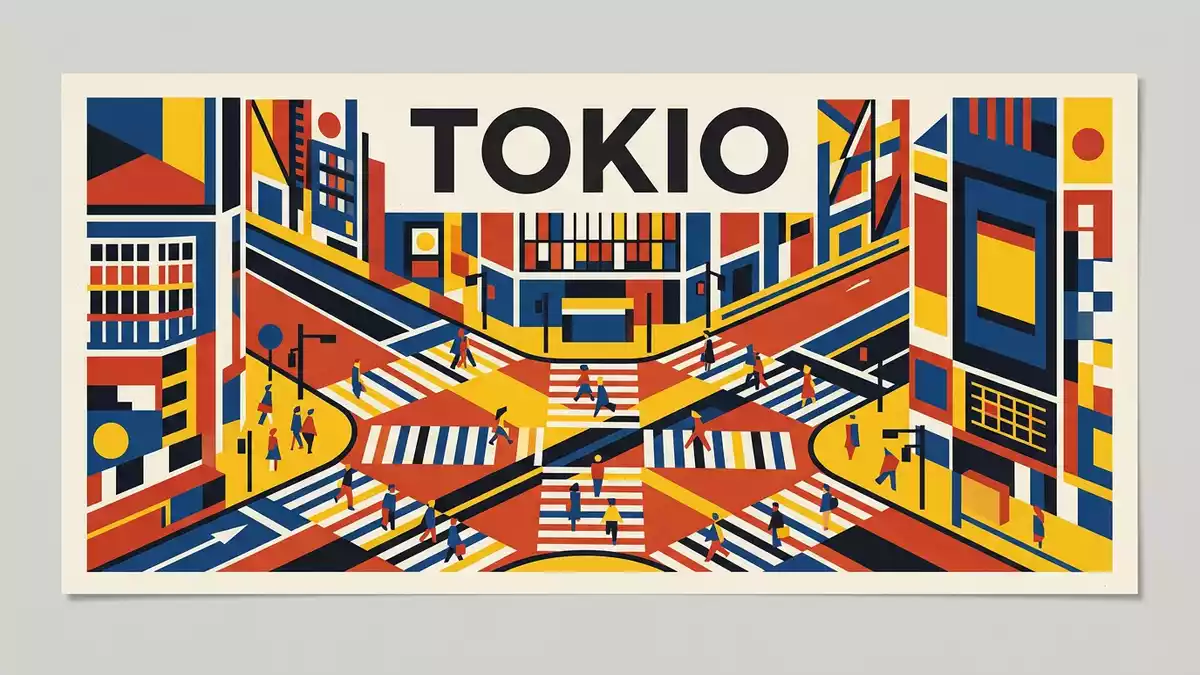
Shibuya Scramble Crossing in Tokio is a road junction turned urban spectacle, a place where ordinary pedestrian movement becomes a choreographed surge framed by towers and illuminated screens. Set directly in front of Shibuya Station in Shibuya City, this all-direction crossing has become one of the most recognisable street scenes in Japan, anchoring countless views of the district’s dense city fabric.Shibuya, Tokyo, Japan
The scramble crossing at Shibuya Station’s front door
Shibuya Scramble Crossing is a scramble-style intersection directly outside the Hachiko Exit of Shibuya Station, where all vehicle traffic halts at once and pedestrian flows move in every marked direction, including diagonally.scramble intersection directly in front of Shibuya Station's Hachik? Exit The junction sits within Shibuya City in western Tokio, with the address recorded within the Dogenzaka area just beyond the station plaza.2 Chome Dogenzaka, Shibuya City, Tokyo
Road authorities record the crossing under the utilitarian name Shibuya Ekimae Crossing, literally “Shibuya Station Front Intersection”, while the widely used Shibuya Scramble Crossing label foregrounds the distinctive all-direction pedestrian phase.official designation Shibuya-ekimae Kosaten Scramble-style phasing was introduced in 1973, turning the already busy junction of local streets into a patterned crossing sequence that stops traffic from several approaches and releases waves of people from each corner.
Geometry, traffic lanes and vantage points above the junction
The intersection brings together a five-way junction where ten traffic lanes meet, with five marked pedestrian crossings, one of them running diagonally between the corner by Hachiko Square and the side facing the QFRONT building.five-way junction where ten traffic lanes meet The diagonal crossing stretches for roughly 36 m (118 ft), giving a broad sweep of walking space that cuts across the entire junction during the scramble phase.diagonal itself is roughly 36 metres
A full traffic-light cycle at Shibuya Scramble Crossing runs to about 140 seconds, with the all-walk scramble stage occupying a little over half a minute before vehicle movement resumes.full cycle of about 140 seconds Around the junction, viewing points have been developed on upper levels of nearby buildings, including the rooftop deck called Shibuya Sky on top of Shibuya Scramble Square, which offers an overhead view of the patterned pedestrian movement across the marked crossings.Shibuya Sky rooftop observation deck
From commuter interchange to global street image
Shibuya Station itself is one of Tokio’s major railway interchanges, with JR lines such as the Yamanote Line and several Tokyo Metro and private railway services converging in a compact district; the scramble crossing grew out of this transport concentration and the dense commercial surroundings of Shibuya.Shibuya Station (JR Yamanote Line, Tokyo Metro multiple lines) Over decades, the crossing’s repeated halts and releases of foot traffic have become a defining visual emblem of the neighbourhood, with the patterned movement set against illuminated façades and large-scale advertising screens.
The crossing’s status as a much-recorded street scene owes partly to its framing by towers and signage, partly to the sheer density of people who pass through during a scramble phase, and partly to the way the all-direction movement can be seen from elevated vantage points such as café windows and rooftop decks overlooking the intersection.busiest pedestrian intersection Together, the road geometry, transport role and architectural backdrop give Shibuya Scramble Crossing a layered character: a working city junction that also serves as a staged view of Tokio’s dense urban life.
Visiting Shibuya Scramble Crossing: what travellers from Western Europe should know
- Shibuya Scramble Crossing stands directly outside the Hachiko Exit of Shibuya Station in Shibuya City, western Tokio, with JR and Tokyo Metro lines converging at the station.
- The junction is a paved multi-lane city street with marked pedestrian crossings; reaching viewpoints such as Shibuya Sky involves lifts and escalators inside high-rise buildings.
- Shibuya Scramble Crossing is surrounded by commercial towers, cafés and department stores, with Hachiko Square and its dog statue on one corner beside the station plaza.
- The official language is Japanese and the currency is the yen.
- Entry requirements depend on your nationality; UK travellers can check the FCDO travel advice at gov.uk/foreign-travel-advice, Irish travellers the Department of Foreign Affairs at ireland.ie.
Searching for Shibuya Scramble Crossing on social platforms
These links open searches for Shibuya Scramble Crossing on each platform.
Frequently asked questions about Shibuya Scramble Crossing
Where is Shibuya Scramble Crossing located in Tokio?
Shibuya Scramble Crossing is in Shibuya City, directly in front of Shibuya Station’s Hachiko Exit, with the junction recorded under the Dogenzaka address area.
What can visitors expect when they reach the crossing?
Visitors encounter a multi-lane city intersection with marked crossings in several directions, including a diagonal route, framed by towers, signage and the station plaza.
What makes Shibuya Scramble Crossing distinctive among Tokio’s streets?
Its scramble-style all-direction pedestrian phase, ten converging traffic lanes, diagonal crossing and overhead viewpoints together give the junction a choreographed, layered character.


