
Shahi Qila in Lahore, the Mughal citadel of Punjab
Published on 08/27/2026 at 21:31 | Editorial responsibility: Rafael Müller, Editor-in-Chief AD HOC NEWS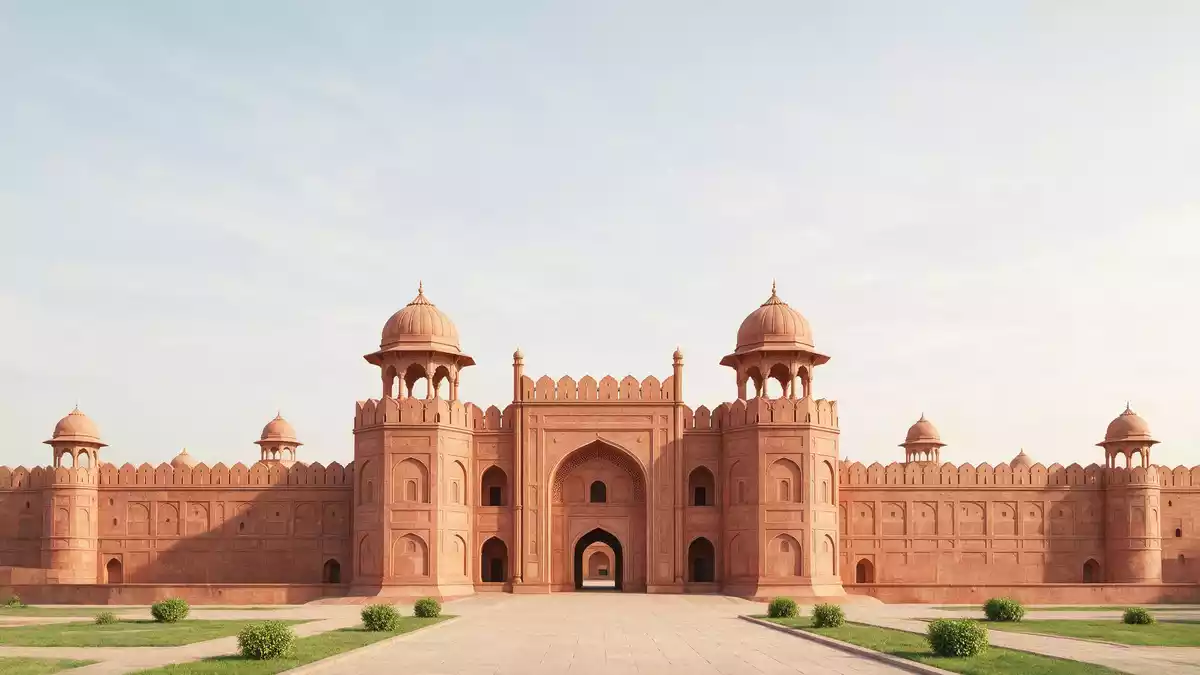
Shahi Qila in Lahore is a sprawling Mughal citadel of brick ramparts, palaces and mosques on the northern edge of the old walled city, overlooking the historic core of Lahore and the neighbouring Badshahi Mosque. The fortress, locally known as Shahi Qila and internationally as Lahore Fort, took on its present Mughal form under Emperor Akbar in the late sixteenth century, with later additions by Jahangir, Shah Jahan and Aurangzeb. It is recognised as part of the “Fort and Shalamar Gardens in Lahore” UNESCO World Heritage Site, underscoring its importance as a major monument of Mughal architecture in Pakistan.
The Mughal fortress above the old city
Shahi Qila occupies the north-western corner of Lahore’s historic core, forming a citadel at the edge of the old walled city where the urban fabric meets high fortifications and ceremonial gateways.The Fort is situated in the north west corner of the city Within its perimeter walls lie a sequence of royal spaces, from audience halls and courtyards to garden terraces and elevated pavilions overlooking the city.Lahore fortress is contemporary to Agra Fort The citadel’s plan is irregular, extending roughly along an east–west axis with major gates and bastions aligned to meet the approach from the city and the river plain.
The modern fort owes much of its layout to Akbar, who rebuilt an earlier fort on the site and replaced older clay defences with solid brick masonry, enlarging and strengthening the complex.Akbar rebuilt an earlier fort on the site Later emperors layered further structures onto this base: Jahangir introduced Persian stylistic elements; Shah Jahan added refined marble pavilions; Aurangzeb created the Alamgiri Gate on the western side, facing what is now the forecourt of Badshahi Mosque.Shah Jahan region was the age of marble Together these phases give Shahi Qila a stratified character: a single fort carrying several reigns of Mughal architectural taste.
Palaces, mosques and the Picture Wall
Within the walls of Shahi Qila, the Mughal rulers created a complex of palatial and ceremonial structures, many of which still stand as distinct elements in the ensemble. The Sheesh Mahal, or Palace of Mirrors, is one of the most celebrated interiors, with intricate decoration reflecting the refined taste of Shah Jahan’s period.Sheesh Mahal, Alamgiri Gate, Naulakha pavilion, and Moti Masjid Nearby lie the Naulakha pavilion and Moti Masjid, a small white marble mosque, forming a cluster of royal residential and devotional spaces within the fort.
Along the northern and western perimeter runs the Picture Wall, a monumental decorated wall considered one of the defining features of the fort’s architecture.the Picture Wall runs along the northern and western perimeter of Lahore Fort Stretching approximately 475 m (1,558 ft) in length and rising to an average height of about 17 m (56 ft), it is covered with vivid panels of glazed tile, fresco and other decorative techniques.Stretching approximately 475 meters in length and rising to an average height of 17 meters This vast surface of imagery is a major reason UNESCO highlighted the fort’s Outstanding Universal Value when inscribing the property in 1981.
World Heritage status and layers of history
Shahi Qila’s story reaches back before the Mughal dynasty, with fortified structures on the site recorded since at least the medieval period. The fort’s present Mughal incarnation, however, is closely associated with Akbar’s reign from 1556 to 1605 and the subsequent seventeenth-century development under his successors.Modern building of fort was constructed in 1556 Over generations, this transformed Shahi Qila into one of the key imperial residences and administrative centres of the Mughal Empire in Punjab.
In 1981, Shahi Qila and the Shalamar Gardens were jointly inscribed on the UNESCO World Heritage List as “Fort and Shalamar Gardens in Lahore”, recognised under cultural criteria i, ii and iii.Fort and Shalamar Gardens in Lahore The listing reflects both the architectural achievement of the fort complex and its role as part of a wider Mughal landscape extending towards the Shalamar Gardens.Lahore Fort: World Heritage Site Within Shahi Qila, three museums – the Mughal Museum, the Armoury Gallery and the Sikh Museum – present different phases of regional history, from imperial armour to Sikh-period artefacts, inside the historic fabric of the fort.The Lahore Fort houses three museums
Visiting Shahi Qila: what travellers from Western Europe should know
- Shahi Qila stands in the north-western corner of old Lahore, close to Badshahi Mosque and Hazuri Bagh, and is reached through the city’s streets by road or local transport.
- Within the fort, movement between terraces, courtyards and ramparts involves stairways and level changes, and some sections follow narrow passageways typical of historic citadel architecture.
- The fortress lies on the plains of Punjab, with summer heat and winter fog as characteristic seasonal conditions, so clothing and pacing on exposed walls and courtyards respond to the regional climate.
- English is widely used in Pakistan alongside Urdu, and the national currency is the Pakistani rupee (PKR) for any purchases around Shahi Qila.
- Entry requirements depend on your nationality; UK travellers can check the FCDO travel advice at gov.uk/foreign-travel-advice, Irish travellers the Department of Foreign Affairs at ireland.ie.
Searching for Shahi Qila on social platforms
These links open searches for Shahi Qila on each platform.
Frequently asked questions about Shahi Qila
Where is Shahi Qila located within Lahore?
Shahi Qila stands at the north-western edge of Lahore’s old walled city, near Badshahi Mosque and Hazuri Bagh, forming a citadel above the historic urban core.
What can visitors expect inside Shahi Qila?
Visitors encounter ramparts, courtyards, palaces, mosques and museums, including spaces such as Sheesh Mahal and Moti Masjid, along with views over the old city.
What makes Shahi Qila distinctive among Mughal sites?
The combination of Akbar’s brick fortifications, Shah Jahan’s marble pavilions, Aurangzeb’s Alamgiri Gate and the extensive Picture Wall gives Shahi Qila a layered Mughal character.


