
Seven Mile Beach in Negril: Jamaica’s long arc of sand and sea
Published on 09/16/2026 at 09:17 | Editorial responsibility: Rafael Müller, Editor-in-Chief AD HOC NEWS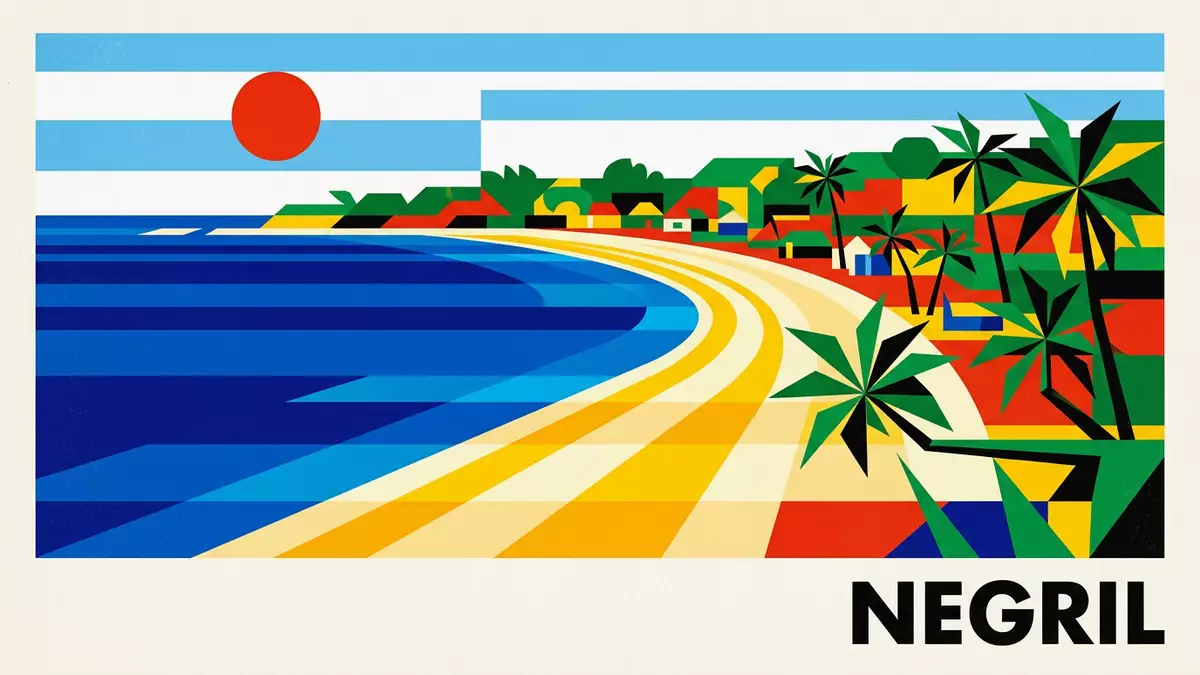
Seven Mile Beach in Negril is a long, pale strip of sand running beside the Caribbean Sea on Jamaica’s western coast, framed by low buildings, palms and shallow, clear water. It forms the main shoreline of Negril, a resort town whose bays have given this beach its name and whose relaxed, low-rise profile leaves the sand and sea as the dominant impression.
A long Caribbean shoreline shaped by two bays
Seven Mile Beach lies on the western side of Jamaica, along the coast at Negril in Westmoreland Parish, where the land meets the Caribbean in a broad, shallow arc.The beach’s length is closely tied to the two bays known as Bloody Bay and Long Bay, whose combined sandy shoreline has given rise to the Seven Mile name. Negril itself sits near the boundary between Westmoreland and Hanover parishes, with Seven Mile Beach stretching north and south away from the town centre and forming the resort’s principal waterfront.This makes it one of the most substantial continuous stretches of sand on the island’s west coast.
Rather than a single uniform strand, Seven Mile Beach is understood as a continuous sequence of sandy sections that follow the curve of the coast. At the northern end, the shoreline runs along Bloody Bay, which is described as roughly 2 miles long, while to the south it follows Long Bay, a bay just under 5 miles in length.Together these bays form the long, low-lying beach that visitors know as Seven Mile Beach. The sandbar that carries the beach lies only a short distance from the low townscape, so accommodation, small businesses and local roads sit just behind the line of palms and beachside plots.
Sand, water and the everyday landscape of Negril’s main beach
The character of Seven Mile Beach is defined by its physical setting: soft, light-coloured sand, shallow water near the shore and a gently shelving seabed that keeps the waves low and the water calm.The beach runs in an almost straight line along the western shore of the island, backed for much of its length by a modest dune, palms and dense tropical vegetation. Behind this green fringe, a line of hotels, guesthouses, bars and restaurants occupies narrow plots that open directly onto the sand, creating a setting where the built edge and the beach are closely interwoven.
Despite the alignment of buildings and businesses, the sand itself remains a public space.Seven Mile Beach is described as a public beach under Jamaican law, with sections in front of resorts providing direct access for guests while other stretches are reached from side streets and beach entrances. The shoreline’s width varies, but the basic pattern stays similar: a band of soft sand with the sea to one side and trees, simple structures and low fences to the other. Toward Negril Point, a rocky headland breaks the sand and marks a transition toward cliffs and deeper water further south and west, where the coast takes on a more rugged character.
How Seven Mile Beach fits into Negril’s wider coast
Seven Mile Beach is only one part of Negril’s coastal landscape, which combines long sandbars with rocky promontories and cliffs. The beach occupies the broad bays to the north and south of the town, while the West End area beyond Negril Point is characterised by limestone cliffs and deeper water at the foot of guesthouses and small resorts.In this West End section the coast lacks a continuous sandy fringe; swimming there generally starts from platforms or steps cut into the rock rather than from a conventional beach. The result is a clear visual contrast between the level, sandy expanses of Seven Mile Beach and the broken, vertical stone faces further along the shore.
A lighthouse stands near the western extremity of Negril’s coast, close to the end of the beach and the beginning of the cliff zone.This lighthouse marks the island’s western tip and provides a reference point for understanding where the long beach gives way to rockier scenery. From the sand near the southern end of Seven Mile Beach, the cliffs and lighthouse lie within sight, giving visitors a sense of the wider coastal setting and the way the shoreline changes character over a relatively short distance.
Visiting Seven Mile Beach: what travellers from Western Europe should know
- Seven Mile Beach runs along the coast at Negril on the western side of Jamaica, reached by road from Montego Bay and located beside Norman Manley Boulevard.
- The terrain is low and sandy, with flat ground along most of the beach and informal paths through palms and vegetation leading from accommodation and side streets to the shoreline.
- The official language is English and the currency is the Jamaican dollar.
- Entry requirements depend on your nationality; UK travellers can check the FCDO travel advice at gov.uk/foreign-travel-advice, Irish travellers the Department of Foreign Affairs at ireland.ie.
Searching for Seven Mile Beach on social platforms
These links open searches for Seven Mile Beach on each platform.
Frequently asked questions about Seven Mile Beach
Where is Seven Mile Beach located?
Seven Mile Beach is on Jamaica’s western coast at Negril in Westmoreland Parish, following the shoreline of Bloody Bay and Long Bay beside the Caribbean Sea.
What should visitors expect on a visit to Seven Mile Beach?
Visitors encounter a long, low-lying beach of soft sand and calm, shallow water, with palms, vegetation and a continuous line of small resorts and businesses just behind the shoreline.
What makes Seven Mile Beach distinctive compared with other Jamaican beaches?
Its distinguishing feature is the extended, gently curving sandbar formed by two bays, creating one of the longest continuous beaches on Jamaica’s west coast and a broad, open coastal landscape.


