Serengeti National Park and the endless Tanzanian plains
Published on 09/08/2026 at 21:23 | Editorial responsibility: Rafael Müller, Editor-in-Chief AD HOC NEWS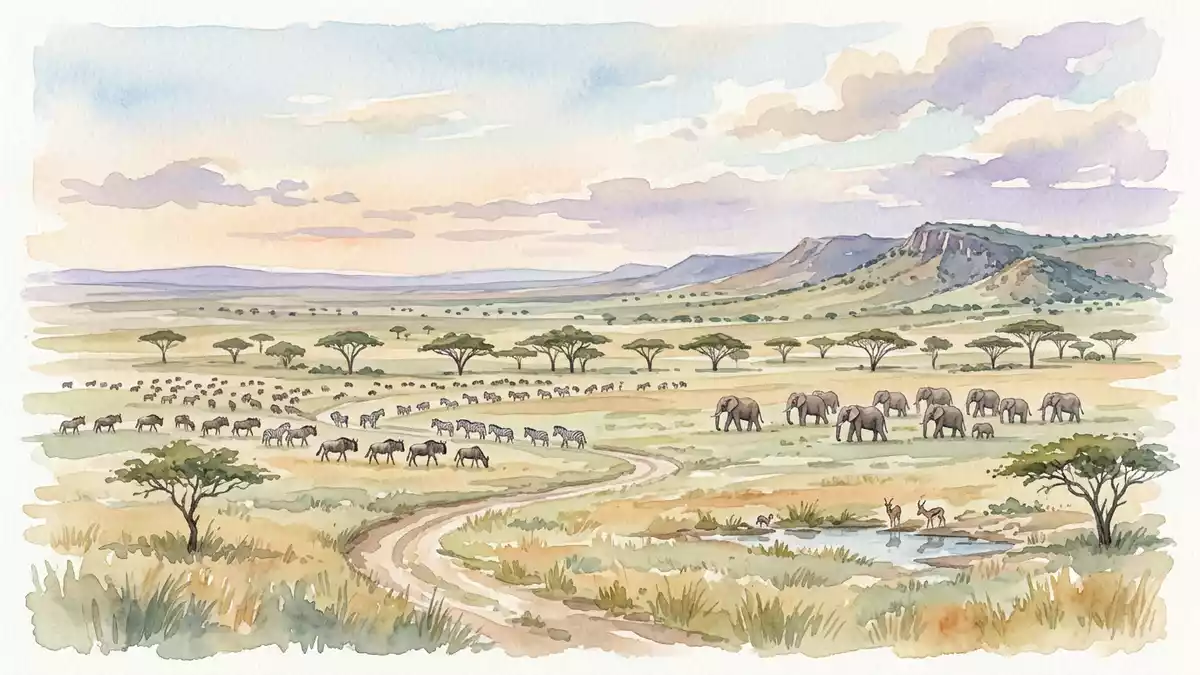
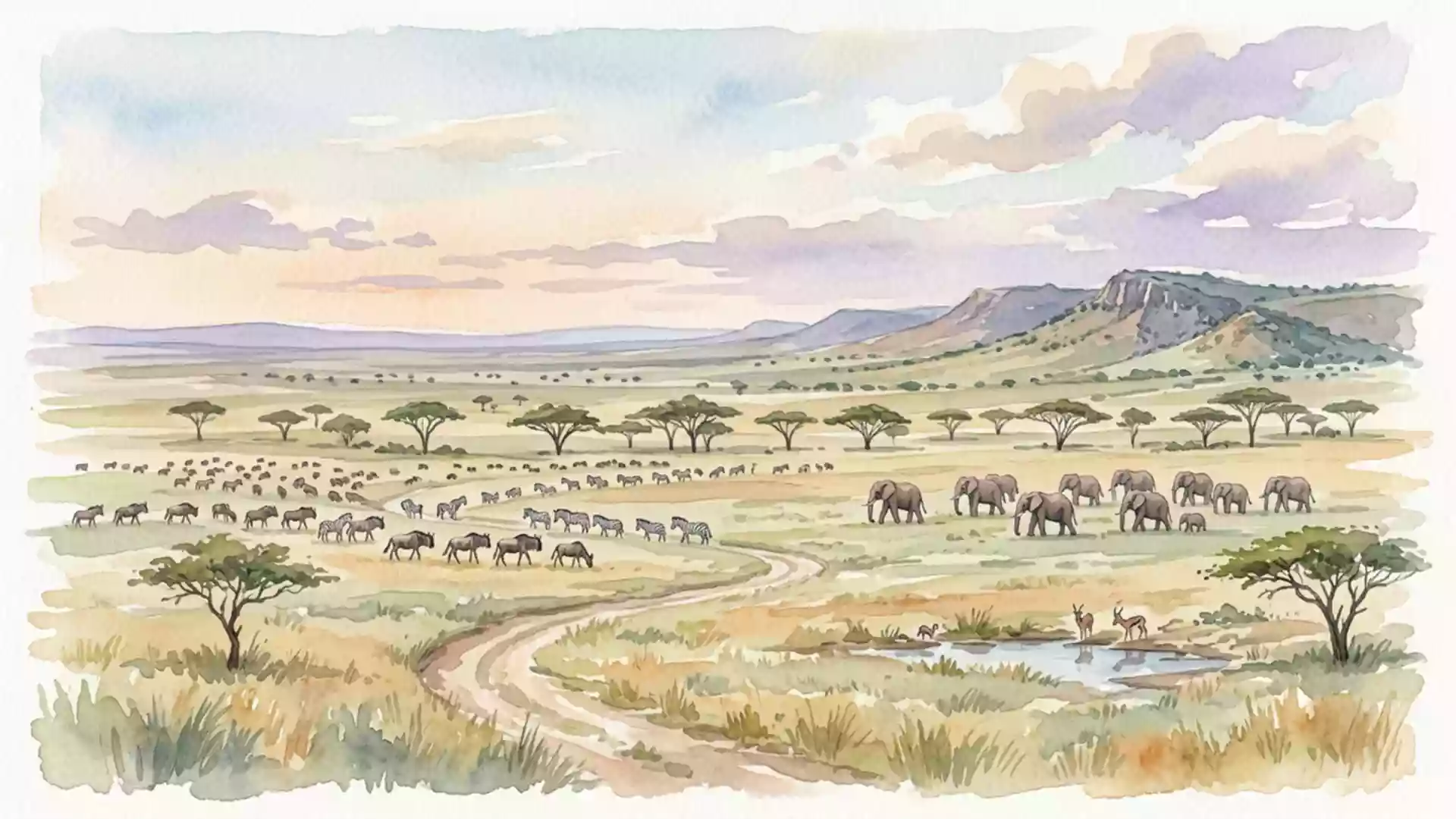
Serengeti National Park in northern Tanzania is defined by open plains that merge into woodlands and river valleys, creating one of Africa’s largest continuous protected landscapes where wildlife still dominates the horizon.
From game reserve to World Heritage landscape
The Serengeti was first protected as a game reserve in 1929, reflecting early efforts to safeguard lion populations on the plains.Serengeti Game Reserve declared In 1951 it was formally gazetted as Serengeti National Park, at that time including the Ngorongoro highlands before the conservation area was separated later in the decade.National park established in 1951
The park gained international recognition when it was inscribed on the UNESCO World Heritage List in 1981, under natural criteria that highlight both its sweeping scenery and rich biodiversity.World Heritage inscription in 1981 Today Serengeti National Park forms the core of the wider Serengeti–Ngorongoro biosphere reserve, a mosaic of protected areas that continues north into Kenya’s Masai Mara National Reserve and south into Tanzanian reserves such as Maswa.Serengeti–Ngorongoro biosphere reserve
Scale of the plains and the Serengeti ecosystem
Serengeti National Park covers around 14,750 to 14,763 km² (about 5,700 sq mi) of protected terrain, placing it among the largest national parks in East Africa.Park area about 14,763 km² Across this area, grassland plains, savanna, riverine forest and patches of woodland create a varied environment where grazing herds and predators move between seasonal feeding grounds.Mix of plains and woodland
The wider Serengeti ecosystem extends beyond the park’s boundaries to include neighbouring reserves and conservation areas on both sides of the Tanzania–Kenya border, together covering tens of thousands of square kilometres.Centre of the Serengeti ecosystem Within the park, central districts such as Seronera lie close to major river systems and serve as focal points for wildlife viewing, with grassland stretching out in every direction and kopjes – isolated rocky outcrops – rising from the plain.
Wildlife migrations and life on the plains
The Serengeti is closely associated with a large-scale migration of grazing mammals that circulates through the ecosystem in response to rainfall and grass growth.Migration defines the ecosystem Vast herds of wildebeest and zebra follow this cycle across the plains and into adjoining conservation areas, with predators such as lions and other carnivores tied to the movement of their prey.
Beyond the well-known herds, Serengeti National Park supports a wide range of species typical of East African savanna, from antelope and giraffe to numerous bird species, many of which depend on specific habitats within the mosaic of grassland, rivers and woodlands.Habitat mosaic and wildlife The continuity of protected land across the ecosystem allows these animals to move between dry-season refuges and wet-season grazing areas without crossing heavily developed terrain.
Visiting Serengeti National Park: what travellers from Western Europe should know
- Serengeti National Park lies in northern Tanzania, west of the Ngorongoro Conservation Area and south of Kenya’s Masai Mara National Reserve, with Seronera acting as a central hub.
- The landscape consists of open grassland and rolling savanna broken by river valleys and scattered rocky outcrops, and travel within the park generally follows dirt roads and tracks rather than paved routes.
- The official language is Swahili and the currency is the Tanzanian shilling.
- Entry requirements depend on your nationality; UK travellers can check the FCDO travel advice at gov.uk/foreign-travel-advice, Irish travellers the Department of Foreign Affairs at ireland.ie.
Searching for Serengeti National Park on social platforms
These links open searches for Serengeti National Park on each platform.
Frequently asked questions about Serengeti National Park
Where is Serengeti National Park?
Serengeti National Park lies in northern Tanzania, forming part of the Serengeti ecosystem between the Ngorongoro highlands and the Kenya border.
What should visitors expect on a trip to Serengeti?
Visitors travel through extensive grassland, savanna and river valleys, with wildlife commonly visible across the plains and access focused around areas such as Seronera.
What makes Serengeti National Park distinctive?
The combination of a very large protected area, long-recognised wildlife migration and its status as a World Heritage Site gives the Serengeti a central role in East African conservation.