
Serengeti National Park and the endless migration across Tanzania
Published on 08/29/2026 at 07:38 | Editorial responsibility: Rafael Müller, Editor-in-Chief AD HOC NEWS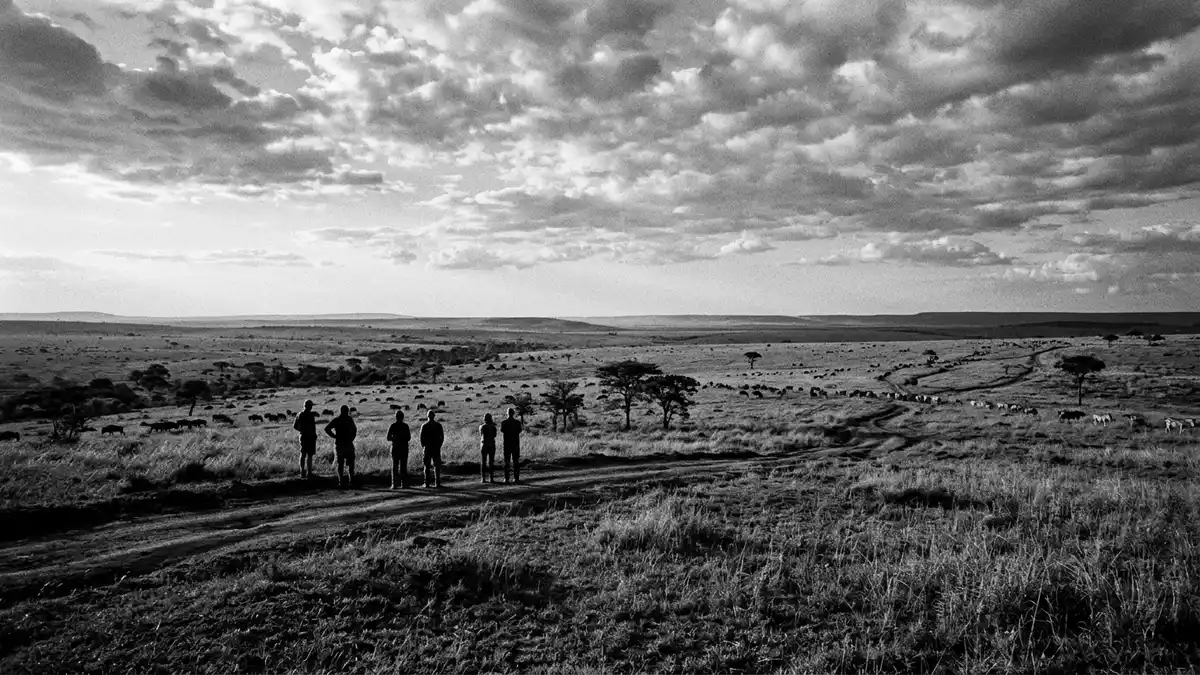
Serengeti National Park in northern Tanzania is defined by open grassland and the movement of animals across it, a protected landscape where plains herds and predators share a vast savannah ecosystem.
Endless plains and a protected African savannah
Serengeti National Park lies on the Serengeti Plain in north-central Tanzania, contiguous with the border of Kenya and extending towards Lake Victoria to the west.north-central Tanzania The park covers an area of about 14,763 km² (5,700 sq mi), forming one of the largest continuous conservation landscapes in East Africa.approximately 14,763 km² Elevations inside Serengeti National Park range from roughly 920 m to 1,850 m (3,020 to 6,070 ft), with gently undulating plains rising towards wooded ridges and volcanic highlands on its margins.rises from 920 m to 1,850 m
The park was formally established as a national park in 1951, following earlier decades as a game reserve, and it was inscribed on the UNESCO World Heritage List in 1981 for its ecological significance.established in 1951World Heritage List in 1981 Serengeti National Park forms part of a wider transboundary ecosystem that includes the Ngorongoro Conservation Area in Tanzania and the Maasai Mara National Reserve just across the border in Kenya, creating a mosaic of protected land for migrating wildlife.contiguous with Ngorongoro and Maasai Mara
The Great Migration and life on the Serengeti
Serengeti National Park is closely associated with large herds of plains animals, especially wildebeest, zebras and gazelles, which move across its grasslands in search of grazing and water.
The wider Serengeti ecosystem supports over one million wildebeest, hundreds of thousands of zebras and large numbers of Thomson’s gazelles on an annual circuit that spans Tanzania and Kenya, an animal migration recognised for its scale in the park’s World Heritage inscription.largest remaining unaltered animal migration The presence of such numerous herbivores supports an extraordinary density of predators, and Serengeti National Park is known for sustaining one of the largest lion populations in Africa alongside cheetahs, spotted hyenas and other carnivores.largest lion population in Africa
Within the park, plains and woodland support different assemblages of wildlife, from elephants and giraffes in the more wooded northern areas to Nile crocodiles and hippopotamuses along the rivers that drain towards Lake Victoria.Nile crocodiles and hippopotamus The park also supports hundreds of bird species, from large ground-dwelling birds on the grasslands to raptors using thermals above the plains, making Serengeti National Park an important destination for observing African savannah ecology.
Landscapes, kopjes and regions of the park
The terrain of Serengeti National Park is widely associated with expansive grassland plains, known in the local Maasai language by a word meaning “endless plains”, interspersed with scattered trees and rock formations.
To the south of the park, open Serengeti Plains form an extensive short-grass area where grazing herds congregate, particularly in periods when rain has produced fresh growth.Serengeti Plains to the south The western corridor follows river valleys towards Lake Victoria, with gallery forest and wetlands supporting crocodiles and other riverine species, while the northern sector is dominated by open woodland where elephants and giraffes are frequently present.Western Corridor and Northern Serengeti
Across these regions, distinctive rocky outcrops known as kopjes rise from the plains, formed from ancient granite and serving as prominent features in the landscape as well as vantage points and resting places for lions.kopjes as key natural features The combination of treeless grassland, scattered acacia woodland and kopjes under wide skies gives Serengeti National Park its characteristic appearance, with long horizons that emphasise both the scale of the land and the flow of animals across it.
Visiting Serengeti National Park: what travellers from Western Europe should know
- Serengeti National Park lies in northern Tanzania in the Mara and Simiyu regions, reached from towns such as Arusha by road and air links serving airstrips within the park.
- The park landscape consists largely of open grassland, with sections of acacia woodland and rocky kopjes; movement on foot around designated areas can involve uneven ground and exposure to sun.
- Serengeti National Park forms part of a wider conservation area connected to Ngorongoro Conservation Area and the Maasai Mara National Reserve in Kenya, so multi-day itineraries often link these neighbouring reserves.
- The official language in Tanzania is Swahili alongside English, and the national currency is the Tanzanian shilling.
- Entry requirements depend on your nationality; UK travellers can check the FCDO travel advice at gov.uk/foreign-travel-advice, Irish travellers the Department of Foreign Affairs at ireland.ie.
Searching for Serengeti National Park on social platforms
These links open searches for Serengeti National Park on each platform.
Frequently asked questions about Serengeti National Park
Where is Serengeti National Park located?
Serengeti National Park is in north-central Tanzania on the Serengeti Plain, bordering Kenya and lying west of Ngorongoro Conservation Area.
What should visitors expect on a visit to Serengeti National Park?
Visitors encounter extensive grassland, woodland and river landscapes inhabited by large herds of grazing animals and predators such as lions, cheetahs and hyenas.
What makes Serengeti National Park distinctive among African parks?
Its scale, the density of wildlife and the annual migration of wildebeest, zebras and gazelles across an open savannah ecosystem give Serengeti National Park a distinctive character.


