
Sequoia National Park and its forest of giant trees
Published on 09/22/2026 at 15:34 | Editorial responsibility: Rafael Müller, Editor-in-Chief AD HOC NEWS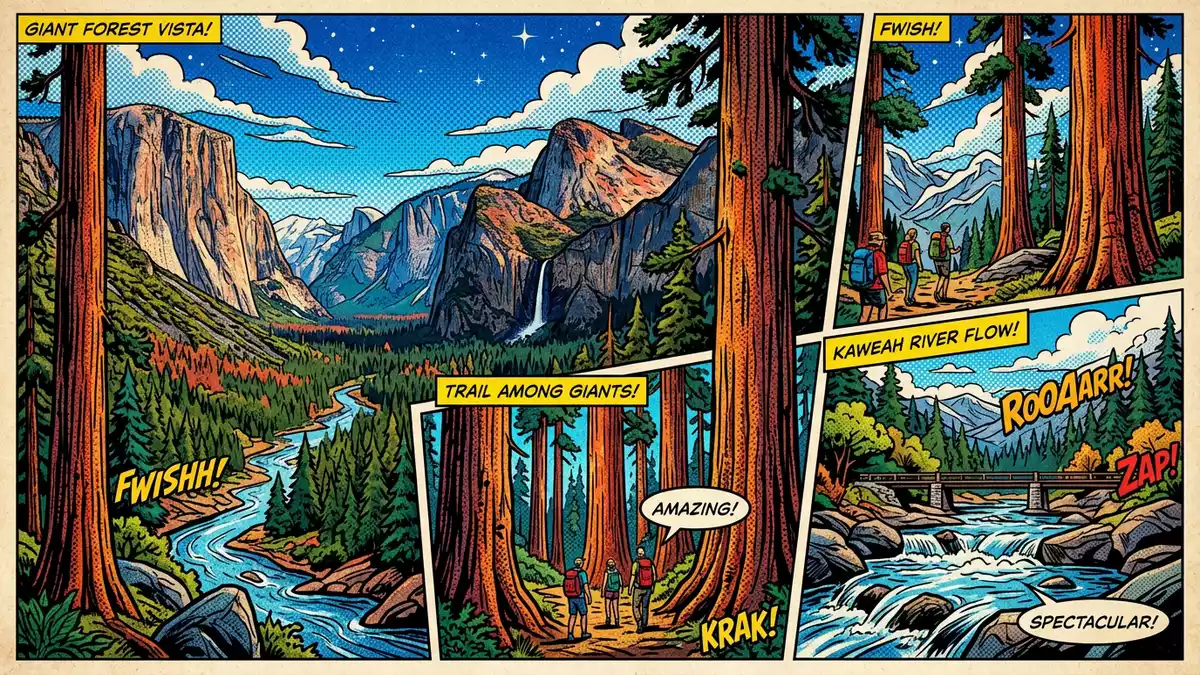
Sequoia National Park stretches from the foothills above Three Rivers into the Sierra Nevada, where giant sequoias occupy forests beneath high granite country. The park’s most recognisable feature is scale: trunks widen into massive bases, while the landscape rises towards Mount Whitney.
Giant sequoias in the Giant Forest
The Giant Forest is a large sequoia grove on a plateau between the Marble and Middle Forks of the Kaweah River. Its mixed conifer forest contains Sequoiadendron giganteum, a species native to the western slopes of California’s Sierra Nevada.
The grove includes the General Sherman Tree, a living giant sequoia measured by trunk volume as the largest living tree on Earth. The tree stands at about 84 m (275 ft) and has a base circumference of roughly 31 m (102 ft). Its estimated age is more than two thousand years. The General Sherman Tree is reached from the Giant Forest area.
From the Sierra foothills to Mount Whitney
Sequoia National Park contains a sharp change in elevation. Foothill country begins near the Kaweah River, with oak woodland, chaparral and warm slopes. Higher ground carries conifer forest, granite formations, meadows and sequoia groves.
Mount Whitney rises to 4,421 m (14,505 ft) above sea level and forms the highest point in the contiguous United States. The mountain lies on the park’s eastern side, within a landscape of ridges, canyons and alpine terrain. The park and adjoining Kings Canyon National Park together protect the headwaters of the Kern, Kings, Kaweah and San Joaquin rivers.
A national park established in 1890
Sequoia National Park was established on 25 September 1890, when President Benjamin Harrison signed the legislation creating it. It became the second national park established in the United States. The park’s founding date belongs to the early period of American national-park conservation.
The protected landscape includes the Giant Forest, Moro Rock, Mineral King and extensive wilderness. The General Sherman Tree became the park’s best-known living landmark, while Moro Rock offers a granite formation reached by a stairway with more than 350 steps. The Moro Rock stairway rises through exposed granite above the surrounding forest.
Visiting Sequoia National Park: what travellers from Western Europe should know
- Sequoia National Park begins beside Three Rivers in California. Highway 198 reaches the Ash Mountain Entrance, while Generals Highway continues towards the Giant Forest.
- The road climbs through narrow, winding mountain terrain. The route from the foothills to the sequoia groves includes sharp bends and substantial changes in altitude.
- Moro Rock has a concrete and stone stairway with more than 350 steps. The route ends at a granite summit above Moro Creek.
- The Giant Forest lies at roughly 2,000 m (6,600 ft) above sea level. Mount Whitney rises far higher, reaching 4,421 m (14,505 ft).
- The official language is English and the currency is the United States dollar.
Searching for Sequoia National Park on social platforms
These links open searches for Sequoia National Park on each platform.
Frequently asked questions about Sequoia National Park
Where is Sequoia National Park?
Sequoia National Park is in California’s southern Sierra Nevada, east of Three Rivers. Highway 198 reaches its southern entrance.
What can visitors see there?
The park contains giant sequoia groves, granite formations, mountain rivers, high wilderness and the General Sherman Tree. Moro Rock provides a stairway route through exposed granite.
What makes the park distinctive?
Its forests contain giant sequoias with immense trunks, while the same protected landscape rises towards Mount Whitney at 4,421 m (14,505 ft).


