
Seoraksan Gungnip Gongwon, granite peaks above Sokcho
Published on 09/07/2026 at 11:12 | Editorial responsibility: Rafael Müller, Editor-in-Chief AD HOC NEWS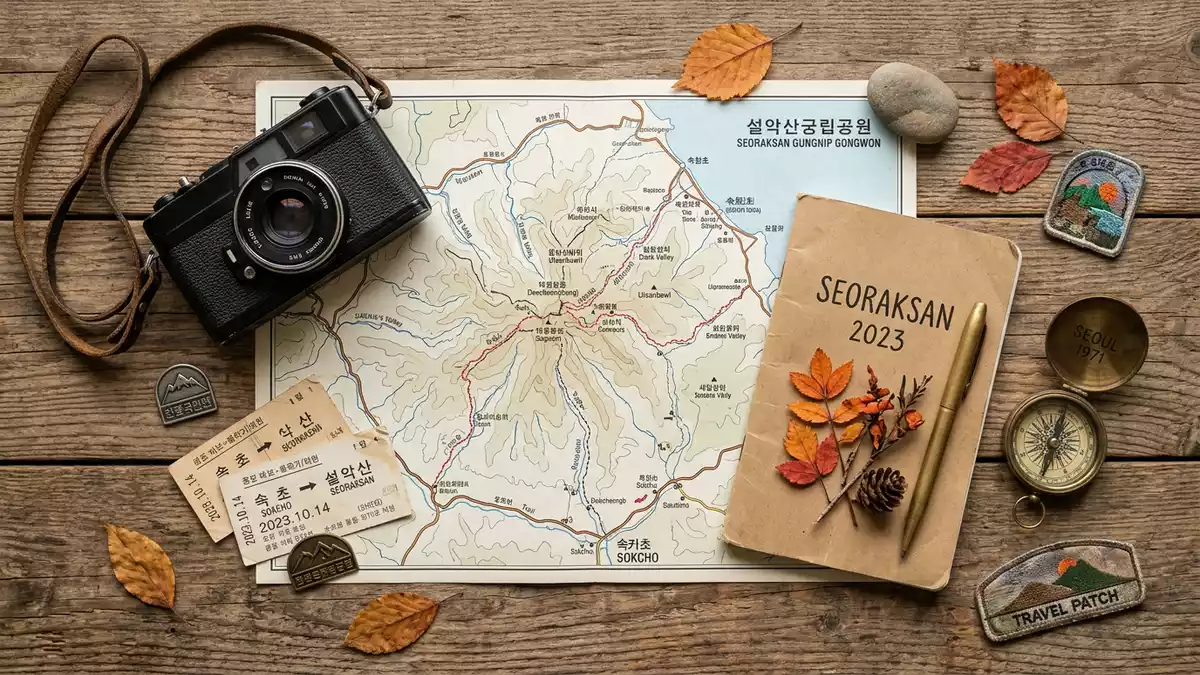
Seoraksan Gungnip Gongwon, known in English as Seoraksan National Park, stretches inland from the coastal city of Sokcho in north-eastern South Korea as a landscape of jagged granite peaks, forested valleys and temple courtyards framed by cliffs.Seoraksan National Park The park was designated a national park in 1970 and later recognised as South Korea’s first UNESCO Biosphere Reserve, anchoring its status as one of the country’s key mountain protected areas.first UNESCO Biosphere Reserve
Granite mountains and divided valleys
Seoraksan Gungnip Gongwon covers a large swathe of the Taebaek mountain range, with the main Seorak-san peak rising to 1,708 m (5,604 ft) above sea level.Seorak-san peak 1,708 m Granite dominates the park’s geology, weathered into steep ridges, freestanding rock towers and cliff faces that drop abruptly into narrow valleys. The terrain is divided into Outer Seorak near Sokcho, Inner Seorak further inland and Southern Seorak around the Osaek area, a three-part structure that shapes how travellers experience the mountains.Outer, Inner and Southern Seorak
Outer Seorak, closest to the sea, combines steep slopes with more accessible paths and facilities, while Inner Seorak reaches deeper into remote valleys with longer mountain routes.Outer Seorak and Inner Seorak Southern Seorak, including the Osaek area, is known for mineral springs emerging from the mountain slopes, adding another layer to the park’s character beyond its cliffs and forests.Osaek mineral springs
Temples, fortresses and marked trails
Within Seoraksan Gungnip Gongwon, Buddhist temples such as Sinheungsa and Baekdamsa sit in valleys against the mountain walls, pairing stone lanterns and pagodas with views into the surrounding forest.Sinheungsa and Baekdamsa temples Paths around these sites link temple precincts with bridges over streams and continue onto steeper slopes leading to viewpoints and higher ridges. A cable car ascends from the Outer Seorak area towards the Gwongeumseong fortress ruins, giving travellers an aerial perspective on cliffs and valleys before arriving at stone remains and open rock platforms.Seorak Cable Car and Gwongeumseong
Marked trails range from short valley walks to demanding ascents on slopes such as Ulsanbawi, where stairways and rock paths climb towards a distinctive multi-pronged rock formation overlooking Sokcho and the coastal plain.Ulsanbawi formation The Dinosaur Ridge, a serrated line of peaks within the park, forms one of the more dramatic mountain routes, tracing an undulating crest of granite with frequent ups and downs and exposed sections.Dinosaur Ridge Together, these features make Seoraksan Gungnip Gongwon both a spiritual landscape and a major hiking destination, with built structures and mountain paths interwoven.
Protected status and regional setting
Seoraksan Gungnip Gongwon lies in Gangwon Province in the north-eastern corner of South Korea, spanning the administrative areas of Sokcho, Inje, Goseong and Yangyang.extent across four areas The park covers roughly 398 km² (153.7 sq mi), placing a significant part of the Taebaek range under national protection.area of 398 km² Its listing on the UNESCO Biosphere Reserve register and the IUCN Green List reflects both ecological value and management standards within the wider international system of protected areas.IUCN Green List and biosphere status
The park’s proximity to Sokcho ties the mountain landscape to a working port city on the East Sea coast, where fishing harbours and beaches form a contrasting foreground to the granite skyline inland.Sokcho as gateway Express bus routes link Seoul with Sokcho, and local buses continue from the city terminals towards the Seorakdong entrance area, where valley facilities and trailheads cluster beneath the peaks.bus connections to Seorakdong This combination of coastal town and mountain park gives Seoraksan Gungnip Gongwon a role as both a regional gateway landscape and a highland reserve.
Visiting Seoraksan Gungnip Gongwon: what travellers from Western Europe should know
- Seoraksan Gungnip Gongwon lies inland from Sokcho in Gangwon Province on South Korea’s east coast, reached by intercity buses to Sokcho and local buses towards the Seorakdong entrance.
- The terrain includes steep granite slopes, long staircases on routes such as Ulsanbawi, and uneven valley paths, so mountain walks involve sustained climbs and descents.
- In winter, snow can extend down into lower valleys, affecting trail surfaces and making exposed sections on higher ridges markedly more demanding.
- Nearby, Sokcho offers coastal scenery and port districts, providing accommodation and services within reach of the park’s main entrance area.
- The official language is Korean and the currency is the South Korean won; entry requirements depend on your nationality, UK travellers can check the FCDO travel advice at gov.uk/foreign-travel-advice, Irish travellers the Department of Foreign Affairs at ireland.ie.
Searching for Seoraksan Gungnip Gongwon on social platforms
These links open searches for Seoraksan Gungnip Gongwon on each platform.
Frequently asked questions about Seoraksan Gungnip Gongwon
Where is Seoraksan Gungnip Gongwon located?
Seoraksan Gungnip Gongwon is in Gangwon Province in north-eastern South Korea, inland from Sokcho and spanning parts of Sokcho, Inje, Goseong and Yangyang.
What can travellers expect on a visit?
Travellers encounter granite peaks, forested valleys, Buddhist temples such as Sinheungsa and Baekdamsa, marked trails from short walks to demanding ridge routes, and facilities concentrated in the Seorakdong entrance area.
What makes Seoraksan Gungnip Gongwon distinctive among mountain parks?
Its combination of sharp granite ridges, the 1,708 m Seorak-san summit, division into Outer, Inner and Southern Seorak, and recognition as South Korea’s first UNESCO Biosphere Reserve gives the park a particular profile among East Asian mountain landscapes.


