
Seongsan Ilchulbong, Jeju’s sea-facing volcanic crater
Published on 09/18/2026 at 18:18 | Editorial responsibility: Rafael Müller, Editor-in-Chief AD HOC NEWS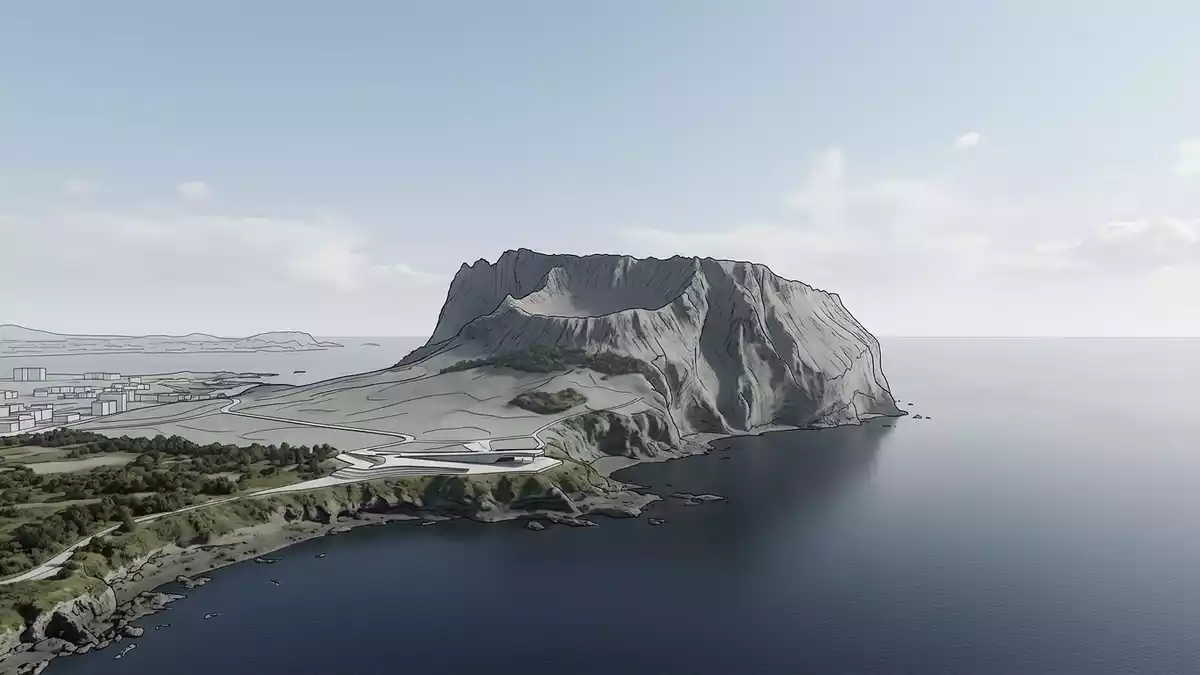
On the eastern edge of Jeju Island in South Korea, Seongsan Ilchulbong rises directly above the sea as a volcanic cone crowned by a wide crater and ringed by cliffs. Recognised as part of the Jeju Volcanic Island and Lava Tubes World Heritage site inscribed by UNESCO in 2007, it combines exposed volcanic layers with open views across the surrounding coast and nearby islands.
A tuff cone shaped by sea and magma
Geologically, Seongsan Ilchulbong is a tuff cone, a volcanic landform built from compacted ash and fragmented rock produced when rising magma met shallow seawater and erupted explosively from the seabed.The Seongsan Ilchulbong tuff cone stands on the coastal flank of the larger Jeju volcano, forming a distinct headland that projects into the sea.
The cone reaches roughly 180 m (590 ft) above sea level, giving its crater rim and jagged walls a clear profile against the sky even from some distance along the shore.The cone reaches roughly 180 m At the summit lies a broad, bowl-like crater about 600 m (2,000 ft) in diameter, with slopes that descend towards the sea on several sides.The mountain is 182 m tall and has a diameter of 600 m The rock itself is a mix of layers and beds of tuff and breccia, recording repeated pulses of hydrovolcanic activity in the late Pleistocene.
Crater rim, cliffs and coastal views
Seen from the surrounding low-lying land and sea, Seongsan Ilchulbong has a fortress-like outline, its outer slopes rising steeply from the coastal plain and its crater rim forming an almost continuous ring of cliffs.The fortress-like Seongsan Ilchulbong tuff cone The cone was once a separate island, but sediment has since connected it to Jeju, so the approach runs over land rather than across open water.It was originally a separate island
From the upper paths and summit area, the crater interior and coastal setting appear together: the grassy floor of the bowl enclosed by rock on most sides, and beyond it the sea and offshore landforms. Udo Island lies offshore to the north-east, and on clear days its low outline can be seen from the summit area along with wide stretches of Jeju’s eastern coastline.From the summit, visitors can see Udo Island The contrast between the interior crater slopes and the open sea beyond is central to the experience of the peak.
World Heritage context and local status
Seongsan Ilchulbong forms one of three core geological sites within the Jeju Volcanic Island and Lava Tubes World Natural Heritage property, alongside Hallasan and the Geomunoreum lava tube system.Hallasan, Seongsan Ilchulbong and Geomunoreum lava tubes UNESCO highlights the peak for the clarity with which its internal structure and sediment layers are exposed, making it an important site for understanding Surtseyan-type eruptions.
Within South Korea, Seongsan Ilchulbong has also been formally recognised as a Natural Monument, a national designation reflecting its scientific and scenic value.Recognised as a Natural Monument The entire tuff cone area is protected, and the site sits within a wider UNESCO Global Geopark that covers Jeju Island’s diverse volcanic landforms.Jeju Island UNESCO Global Geopark This combination of national and international recognition anchors the peak within the broader story of Jeju’s volcanic origin.
Visiting Seongsan Ilchulbong: what travellers from Western Europe should know
- Seongsan Ilchulbong stands on the eastern side of Jeju Island in Seongsan-eup, with road access from Jeju’s main towns and onward connections to the surrounding coastal area.
The cone forms a prominent headland above the sea on Jeju’s east coast. - The ascent follows stepped and sloping paths up the outer flank of the cone, with sections of wooden stairs and viewpoints overlooking the crater and sea.
The climb involves a sustained gradient, and the summit area sits around 180 m (590 ft) above sea level. - The surrounding terrain combines low coastal fields, shorelines and nearby islands, so views from higher points take in both the crater interior and the wider maritime landscape.
- The official language is Korean and the currency is the South Korean won.
- Entry requirements depend on your nationality; UK travellers can check the FCDO travel advice at gov.uk/foreign-travel-advice, Irish travellers the Department of Foreign Affairs at ireland.ie.
Searching for Seongsan Ilchulbong on social platforms
These links open searches for Seongsan Ilchulbong on each platform.
Frequently asked questions about Seongsan Ilchulbong
Where is Seongsan Ilchulbong located?
Seongsan Ilchulbong stands on the eastern tip of Jeju Island in South Korea, in the Seongsan-eup area, forming a headland that rises directly above the sea.
What should visitors expect on a visit?
Visitors encounter a sustained climb on paths and stairs up the flank of a volcanic cone, leading to viewpoints over a wide summit crater and extensive coastal scenery.
What makes Seongsan Ilchulbong distinctive among Jeju’s sites?
Its combination of tuff cone geology, exposed crater structure, cliffs rising from the sea and dual recognition as a Natural Monument and UNESCO World Heritage component makes it a distinctive part of Jeju’s volcanic landscape.


