
Sentosa and the island shaped by two contrasting histories
Published on 09/23/2026 at 18:36 | Editorial responsibility: Rafael Müller, Editor-in-Chief AD HOC NEWS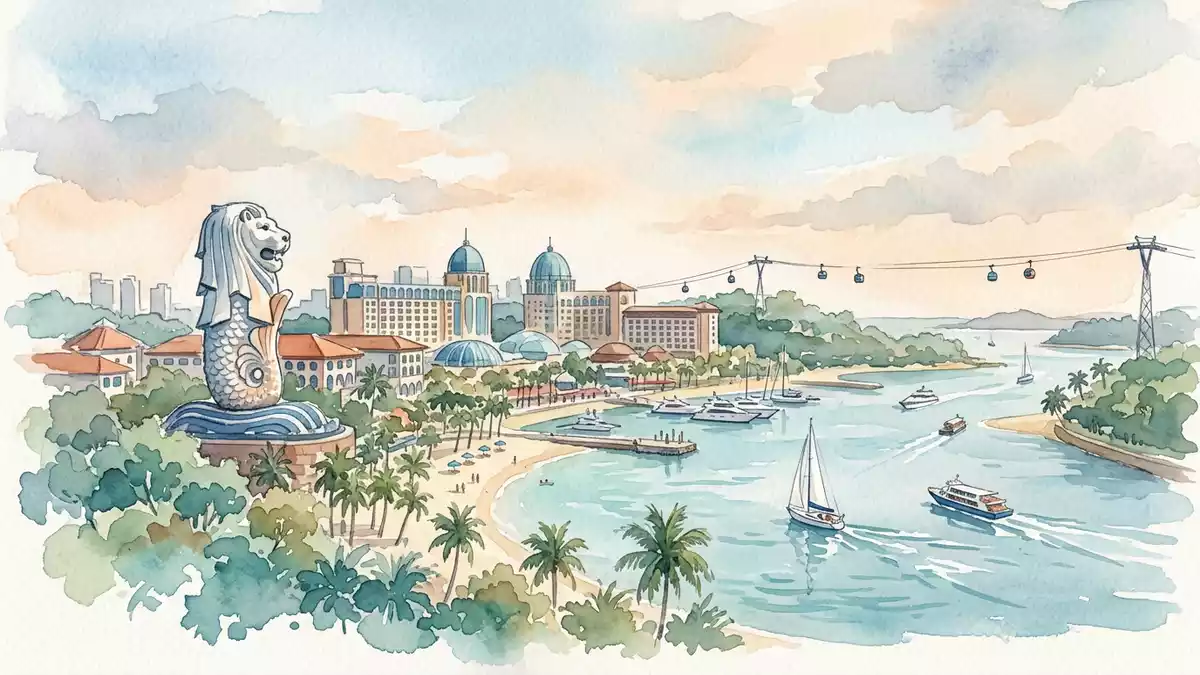
Sentosa is an island resort off the southern coast of Singapore, where beaches, rainforest and large entertainment complexes share the same territory as Fort Siloso. Its visible character comes from this contrast: a leisure landscape occupies an island with a recorded military and wartime history.
Sentosa between coast, forest and resort
Sentosa covers about 500 hectares and lies off Singapore’s southern coast. Beaches run along the island’s southern edge, while landscaped grounds, dense greenery, hotels, restaurants, attractions and residential areas occupy the interior.
The island’s recreational identity dates from 1972, when it entered a new phase as a resort destination. Its name comes from the Malay word for peace and tranquillity, a marked change from the island’s former name, Pulau Blakang Mati, recorded from the seventeenth century. Sentosa’s island overview records this transition alongside its beaches, greenery and resort facilities.
Fort Siloso and the island’s military past
Fort Siloso occupies the western part of Sentosa and preserves the remains of a British coastal artillery installation. Batteries, military structures, paths and displays form a historical landscape within the resort island.
The island also held a prisoner-of-war camp during the Japanese Occupation from 1942 to 1945. This history gives Sentosa a second register beyond entertainment, with military architecture and wartime interpretation close to beaches and contemporary attractions. Sentosa’s wartime history includes its military installation and prisoner-of-war camp.
From Pulau Blakang Mati to a leisure island
Sentosa’s earlier names remain part of its cultural geography. Pulau Blakang Mati appears in records from the 1600s, while the present name belongs to the island’s resort development in the twentieth century.
The resort landscape includes Universal Studios Singapore, S.E.A. Aquarium, water attractions, museums, golf courses, a marina and a cable-car connection with Mount Faber. Resorts World Sentosa opened in 2010, adding a major entertainment and hospitality complex to the island. Resorts World Sentosa’s opening belongs to the island’s transformation from military territory into a leisure destination.
The result is a place read through layers rather than a single landmark. Fort Siloso presents fixed military structures, while the beaches, forested areas and large attractions form the island’s recreational face. Both belong to Sentosa’s physical identity.
Visiting Sentosa: what travellers from Western Europe should know
- Sentosa lies south of Singapore’s main island. HarbourFront MRT station connects with VivoCity, the Sentosa Express monorail and the Sentosa Boardwalk.
- The Mount Faber Line cable car reaches Sentosa at Imbiah Lookout. The island also has roads, internal transport and pedestrian routes between its districts.
- Fort Siloso occupies the western side of the island, while Resorts World Sentosa is near the Waterfront area and the main southern beaches extend along the coast.
- The official language is English, Malay, Mandarin Chinese and Tamil, and the currency is the Singapore dollar.
Searching for Sentosa on social platforms
These links open searches for Sentosa on each platform.
Frequently asked questions about Sentosa
Where is Sentosa?
Sentosa is an island off the southern coast of Singapore. It is connected with the mainland by pedestrian, rail, road and cable-car routes.
What can visitors expect on the island?
Sentosa combines beaches, forested areas, resorts, museums, theme-park attractions, marine exhibits, golf facilities and historic military sites.
What makes Sentosa distinctive?
Its landscape brings together a twentieth-century resort destination and preserved wartime structures. Fort Siloso provides the clearest physical link with the island’s military past.


