
Schloss Schonbrunn’s baroque palace and park in Wien
Published on 08/29/2026 at 16:13 | Editorial responsibility: Rafael Müller, Editor-in-Chief AD HOC NEWS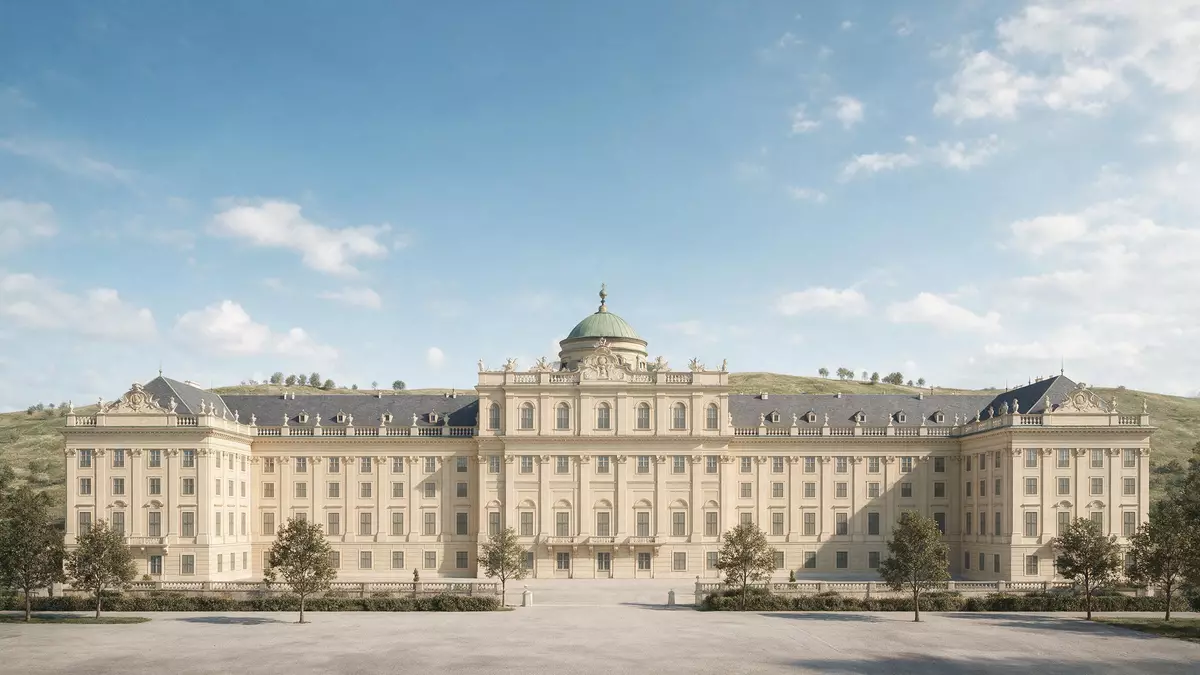
Schloss Schonbrunn in Wien is a Baroque imperial palace where a residence of the Habsburg rulers and an extensive formal park form a continuous landscape. From the eighteenth century until 1918 it served as a principal summer residence of the Habsburg emperors, and palace and gardens together are recognised as a UNESCO World Heritage site.
A Habsburg summer residence on the western edge of Wien
Schloss Schonbrunn stands in Hietzing, a district on the western side of Wien, where the city begins to give way to gentler ground and garden suburbs.Schloss Schonbrunn stands in Hietzing The estate entered Habsburg hands in the sixteenth century, when Emperor Maximilian II acquired land and a residence in what was then countryside to the west of the city.in the possession of the Habsburgs since 1569
The palace complex in its present Baroque form took shape from the late seventeenth century. Around the 1690s Emperor Leopold I commissioned the architect Johann Bernhard Fischer von Erlach to design an imperial residence here, creating a new palace that replaced earlier buildings on the site.Leopold I commissioned Johann Bernhard Fischer von Erlach Later in the eighteenth century, during the reign of Empress Maria Theresa, the architect Nikolaus Pacassi reworked and enlarged the complex, and it was in this period that Schonbrunn became the centre of Habsburg court life in the warmer months.it got its present form under Empress Maria Theresia
Baroque palace, Rococo interiors and imperial rooms
From the outside Schloss Schonbrunn reads as a long, multi-wing Baroque palace with façades organised in strict rhythm around a ceremonial forecourt.Rococo-style summer palace The building counts around 1,440 rooms, with suites of state apartments arranged en enfilade along the main front, and service rooms, guest quarters and circulation spaces extending into side wings.Schönbrunn Palace has a total of 1,441 rooms
Many of the ceremonial interiors took on their present character in the eighteenth century, when Maria Theresa used Schonbrunn as her principal summer residence. Decorative schemes from this period combine Rococo stuccowork, mirrors and gilded surfaces with parquet floors and pale wall fields, producing bright reception rooms suited to formal gatherings.Rococo-style palace with around 1,440 rooms Individual rooms carry strong associations with Habsburg figures: Emperor Franz Joseph was born in the palace in 1830 and spent much of his later life here, and the mirrored halls recall concerts in which a young Wolfgang Amadeus Mozart performed for the court.Franz Joseph was born in Schönbrunn Palace in 1830
Gardens, park buildings and a Baroque landscape
Behind the palace the grounds unfold as a geometrically ordered park that reads as a single Baroque landscape. Formal parterres stretch away from the main façade, edged by gravel walks and trimmed hedges, while longer axes carry the eye towards distant focal points such as garden structures and tree-lined avenues.Palace and Gardens of Schönbrunn
The park incorporates a range of specialised gardens and buildings. Within the grounds stands the Tiergarten Schönbrunn, which traces its origins to a menagerie founded in 1752 and is regarded as one of the earliest zoological gardens integrated into a palace landscape.Schönbrunn Tiergarten founded within the grounds in 1752 Elsewhere glasshouses bring together exotic planting in a controlled climate, while features such as a maze, an orangery and ornamental fountains underline the way the park combines horticulture, architecture and water into a single designed setting.the Schloss and the gardens of Schönbrunn
Visiting Schloss Schonbrunn: what travellers from Western Europe should know
- Schloss Schonbrunn lies in the Hietzing district on the western side of Wien and is reached by city transport services that run towards this part of the city.
- The palace complex extends over a broad area with long garden avenues and extensive grounds, so a visit involves substantial walking on gravel paths and broad terraces.
- Within the park the terrain is mostly gentle but includes gradual inclines, especially on the main axis rising away from the palace towards the higher viewpoints.
- The official language is German and the currency is the euro.
Searching for Schloss Schonbrunn on social platforms
These links open searches for Schloss Schonbrunn on each platform.
Frequently asked questions about Schloss Schonbrunn
Where is Schloss Schonbrunn located?
Schloss Schonbrunn is in the Hietzing district on the western side of Wien, in Austria, where the historic palace complex forms part of the city’s urban fabric.
What can visitors expect at Schloss Schonbrunn?
Visitors encounter a large Baroque palace with Rococo interiors and an extensive formal park that includes specialised gardens, garden buildings and a historic zoo within the grounds.
What makes Schloss Schonbrunn distinctive among European palaces?
Schloss Schonbrunn stands out for the way palace and gardens form a coherent Baroque ensemble that records centuries of Habsburg imperial life in a single designed landscape.


