
Schloss Schonbrunn and its wide Baroque landscape in Wien
Published on 09/01/2026 at 06:37 | Editorial responsibility: Rafael Müller, Editor-in-Chief AD HOC NEWS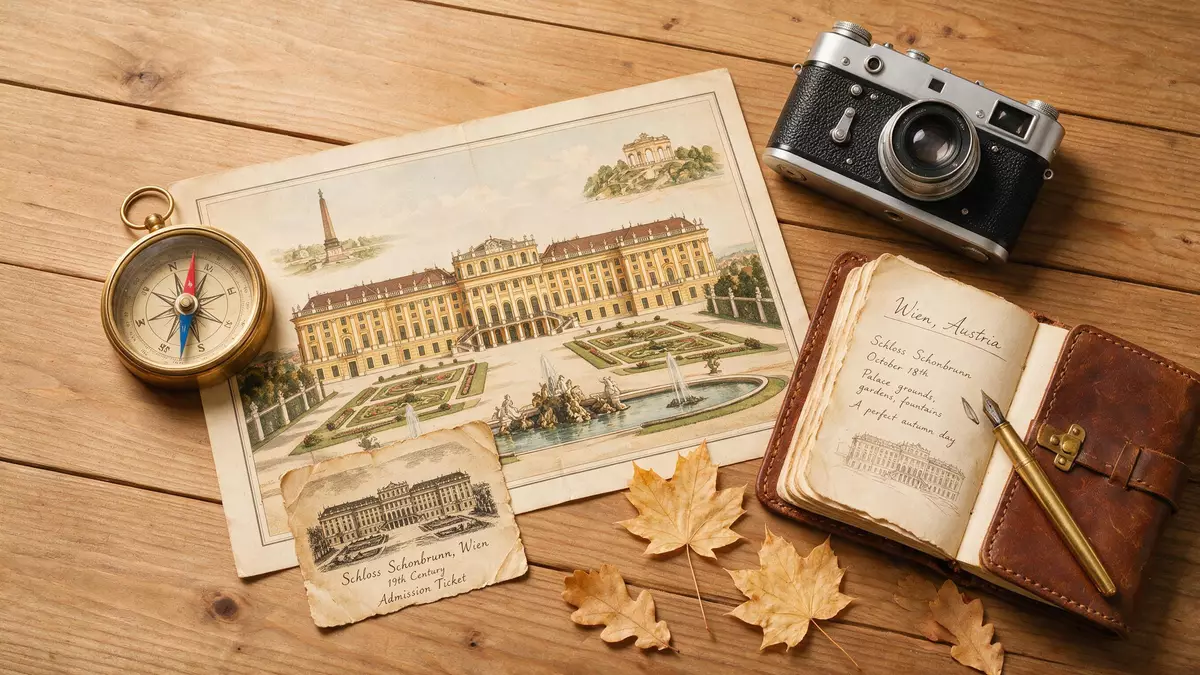
Schloss Schonbrunn in Wien is both a grand Baroque palace and a vast formal landscape, a place where architecture and gardens together show how the Habsburg rulers shaped their summer residence over several centuries. In its present form the complex took shape in the eighteenth century during the reign of Empress Maria Theresa, turning an earlier hunting estate into a stately residence framed by one of Europe’s largest Baroque palace parks.
A Habsburg summer residence in Baroque form
The roots of the Schonbrunn estate reach back to the sixteenth century, when Holy Roman Emperor Maximilian II acquired land along the Wien river as a hunting ground and retreat outside the city walls.Holy Roman Emperor Maximilian II The name “Schönbrunn” entered historical records later in the seventeenth century, tied to a spring on the grounds and the hunting lodge that stood nearby.the name Schönbrunn The palace recognised today began at the end of that century, when Emperor Leopold I commissioned architect Johann Bernhard Fischer von Erlach to design a Baroque residence for his son, the future Joseph I, using the hunting lodge site as the starting point.
Much of what visitors see derives from the extensive rebuilding undertaken for Maria Theresa in the 1740s and 1750s, when Schonbrunn became the main summer residence of the Habsburg rulers.main summer residence Under her patronage, architect Nicolaus Pacassi reworked the interiors in the Rococo style, creating suites of ceremonial rooms aligned along the main axis of the palace for court functions and family life.Rococo-style interiors Later, in the early nineteenth century, court architect Johann Aman remodelled the exterior in a neoclassical direction, including the façade treatment and the characteristic “Schönbrunn yellow” colour, giving the complex the appearance familiar from photographs.
Inside a palace of many rooms
Schloss Schonbrunn contains a long sequence of rooms arranged en enfilade along the main building, reflecting its origin as a setting for imperial representation and private retreat. State rooms facing the garden side include richly decorated halls with stucco work, gilded panelling and ceiling paintings, built for receptions, balls and audiences during the Habsburg period.state rooms and halls More intimate apartments, particularly those associated with Maria Theresa and her immediate family, occupy suites closer to the centre of the palace, their decoration combining Rococo ornament with textiles and furnishings chosen over generations.
The palace interiors bear traces of later nineteenth-century adaptations, when Schonbrunn again served as a summer residence and living quarters for the imperial family. Rooms were updated to match changing standards of comfort, with new furniture and services integrated behind historic surfaces.nineteenth-century adaptations Yet the overall plan, with its alignment on the central axis leading towards the gardens, still reflects the Baroque idea of a residence opening out into a designed landscape.
Gardens, parkland and the wider estate
Beyond the palace façade, Schloss Schonbrunn opens onto an extensive formal park laid out in terraces and parterres, framed by avenues and woodland sections. The Baroque garden design, developed in stages from the early eighteenth century and reworked under Maria Theresa, emphasises long sightlines from the palace into the grounds, with geometric planting beds and ornamental fountains marking the main axes.Palace and Gardens of Schönbrunn The ensemble includes garden buildings and monuments such as the Gloriette on the hillside, which terminates the central vista and adds a further architectural focus within the park.
The wider estate also contains one of the oldest zoological gardens in Europe, founded in the mid-eighteenth century within the palace grounds and developed around a series of pavilions.zoological garden within the grounds Together, the palace, formal gardens and associated structures form a Baroque ensemble recognised as a UNESCO World Heritage site since 1996, under the title “Palace and Gardens of Schönbrunn”.UNESCO World Heritage site since 1996 The park’s combination of axial design, ornamental features and long historical continuity makes it a central part of the experience of Schloss Schonbrunn.
Visiting Schloss Schonbrunn: what travellers from Western Europe should know
- Schloss Schonbrunn stands in the Hietzing district in the western part of Wien, with the main entrances reached from streets that follow the palace’s outer edge.
- The grounds extend over a large area with formal parterres, wide paths and slopes rising towards the Gloriette, so moving across the park involves long walks on mainly level but sometimes inclined surfaces.
- Within the estate, the historic zoo occupies a section of the grounds, linked by paths that pass garden features and pavilions.
- The official language is German and the currency is the euro.
Searching for Schloss Schonbrunn on social platforms
These links open searches for Schloss Schonbrunn on each platform.
Frequently asked questions about Schloss Schonbrunn
Where is Schloss Schonbrunn located?
Schloss Schonbrunn stands in the Hietzing district of Wien, west of the historic centre, on land once used as a Habsburg hunting estate.
What should visitors expect on a visit to Schloss Schonbrunn?
A visit combines access to Baroque and Rococo palace interiors with walks through a large formal park, including long avenues, ornamental fountains and garden buildings.
What makes Schloss Schonbrunn distinctive among European palaces?
Its combination of a multi-period Baroque residence, an extensive designed landscape and an eighteenth-century zoo, all recognised together as a UNESCO World Heritage ensemble, gives Schloss Schonbrunn a distinctive character.


