
Schloss Schonbrunn and its vast Baroque landscape
Published on 09/12/2026 at 17:26 | Editorial responsibility: Rafael Müller, Editor-in-Chief AD HOC NEWS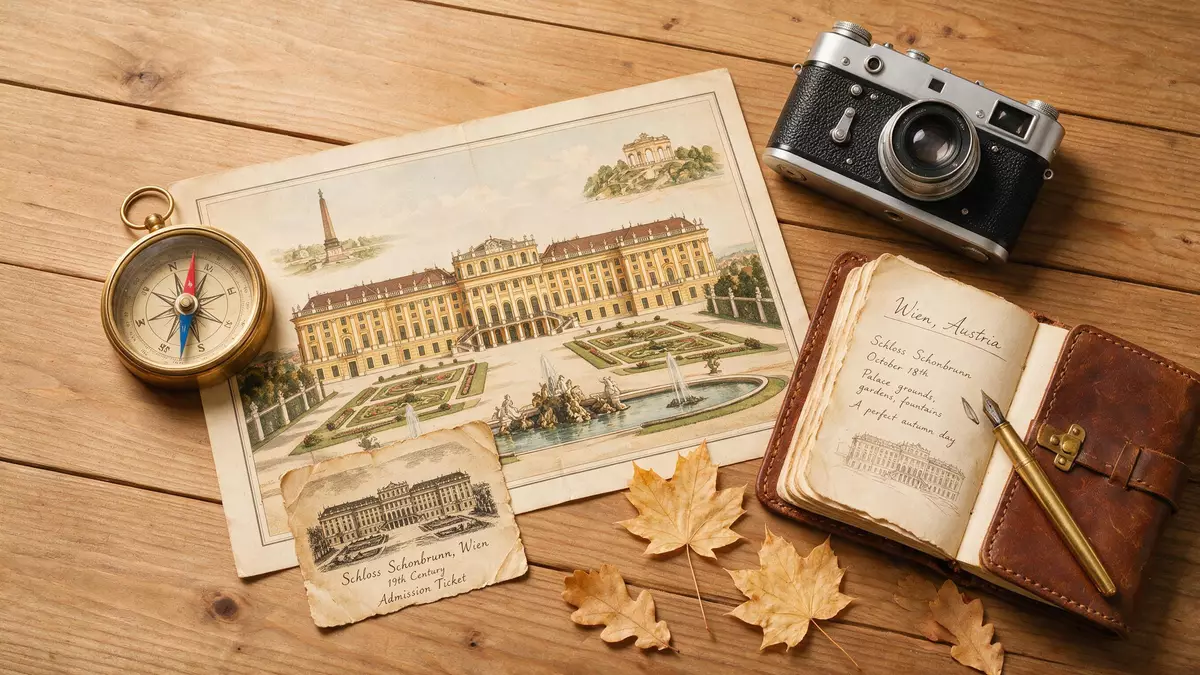
Schloss Schonbrunn in Wien is an imperial summer residence paired with a vast Baroque park, where a palace and its landscape are treated as a single composed setting.
From hunting lodge to imperial summer residence
The estate that became Schloss Schonbrunn entered Habsburg hands in the sixteenth century as a hunting ground on the western edge of Wien, forming the nucleus of a later residence.hunting ground since the sixteenth century In the seventeenth century Emperor Leopold I ordered a Baroque hunting lodge for his son, the future Emperor Joseph I, on land already known by the name Schönbrunn.
After destruction in 1683 during the last Ottoman siege of Wien, the project was recast as a full imperial residence under the architect Johann Bernhard Fischer von Erlach, whose designs turned the lodge into a palace embedded in formal grounds.designed by Johann Bernhard Fischer von Erlach The palace took shape in the late seventeenth and early eighteenth century, and later work by architects including Nicolaus Pacassi refined its Rococo interiors during the eighteenth century.Rococo-style summer palace of the Habsburgs
Palace, park and UNESCO World Heritage status
Schloss Schonbrunn stands in the Hietzing district of Wien, set within a park that forms a formally recognised cultural ensemble of palace and gardens.located in Hietzing, the 13th district of Vienna The complex covers a large area of terraces, avenues and lawns aligned with the palace axis, turning the landscape into an extension of the architecture.
In 1996 the “Palace and Gardens of Schönbrunn” were added to the UNESCO World Heritage List as an outstanding Baroque ensemble and a material symbol of Habsburg power from the end of the seventeenth to the early twentieth century.inscribed on the World Heritage List in 1996one of the most impressive Baroque ensembles in Europe Within the grounds, the zoo founded in 1752 forms part of the same designed landscape and is recognised as one of the earliest zoological gardens integrated into a palace park.Schönbrunn Tiergarten founded in 1752
Axes, terraces and the Gloriette hill
The gardens of Schloss Schonbrunn follow a geometric plan laid out in the early eighteenth century, with a main axis carrying the view away from the palace into terraces and ornamental parterres.formal gardens created from 1696 onwards Long avenues lined with planting organise the park into sections, where fountains and statues punctuate the lawns and frame viewpoints back towards the façade.
On the hill beyond the parterre, the Gloriette provides a termination to the main axis and a vantage point over palace and city.Gloriette structure with a central triumphal arch Its central section in the form of a triumphal arch is flanked by arcaded wings, echoing the rhythm of the palace and giving a second architectural focus to the designed landscape.
Visiting Schloss Schonbrunn: what travellers from Western Europe should know
- Schloss Schonbrunn lies in Wien’s Hietzing district to the west of the historic centre and is reached by urban transport lines serving the palace area and nearby stations.
- The palace complex includes broad formal avenues and open terraces in the park, alongside interior routes that involve flights of stairs within the historic palace.
- The estate sits within the built-up area of Wien, with other Hietzing streets and residential districts immediately beyond the perimeter of the park walls.
- The official language is German and the currency is the euro.
Searching for Schloss Schonbrunn on social platforms
These links open searches for Schloss Schonbrunn on each platform.Frequently asked questions about Schloss Schonbrunn
Where is Schloss Schonbrunn located?
Schloss Schonbrunn stands in the Hietzing district of Wien, west of the historic city centre, within an extensive palace park enclosed by walls.
What can visitors expect on a visit to Schloss Schonbrunn?
Visitors encounter a Baroque palace with Rococo interiors and a formal park laid out on strict geometric axes, with fountains, statues and long avenues.
What makes Schloss Schonbrunn distinctive among European palaces?
Its combination of an imperial residence, early zoo and formally composed park recognised as a UNESCO World Heritage ensemble gives Schloss Schonbrunn a rare breadth of designed landscape.


