
Schloss Schonbrunn, a baroque summer palace in Wien
Published on 09/16/2026 at 11:13 | Editorial responsibility: Rafael Müller, Editor-in-Chief AD HOC NEWS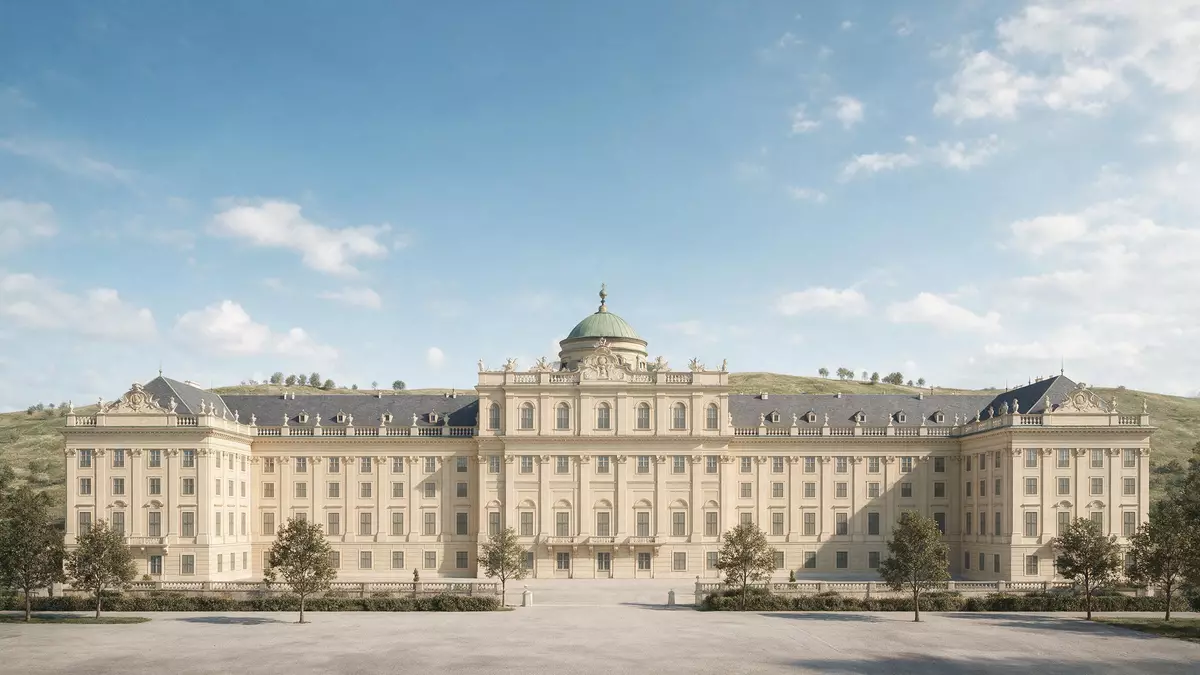
Schloss Schonbrunn is the former imperial summer residence on the western side of Wien, a baroque palace complex whose long façades open onto a vast formal park shaped over centuries of Habsburg rule.
A baroque palace shaped under Maria Theresa
The estate at Schonbrunn developed from a Habsburg hunting property into a substantial residence in the late seventeenth century, when Emperor Leopold I ordered a new building from the Baroque architect Johann Bernhard Fischer von Erlach.Leopold I’s commission set the tone for a multi-winged palace with a ceremonial forecourt and an axial relationship to its grounds.
In the eighteenth century, Empress Maria Theresa received Schonbrunn as a wedding gift and oversaw its transformation into a full imperial summer residence, with extensive building campaigns between the 1740s and 1760s that fixed the palace’s outline and much of its internal layout.Maria Theresa’s remodelling created the long central block and spreading side wings familiar from panoramas of the site, while later work under Franz I gave the exterior the pale, restrained neoclassical look seen on the façades.
Gardens, axes and the wider park landscape
Schloss Schonbrunn stands at the centre of formal gardens that extend in broad terraces and avenues across an area that once formed the Katterburg estate, a property recorded from the fourteenth century as belonging to the abbey at Klosterneuburg.The early history of the grounds gives Schonbrunn a long continuity as a managed landscape, first enclosed as a hunting park under Maximilian II and later structured into the parterres and bosquets visible from the palace steps.
The palace and gardens align in a straight axis running away from the main façade, a hallmark of baroque planning that gathers lawns, geometrically ordered flowerbeds and clipped hedges into a single perspective.The Palace and Gardens of Schonbrunn form a listed ensemble on the UNESCO World Heritage List, recognised for the way architecture and parkland combine into a coherent imperial landscape that has remained largely intact since the eighteenth century.
Imperial interiors and later history
Within the long façades, Schloss Schonbrunn contains suites of state rooms, private apartments and service areas that reflect its role as the main summer residence of the Habsburg rulers from the eighteenth century until the end of the monarchy in 1918.Studies of the palace’s architectural history trace the evolution of these interiors from the high Baroque through late Rococo decorative schemes, with later additions in the nineteenth century when Emperor Franz II (I) and his successors again took up residence.
After the Habsburg dynasty lost its ruling role, the palace passed into the ownership of the Republic of Austria and has been maintained as a historic complex, with the principal rooms, façades and formal gardens preserved in a configuration close to that reached by the late nineteenth century.The palace’s official history emphasises this continuity, noting that apart from minor changes the architectural history effectively concluded by around 1870, leaving visitors walking through spaces shaped at the height of Habsburg power.
Visiting Schloss Schonbrunn: what travellers from Western Europe should know
- Schloss Schonbrunn lies in the Hietzing district to the south-west of central Wien, with access by city streets and local public transport that stop near the palace grounds.
- The site consists of a large, paved forecourt in front of the palace and extensive parkland behind it, with long, gently rising paths and some staircases between garden levels.
- Within the park, distances between major features such as viewpoints, garden structures and subsidiary buildings can be substantial, so visiting involves walking along broad avenues and across open lawns.
- The official language is German and the currency is the euro.
Searching for Schloss Schonbrunn on social platforms
These links open searches for Schloss Schonbrunn on each platform.Frequently asked questions about Schloss Schonbrunn
Where is Schloss Schonbrunn located within Wien?
Schloss Schonbrunn stands in Hietzing, a district on the western side of Wien, with the palace and park forming a large, coherent complex within the urban fabric.
What should visitors expect when exploring Schloss Schonbrunn?
Visitors encounter a baroque palace with ceremonial courtyards, suites of historic rooms and an extensive park laid out in formal axes, avenues and garden compartments.
What makes Schloss Schonbrunn distinctive among European palaces?
The combination of a Baroque and neoclassical palace by Fischer von Erlach and later architects, together with a preserved formal park, gives Schloss Schonbrunn a rare continuity as an imperial summer residence.


