
Schloss Sanssouci, Frederick the Great’s Rococo retreat above Potsdam’s vineyards
Published on 09/11/2026 at 17:40 | Editorial responsibility: Rafael Müller, Editor-in-Chief AD HOC NEWS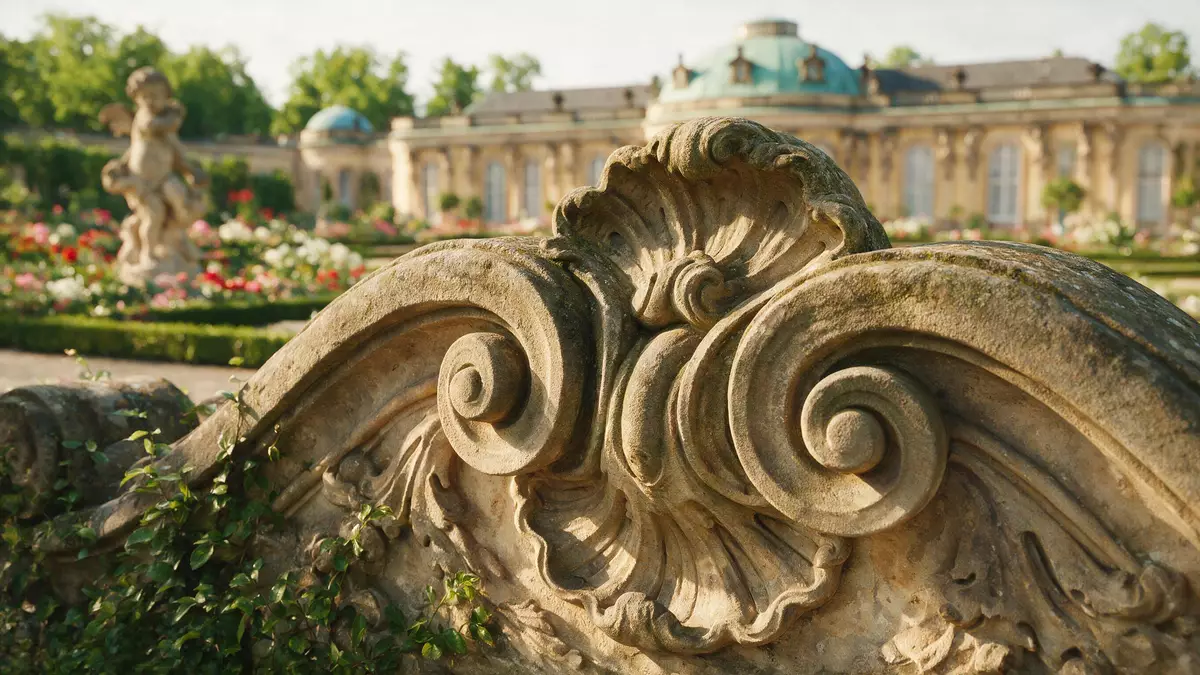
Schloss Sanssouci in Potsdam is a compact Rococo summer palace commissioned by Frederick II of Prussia, better known as Frederick the Great, in the mid?eighteenth century. It stands above vineyard terraces on a gentle slope on the northern edge of the city, combining an elongated palace with a formally laid?out park that has become one of Brandenburg’s best?known historic landscapes.
A hilltop palace in Frederick the Great’s Potsdam
Schloss Sanssouci occupies a rise on the outskirts of Potsdam, just outside Berlin, where Frederick the Great ordered a series of stepped vineyard terraces to be laid out before work on the palace itself began. The six main terraces climb the southern slope, creating a geometric base of stone retaining walls, planted beds and flights of steps that lead directly towards the central axis of the building.six vineyard terraces The French name “Sanssouci”, meaning “without worry”, appears on the garden front and encapsulates the palace’s role as an informal rural retreat away from the ceremonial burdens of Berlin.
The palace and park form part of the ensemble of Prussian palaces and gardens in and around Potsdam and Berlin that are recognised as a UNESCO World Heritage Site. The site’s inscription highlights the way architecture, horticulture and landscape design were combined to create a continuous sequence of terraces, avenues, ornamental buildings and water features stretching across the undulating terrain north?west of central Potsdam.UNESCO World Heritage Site Within this wider setting, Schloss Sanssouci stands out as Frederick’s most personal residence, conceived on a smaller scale than the nearby palace complexes at the New Palace and Charlottenhof.
Rococo architecture in a single elongated wing
Construction of Schloss Sanssouci began in 1745 and was completed two years later, in 1747, under the direction of court architect Georg Wenzeslaus von Knobelsdorff.built between 1745 and 1747 Frederick sketched the basic layout himself and had Knobelsdorff translate these ideas into a single?storey palace in the Rococo style, laid out as an elongated wing along the crest of the hill.Frederick sketched the layout The plan follows an enfilade: a sequence of principal rooms aligned in a straight line, with doors facing each other so that a clear vista runs through the entire suite.
On the garden side, the palace is articulated by a long façade punctuated by a central pavilion and a series of tall French windows that open directly onto the upper terrace. This façade is decorated with sandstone herms and rich Rococo ornamentation, including rocailles, scrolls and plant motifs characteristic of mid?eighteenth?century German interpretations of the French style.south-facing garden façade Inside, key spaces such as the Marble Hall, the library and a series of intimate guest rooms maintain this decorative language, combining gilded stucco, mirrors, painted panels and elaborate ceiling compositions.
From private summer retreat to palace museum
For Frederick the Great, Sanssouci was first and foremost a personal refuge, not a grand ceremonial residence. He spent extended periods here during the warmer months, living in relatively close quarters compared with the far larger palaces at Charlottenburg or the Berlin Stadtschloss, and he used the rooms to write, play music and host select companions including the French philosopher Voltaire.personal refuge for Frederick The palace’s compact dimensions and single level emphasise this intimacy: many rooms open directly onto the terrace, with little spatial separation between interior and garden.
After Frederick’s death in 1786, the role of Sanssouci evolved as successive Prussian rulers adapted the wider park with new buildings and landscape details while retaining the original palace as a focal point. In the nineteenth century, the palace was opened as a museum, among the earlier examples of royal residences in Germany to become accessible in this way.opened as a museum in the nineteenth century Visitors walking through the state rooms encounter interiors that preserve a high proportion of their eighteenth?century decoration, including paintings by artists such as Watteau, Panini and Pesne hung within elaborate Rococo frames.
Visiting Schloss Sanssouci: what travellers from Western Europe should know
- Schloss Sanssouci stands in the Sanssouci Park on the northern side of Potsdam, which lies south?west of central Berlin and is reached by regional trains and urban transport from the capital.
- The approach from the park to the palace involves climbing exterior staircases that rise alongside the vineyard terraces, followed by further steps within the building for any tower or upper?level viewpoints.
- The wider Sanssouci Park extends over gently undulating ground with formal avenues, lawns and ornamental structures, so a visit typically includes walking across a mixture of paved paths and gravel surfaces.
- The official language is German and the currency is the euro.
Searching for Schloss Sanssouci on social platforms
These links open searches for Schloss Sanssouci on each platform.
Frequently asked questions about Schloss Sanssouci
Where is Schloss Sanssouci located?
Schloss Sanssouci is in Sanssouci Park on the northern side of Potsdam in eastern Germany, a short distance south?west of Berlin.
What can visitors expect from a visit to Schloss Sanssouci?
Visitors encounter an elongated Rococo palace with richly decorated state rooms, vineyard terraces rising towards the garden front and a wide surrounding park filled with formal avenues and ornamental buildings.
What makes Schloss Sanssouci distinctive among European palaces?
Schloss Sanssouci stands out for its combination of an intimate single?storey Rococo residence, personally shaped by Frederick the Great, and a hillside setting on vineyard terraces within a larger World Heritage landscape.


