
Schloss Sanssouci, a Rococo palace above Potsdam’s vineyard terraces
Published on 09/10/2026 at 22:13 | Editorial responsibility: Rafael Müller, Editor-in-Chief AD HOC NEWS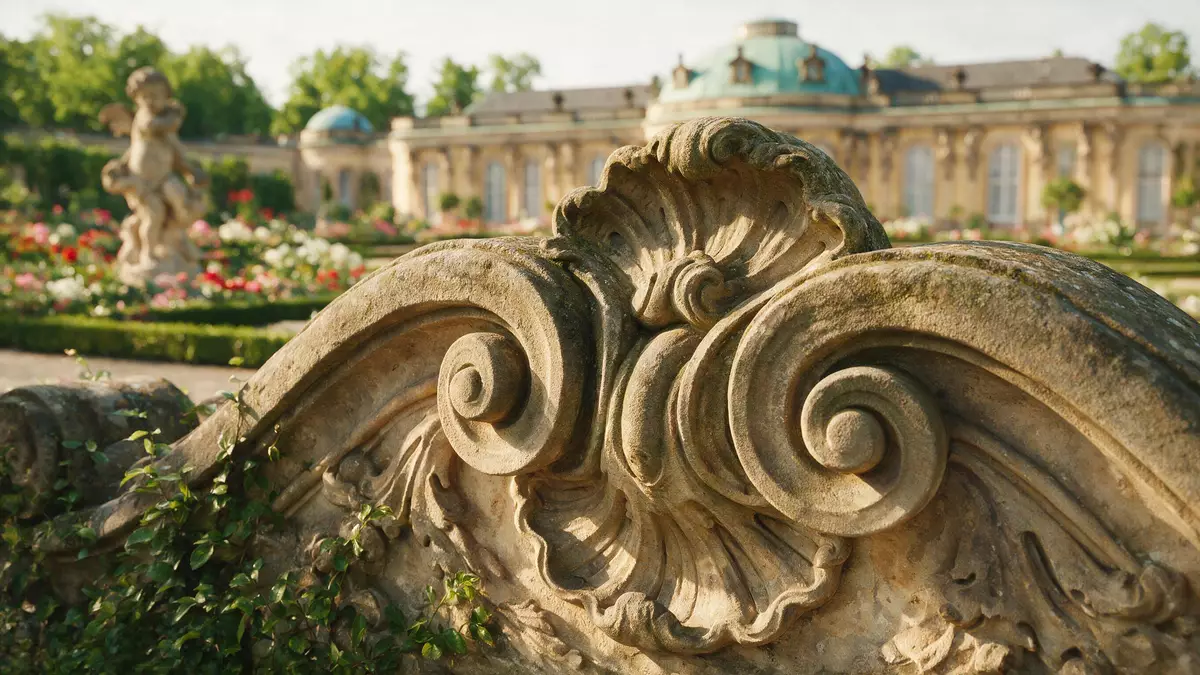
Schloss Sanssouci in Potsdam is a low, elongated Rococo palace laid out along vineyard terraces on a south-facing slope, built for Frederick the Great in the mid-eighteenth century. It forms the intimate centrepiece of Sanssouci Park, a royal landscape where architecture and planted hillside are tightly bound together.
Frederick the Great’s summer retreat on the Weinberg
The palace was commissioned by Frederick II of Prussia, better known as Frederick the Great, as a personal summer residence above Potsdam.personal summer residence Construction took place between 1745 and 1747, a concentrated building phase that followed the king’s decision to turn a bare hill into a stepped vineyard.construction took place between 1745 and 1747
Frederick had six broad vineyard terraces laid out on the southern slope of the Bornstedter ridge, creating walled platforms where grapes and figs could be cultivated against brickwork facing the sun.six broad vineyard terraces The palace itself occupies the crown of these terraces, so that its garden front looks directly down over vines and the main axis of Sanssouci Park.
Frederician Rococo in a single-storey palace
Schloss Sanssouci was designed by the architect Georg Wenzeslaus von Knobelsdorff, who translated Frederick’s sketches into a one-storey Rococo residence with a sequence of closely linked rooms.designed by the architect Georg Wenzeslaus von Knobelsdorff The architectural style is Frederician Rococo, a light, ornamental mode that favours curved lines, sculpted decoration and painted ceilings over heavy structural mass.architectural style is Frederician Rococo
The garden façade is among the most recognisable palace fronts in Germany, with a central domed pavilion flanked by a long, gently curving range and tall French windows opening towards the terraces.central domed pavilion Sandstone herms by sculptor Friedrich Christian Glume stand along this façade, linking architecture and garden statuary into a single decorative band.
Terraces, park and later layers
The vineyard terraces below Schloss Sanssouci give the site much of its character, stepping down the slope in broad curves edged by retaining walls and planted niches.stepping down the slope in broad curves Paths and staircases link the palace level with the lower park, where further palaces and pavilions extend the royal landscape.
In the nineteenth century the palace wings were lengthened under King Frederick William IV, and in 1873 Wilhelm I opened the residence as a museum, adding a public layer to what had begun as a private retreat.opened the residence as a museum In 1991 the remains of Frederick the Great were reinterred on the uppermost vineyard terrace, fulfilling his wish to be buried near his vines.reinterred on the uppermost vineyard terrace
Visiting Schloss Sanssouci: what travellers from Western Europe should know
- Schloss Sanssouci stands in Sanssouci Park on the Weinberg hill in Potsdam, south-west of central Berlin, with access from streets such as Maulbeerallee.
- The site combines a palace on a hilltop with vineyard terraces and parkland, so visiting involves walking staircases between levels and moving across garden paths.
- Within the wider park, further palaces and ornamental buildings lie within walking distance, and long axial avenues connect Schloss Sanssouci with other parts of the landscape.
- Potsdam is in Germany; the official language is German and the currency is the euro.
Searching for Schloss Sanssouci on social platforms
These links open searches for Schloss Sanssouci on each platform.
Frequently asked questions about Schloss Sanssouci
Where is Schloss Sanssouci?
Schloss Sanssouci is in Sanssouci Park in Potsdam in Germany, on a hillside known as the Weinberg above the city’s northern districts.
What should visitors expect on a visit?
A visit combines a low Rococo palace, stepped vineyard terraces and extensive formal parkland, with paths and staircases linking the hilltop with the wider grounds.
What makes Schloss Sanssouci distinctive among palaces?
Schloss Sanssouci is distinctive as a single-storey Rococo summer palace stretched along vineyard terraces, created as Frederick the Great’s intimate retreat rather than a large ceremonial residence.


