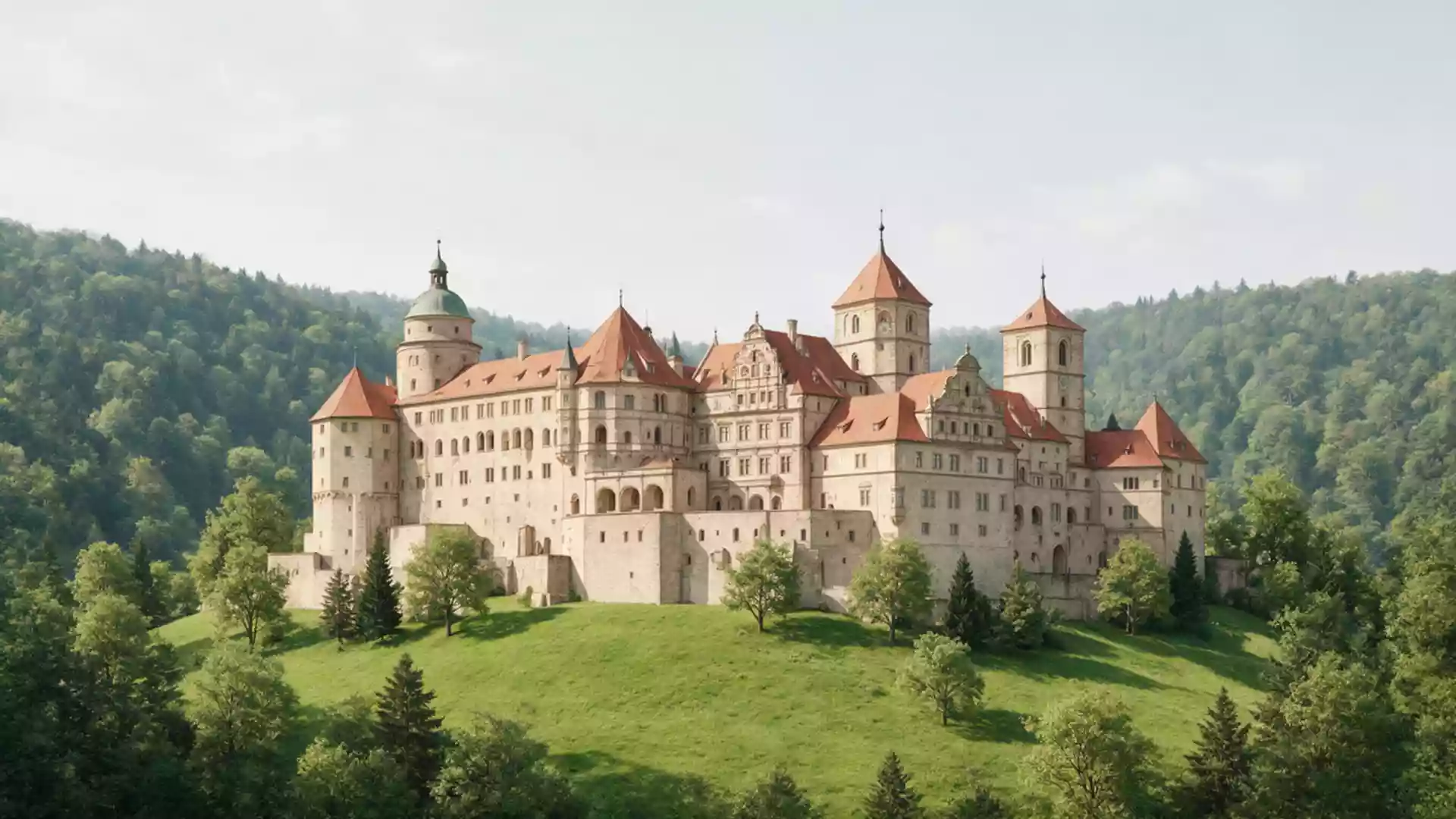
Schloss Heidelberg and the red sandstone ruin above the Neckar
Published on 09/03/2026 at 22:06 | Editorial responsibility: Rafael Müller, Editor-in-Chief AD HOC NEWS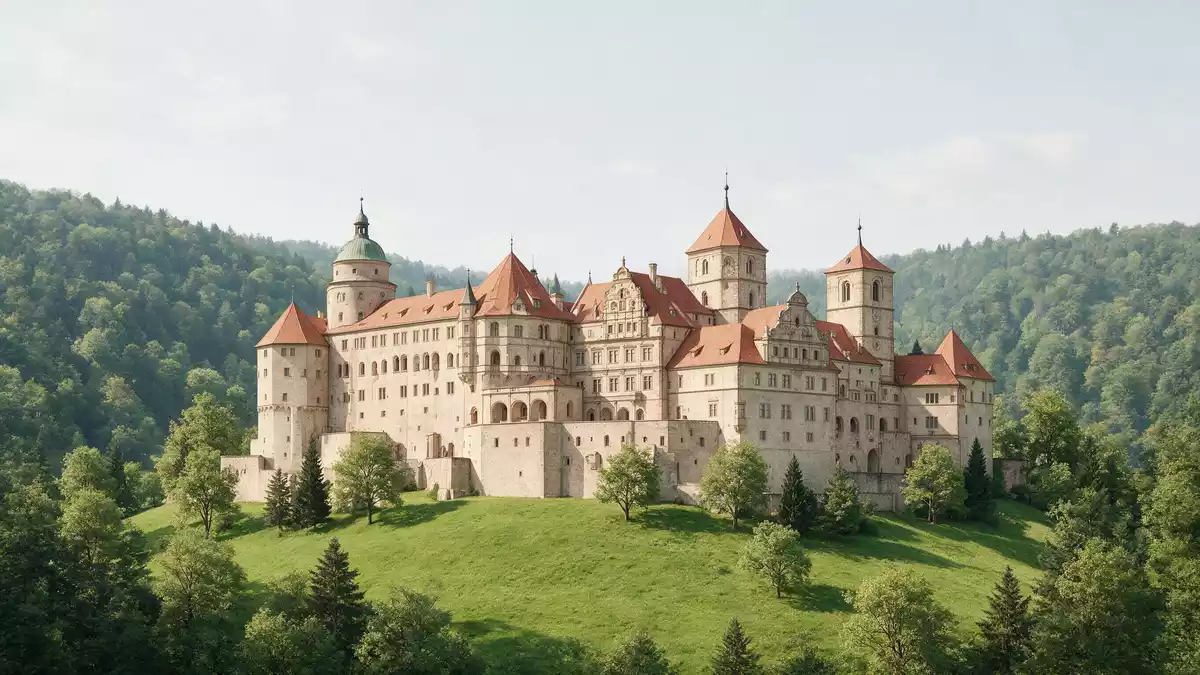
Schloss Heidelberg rises above Heidelberg as a red sandstone ruin spread across a hillside. Its broken walls, courtyards and towers make the palace's layered history visible at a glance.
Renaissance layers on a medieval hill
The castle began as a residence of the counts palatine of the Rhine, later prince electors, and was first mentioned in 1225. Its later fabric includes major Renaissance work from the sixteenth century, including the Ottheinrichsbau and Friedrichsbau.
The first mentioned in 1225 and the Renaissance palaces are the two anchors that give the site its historical depth.
Walls, courtyards and the broken palace form
Schloss Heidelberg is not a single coherent block. It reads as an ensemble of buildings, walls and towers gathered around a courtyard, with façades from different periods facing one another.
The most recognisable parts are the show façades of the Ottheinrichsbau and Friedrichsbau. A deep moat, terrace edges and the remaining fortifications add another layer to the composition.
The architectural ensemble and the red sandstone ruins are the visual core of the place.
From princely residence to Romantic ruin
Until the Thirty Years’ War, Schloss Heidelberg belonged among the notable complexes of the Holy Roman Empire. In the late seventeenth century, war left it badly damaged, and lightning struck it again in 1764.
The ruin gained a second cultural life in the nineteenth century, when Romantic writers and artists treated it as a powerful image of loss and beauty. The palace garden, the Hortus Palatinus, belongs to the same historical landscape around the hill.
The Holy Roman Empire and the 1764 lightning strikes mark the turning points in its history.
Visiting Schloss Heidelberg: what travellers from Western Europe should know
- The castle stands above Heidelberg's old town on the north flank of Königstuhl hill. It is reached on foot from the town and by mountain transport from the valley.
- The terrain includes steep terraces, a moat, ramparts and uneven stone surfaces. The palace garden terraces and fortifications are part of the approach.
- The ruins include open courtyards, façades, towers and a large terrace with views across the Neckar valley and the historic district.
- The official language is German and the currency is the euro.
Searching for Schloss Heidelberg on social platforms
These links open searches for Schloss Heidelberg on each platform.
Frequently asked questions about Schloss Heidelberg
Where is Schloss Heidelberg?
It stands above Heidelberg in Baden-Württemberg, overlooking the Neckar valley from the slope of Königstuhl hill.
What does a visit involve?
Expect ruined façades, courtyards, terraces and stone fortifications rather than a single intact palace block. The setting combines hillside paths with open views over the city.
What makes Schloss Heidelberg distinctive?
Its mixed fabric is the key feature: medieval origins, Renaissance palaces, fortifications and later ruin all remain visible in one place.