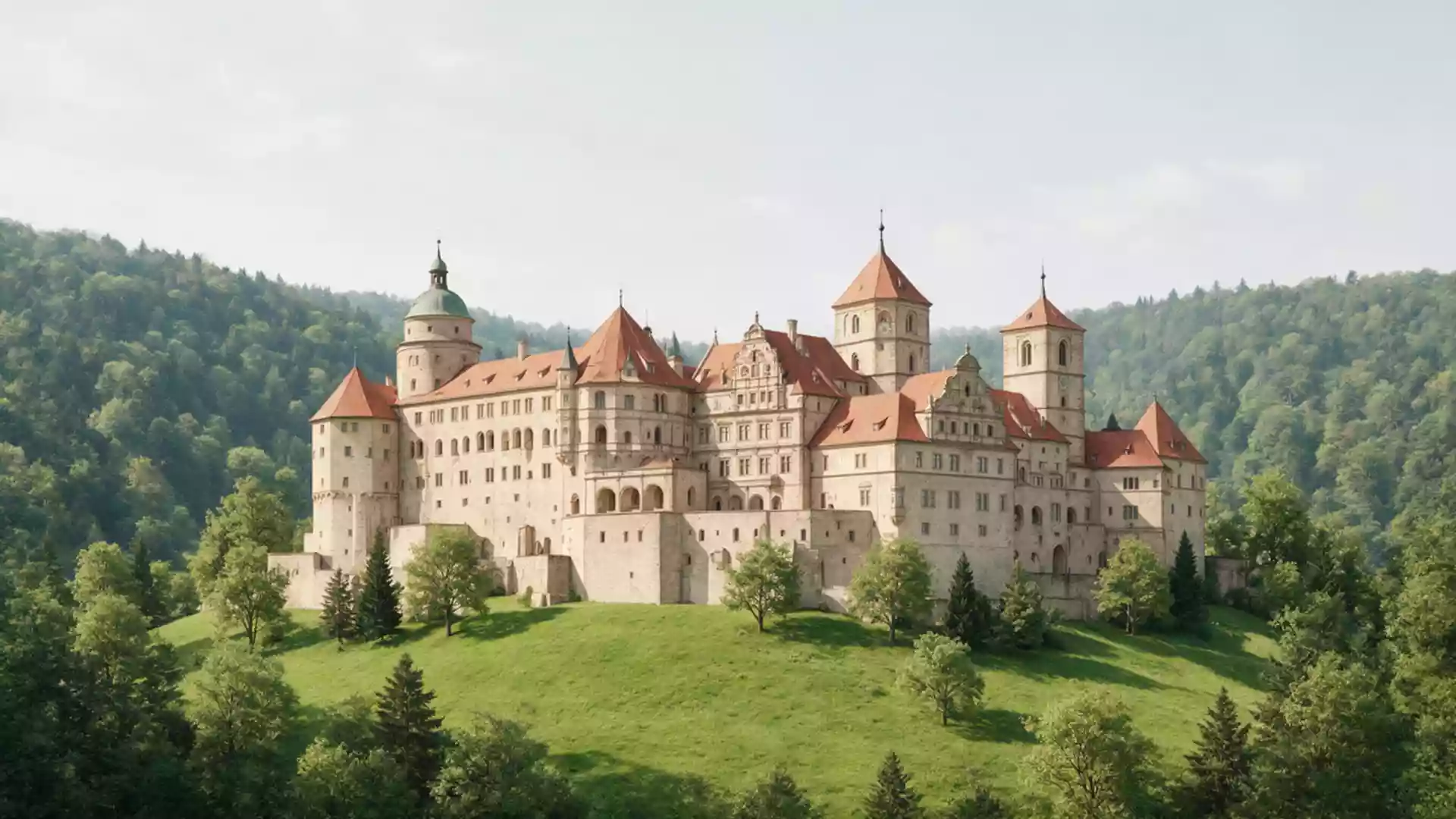
Schloss Heidelberg and the red sandstone ridge
Published on 09/02/2026 at 12:54 | Editorial responsibility: Rafael Müller, Editor-in-Chief AD HOC NEWS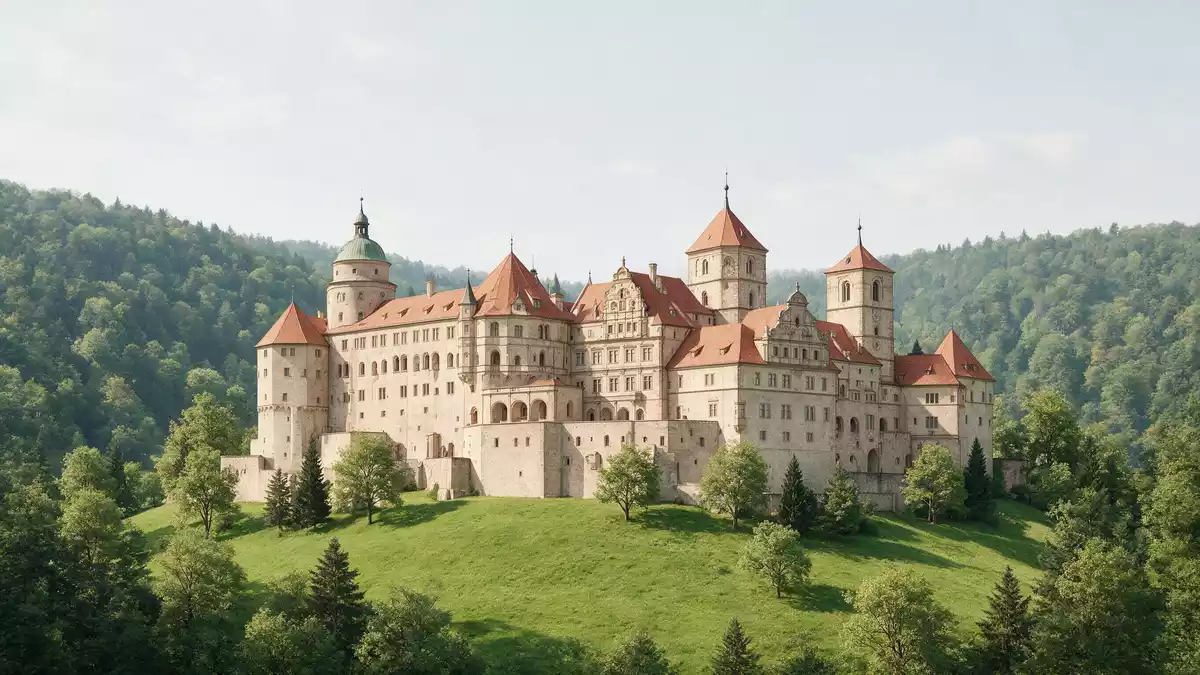
Schloss Heidelberg rises above Heidelberg in red sandstone, with medieval fabric, Renaissance wings and a ruin that still reads as a single hillside complex. First mentioned in 1225, it developed under the counts palatine of the Rhine and later the prince electors, including Friedrich IV and Friedrich V.
Red sandstone, wings and a long hillside profile
The castle spreads along the slope of the Königstuhl rather than standing as a compact block. Its most memorable parts include the Ottheinrich’s Wing, the Friedrich’s Wing and the English Wing, all part of the Renaissance phase that transformed the older medieval residence.
That Renaissance layer is tied to names that matter in European architecture. The English Wing follows a design based on Andrea Palladio, while the Ottheinrich’s Wing, begun in 1556, is one of the castle’s best-known palace fronts.
From princely residence to ruin
The residence changed character through war, fire and destruction in the late seventeenth century. French attacks during the War of the Grand Alliance left the castle damaged, and later lightning strikes added to the ruinous state that defines it today.
That loss did not erase the site’s architectural sequence. The visible ensemble still brings together Gothic remains, Renaissance façades and later conservation work, including restoration campaigns associated with Carl Schäfer in the nineteenth century.
A castle that still reads as a sequence
The place is not a single monument in one style, but a layered composition with clear breaks between phases. The Gläserner Saalbau, Ottheinrichsbau, Friedrichsbau and Englischer Bau make the sequence legible from one slope to the next.
Heidelberg Castle also carries a formal place in broader heritage discussions. Heidelberg, town and castle was placed on Germany’s UNESCO Tentative List as a combined property, reflecting the long association between the castle and the old town below.
Visiting Schloss Heidelberg: what travellers from Western Europe should know
- The castle stands above Heidelberg’s old town on the Königstuhl hillside. The Bergbahn funicular reaches the Schloss stop from Kornmarkt, and Heidelberg central station connects with bus line 33 or bus line 20 to the Bergbahn stop.
- The approach from the town involves a hillside ascent. The funicular stop, courtyards and upper terraces sit on uneven ground, with the castle spread across the slope rather than gathered around one flat forecourt.
- The castle and the funicular belong to a larger hill system that continues to Molkenkur and Königstuhl. From the castle, the line extends towards the city’s highest point, which rises to more than 550 metres.
- The site sits above the Neckar valley and the old town. Red sandstone is the dominant material across the most visible façades and ruins.
Searching for Schloss Heidelberg on social platforms
These links open searches for Schloss Heidelberg on each platform.
Frequently asked questions about Schloss Heidelberg
Where is Schloss Heidelberg?
It stands in Heidelberg, Germany, above the old town on the slope of the Königstuhl. The funicular railway reaches the castle from Kornmarkt.
What does a visit involve?
The castle is spread across a hillside, so the route includes slopes, terraces and changing levels. The main sightlines are the façades, courtyards and the red sandstone ruins.
What makes Schloss Heidelberg distinctive?
Its identity lies in the combination of medieval remains, Renaissance palace wings and a ruin that still preserves a clear architectural sequence. The names Friedrich IV, Friedrich V and Andrea Palladio belong to that story.