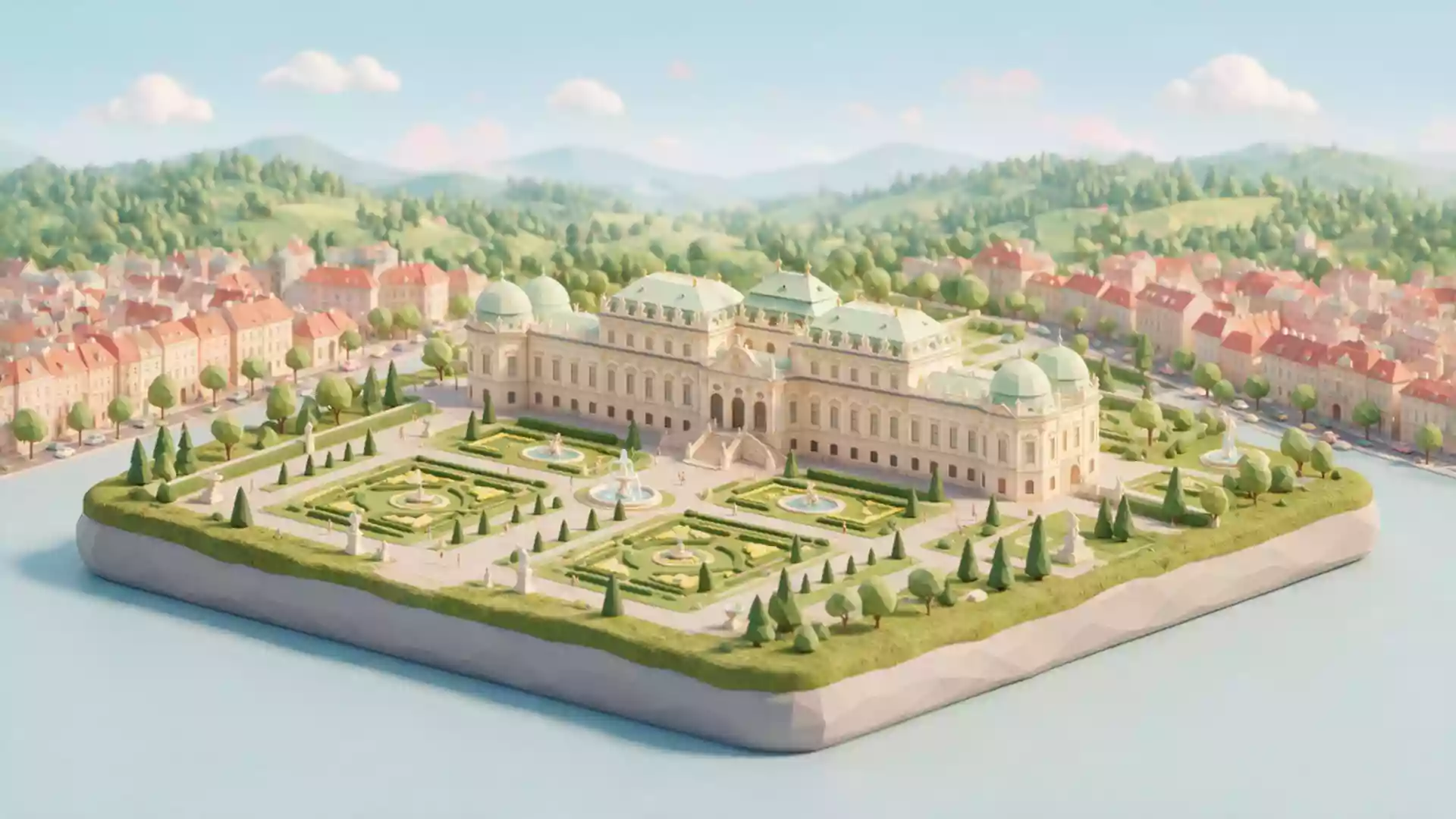
Schloss Belvedere in Wien and its baroque palace gardens
Published on 08/27/2026 at 13:11 | Editorial responsibility: Rafael Müller, Editor-in-Chief AD HOC NEWS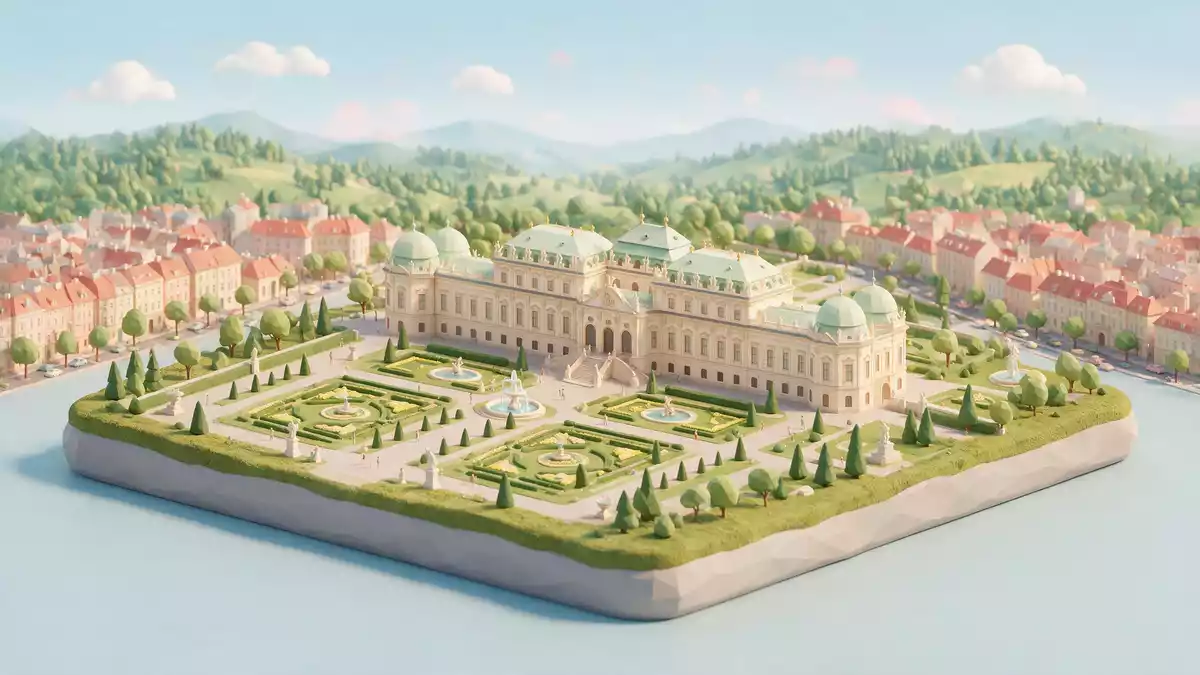
Schloss Belvedere in Wien brings together a baroque palace ensemble, terraced gardens and a major Austrian art collection in a single, carefully staged landscape. Built in the early eighteenth century as the summer residence of Prince Eugene of Savoy, its two main palaces and linking grounds still trace a powerful axis across Vienna’s Landstraße district.
A baroque palace on a city slope
Schloss Belvedere occupies a gentle slope on the south-eastern side of Vienna’s historic centre, in the city’s third district of Landstraße.The Belvedere is described as a Baroque palace complex in Vienna's third district From the upper terraces, the line of sight runs down towards the old city, underlining the name “Belvedere”, which literally refers to a fine view.
The origins of the complex lie in the career of Prince Eugene of Savoy, a Habsburg field marshal whose victories against the Ottoman Empire turned him into one of the most powerful figures in early eighteenth-century Austria.The complex was built as his summer residence Eugene commissioned the architect Johann Lukas von Hildebrandt, who worked within the baroque vocabulary of long façades, projecting pavilions and sculpted decoration to create a garden palace outside Vienna’s then city walls.The overall ensemble of Upper and Lower Belvedere is highlighted as a baroque architectural complex
Upper and Lower Belvedere with formal gardens
The complex consists of two principal palaces, the Upper Belvedere at the higher end of the site and the Lower Belvedere below it, linked by a long, formally structured garden.Schloss Belvedere is described as two Baroque palaces connected by gardens The Lower Belvedere was completed earlier in the eighteenth century and served as Prince Eugene’s main living quarters, while the Upper Belvedere, finished in 1723, was planned for receptions and display.Upper Belvedere is dated to the early 1720s and associated with ceremonial use
Between the two palaces stretches a series of terraces arranged as formal gardens, with staircases, pools and symmetrically planted parterres forming a central axis.The palace ensemble is described as Upper and Lower Belvedere with formal gardens The baroque composition draws the eye from the richly articulated façade of the Upper Belvedere down through the garden towards the city, while side alleys, statues and smaller garden spaces frame the main route.
From princely residence to national art museum
After Prince Eugene’s death in 1736, Schloss Belvedere passed into imperial ownership and became part of the Habsburg system of residences.The transfer into imperial hands and later museum use is documented In the later eighteenth century, parts of the complex began to house the imperial picture gallery, giving Belvedere an early role as a public exhibition space where artworks were displayed beyond strictly court circles.
This museum function expanded over the nineteenth and twentieth centuries into the Österreichische Galerie Belvedere, the federal art museum headquartered in the palace ensemble.Belvedere is named as a museum holding important Austrian art The institution now presents Austrian painting from the Middle Ages through the baroque era and nineteenth century into modern and contemporary work, spread across the Upper Belvedere, Lower Belvedere and the separate Belvedere 21 building.
Visiting Schloss Belvedere: what travellers from Western Europe should know
- Schloss Belvedere stands in Vienna’s Landstraße district, south-east of the historic centre, with the Upper Belvedere facing Prinz-Eugen-Straße and the Lower Belvedere closer to Rennweg.
- The site follows a noticeable slope between the two palaces, and visiting the gardens involves walking up and down broad exterior staircases and terraces.
- The official language is German and the currency is the euro.
Searching for Schloss Belvedere on social platforms
These links open searches for Schloss Belvedere on each platform.Frequently asked questions about Schloss Belvedere
Where is Schloss Belvedere located?
Schloss Belvedere stands in Vienna’s third district, Landstraße, on a slope south-east of the historic city centre.
What can visitors expect inside Schloss Belvedere?
The palaces contain historical interiors and exhibitions of Austrian art spanning several centuries, with rooms adapted as galleries within the baroque shell.
What makes Schloss Belvedere distinctive among Vienna’s sights?
The combination of Upper and Lower Belvedere, their formal gardens and the role as a national art museum gives the complex a dual identity as palace and gallery.