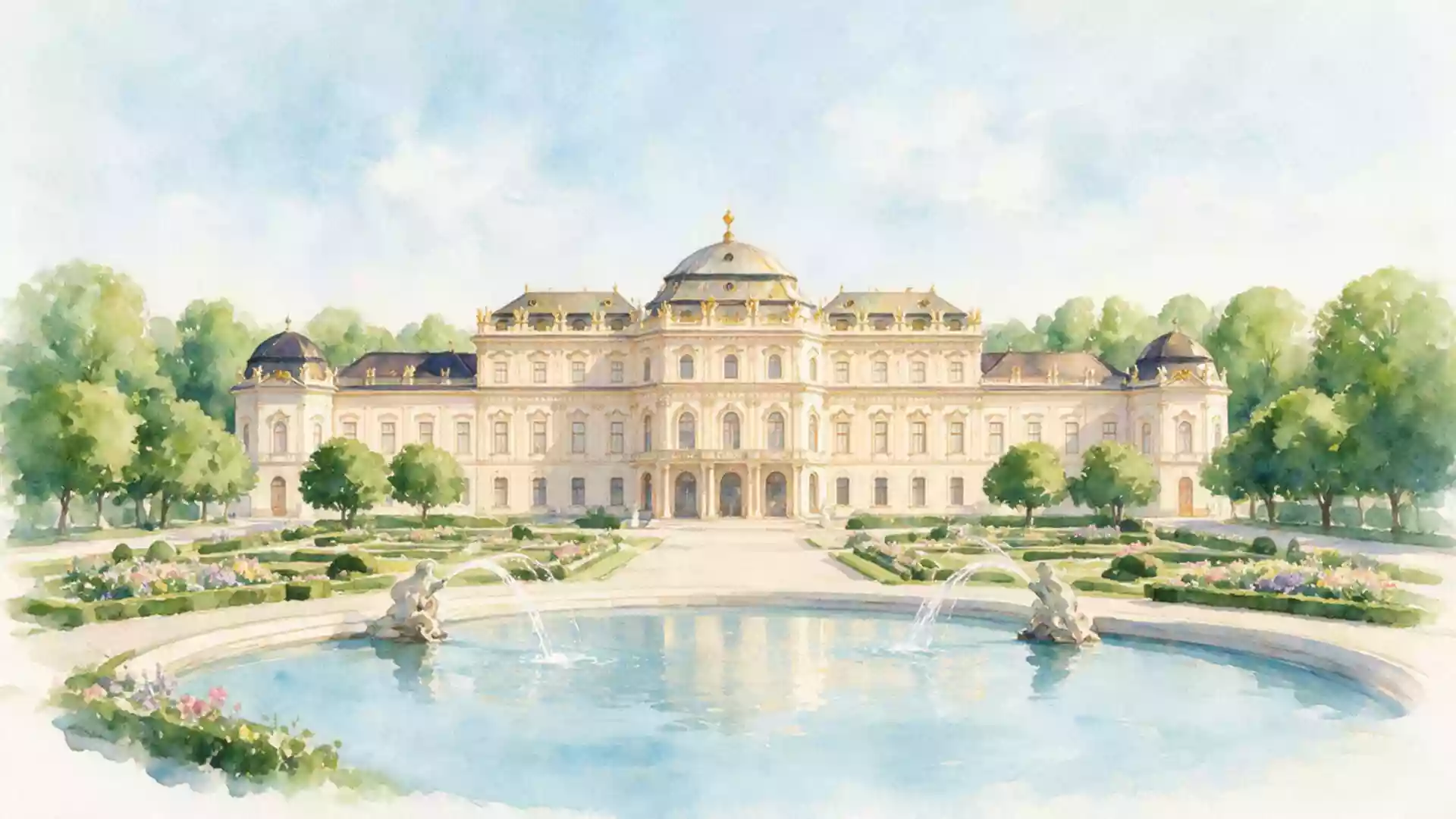
Schloss Belvedere in Wien and its baroque palace ensemble
Published on 08/31/2026 at 10:03 | Editorial responsibility: Rafael Müller, Editor-in-Chief AD HOC NEWS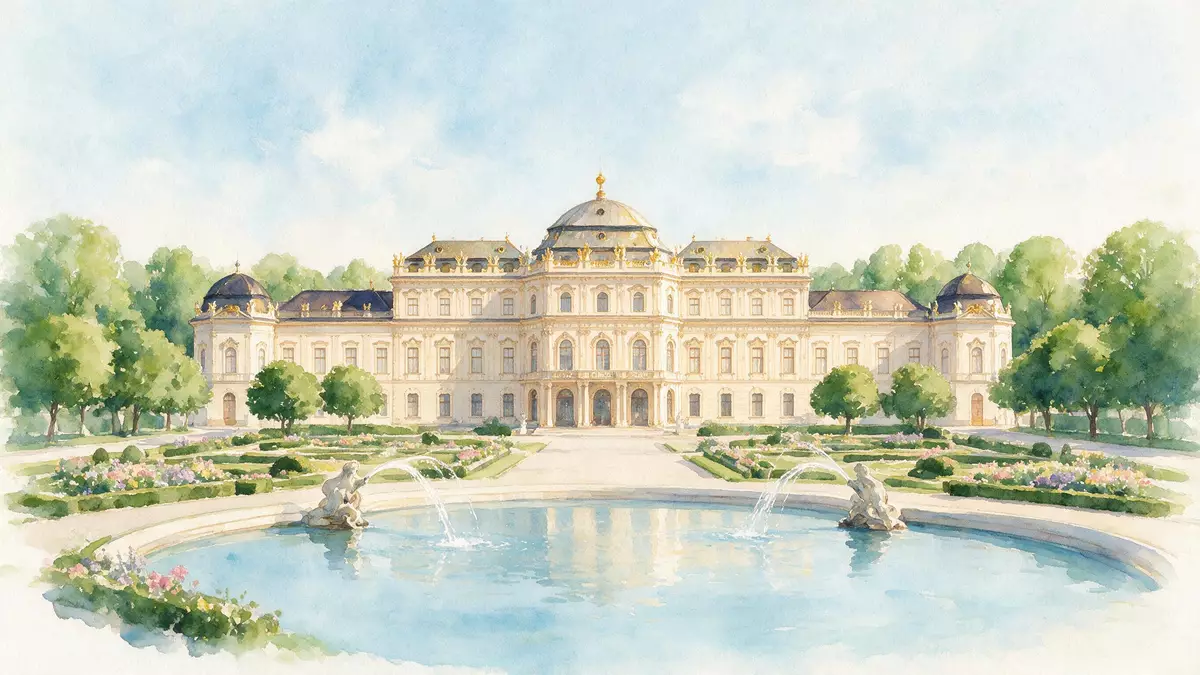
Schloss Belvedere in Wien is a baroque palace ensemble of Upper and Lower Belvedere, formal gardens and grand interiors that link courtly architecture with a major Austrian art collection. Built as a summer residence for Prince Eugene of Savoy in the early eighteenth century, it occupies a slope in Vienna’s Landstraße district and looks out over the city’s historic centre.
Prince Eugene’s summer residence above Vienna
The origins of Schloss Belvedere lie in the career of Prince Eugene of Savoy, the Habsburg military commander whose victories against the Ottoman Empire secured him immense influence and wealth.Prince Eugene of Savoy In the 1710s he commissioned architect Johann Lukas von Hildebrandt to design his summer residence on the then outskirts of Vienna, creating a complex that combined representation with retreat.Johann Lukas von Hildebrandt
Construction of the Lower Belvedere began in the early seventeenth century, followed by the Upper Belvedere on the higher part of the site, with the overall project completed in 1723.completed in 1723 The palaces were laid out on a south-facing slope in the Landstraße district, taking advantage of the elevation to frame wide views across Vienna.Landstraße district Over the eighteenth century, Schloss Belvedere passed into Habsburg ownership and became one of the imperial residences in the city.
Baroque architecture and tiered gardens
Schloss Belvedere is a baroque complex with two main palace buildings, the Lower Belvedere closer to the city and the Upper Belvedere higher on the slope, linked by a long formal garden.two palaces and gardens Hildebrandt’s architecture gives the façades strong articulation, with projecting sections, sculptural decoration and a pronounced horizontal emphasis that leads the eye along the building fronts.
Between the palaces stretches a terraced garden laid out on axial lines, with decorative basins, fountain structures, clipped hedges and statuary marking each level.formal garden Stone balustrades define the edges of the terraces, while broad flights of steps connect the levels and emphasise the descent from Upper to Lower Belvedere. From the upper palace the garden forms a green carpet stretching towards the historic centre, with the towers of inner-city churches visible beyond.
From aristocratic residence to national art museum
After Prince Eugene’s death in 1736, Schloss Belvedere entered imperial ownership, and Empress Maria Theresa integrated the palace into the system of Habsburg residences.imperial ownership In the later eighteenth century the Upper Belvedere began to house imperial painting collections, and by 1781 an imperial picture gallery was open to the public, giving the complex one of the earliest roles as a public art museum in Europe.imperial picture gallery
The palaces now house the Österreichische Galerie Belvedere, presenting works from the Middle Ages to contemporary art and giving the ensemble a second identity as a major museum site.Österreichische Galerie Belvedere Historic rooms retain stucco decoration, ceiling paintings and state staircases, while museum galleries insert display walls and lighting into the baroque structure. The combination of court architecture, landscaped gardens and national art holdings makes Schloss Belvedere a central place in Austria’s cultural landscape.
Visiting Schloss Belvedere: what travellers from Western Europe should know
- Schloss Belvedere stands in Vienna’s Landstraße district, south-east of the historic centre, and is reached by tram and regional rail services that stop near the palace grounds.
- The site extends along a slope, with broad exterior staircases between the garden terraces and additional steps inside the palace wings, so visitors encounter level changes throughout.
- Within the complex, museum routes pass through historic rooms and modernised galleries, with long corridors and larger halls that can involve substantial walking on hard floors.
- The official language is German and the currency is the euro.
Searching for Schloss Belvedere on social platforms
These links open searches for Schloss Belvedere on each platform.Frequently asked questions about Schloss Belvedere
Where is Schloss Belvedere located in Wien?
Schloss Belvedere stands on a slope in Vienna’s Landstraße district, south-east of the historic centre and within the city’s third district boundaries.
What can visitors expect on a visit to Schloss Belvedere?
Visitors encounter baroque palace architecture, formal tiered gardens and museum galleries presenting Austrian and international art in the historic rooms.
What makes Schloss Belvedere distinctive among Vienna’s palaces?
The combination of Upper and Lower Belvedere, the axial garden between them and the role as home of the Österreichische Galerie Belvedere gives the complex a distinctive profile.