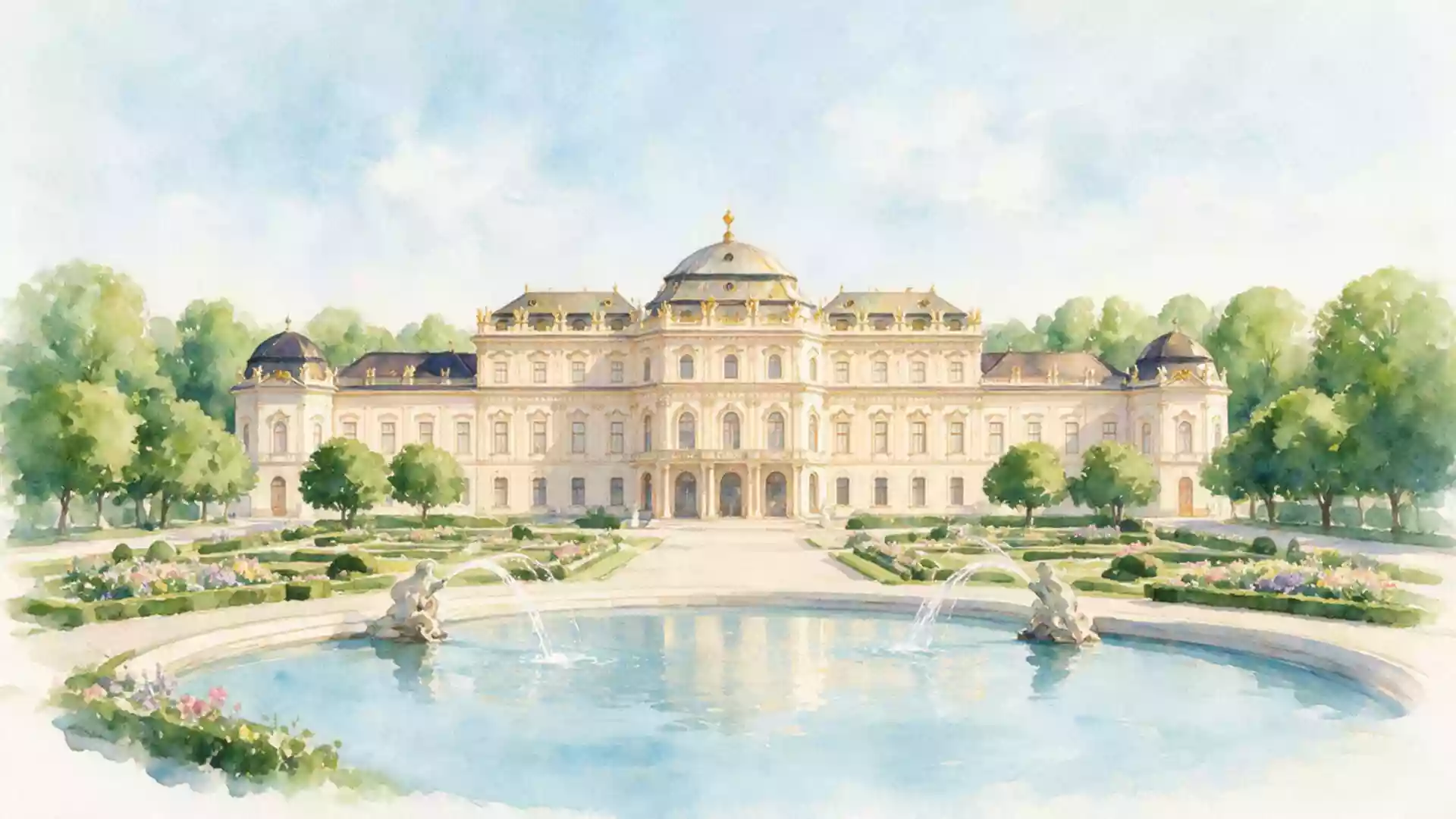
Schloss Belvedere in Wien: a baroque palace overlooking art and city
Published on 09/07/2026 at 21:58 | Editorial responsibility: Rafael Müller, Editor-in-Chief AD HOC NEWS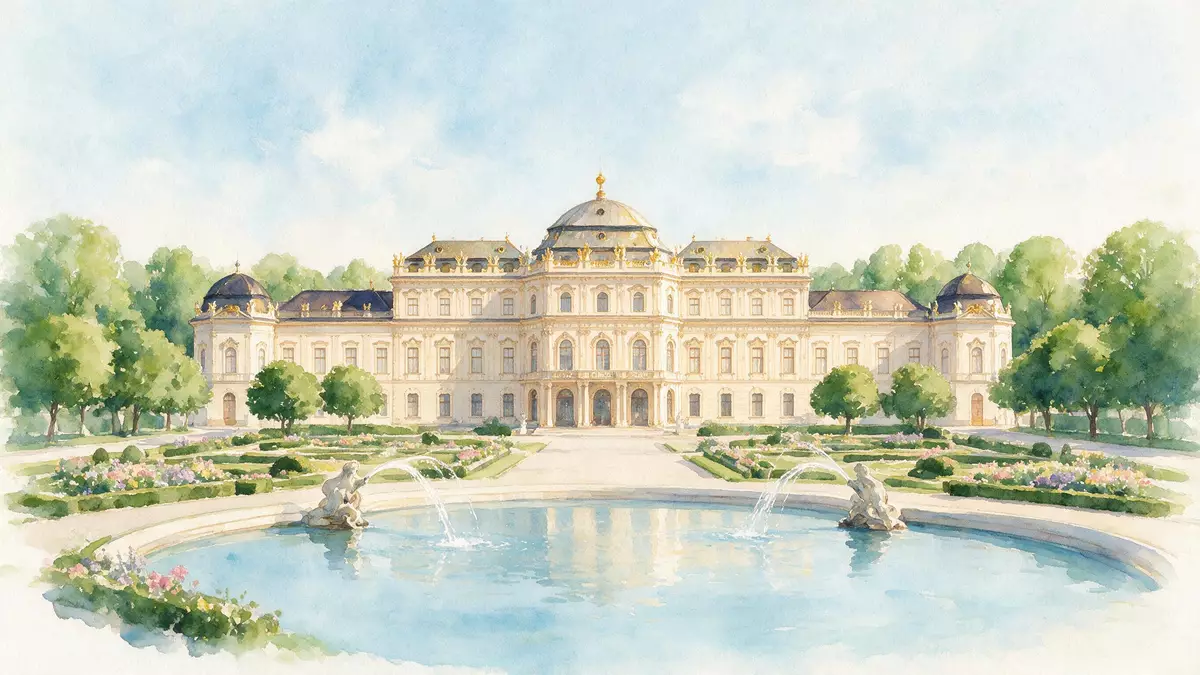
Schloss Belvedere in Wien is a baroque palace ensemble where courtly architecture, formal gardens and Austrian art share a single hillside above the city centre. Built in the early eighteenth century as the summer residence of Prince Eugene of Savoy and completed in 1723, it now houses the Österreichische Galerie Belvedere, a federal art museum whose collection ranges from medieval painting to Gustav Klimt.
Baroque palaces on a Viennese slope
Schloss Belvedere occupies a gentle slope in Wien’s Landstraße district, south?east of the historic centre. The complex consists of the Upper Belvedere on the crest of the hill and the Lower Belvedere closer to the former city edge, linked by an axial garden that steps down towards the urban fabric.Schloss Belvedere occupies a gentle slope Each palace is a self?contained building, but they were conceived together as one baroque composition that joins architecture and landscape.
The ensemble was commissioned by Prince Eugene of Savoy, the Habsburg military commander whose victories against the Ottoman Empire gave him the means to build a country retreat close to Wien. He engaged the architect Johann Lukas von Hildebrandt, a leading baroque designer, to create the palaces and their garden in a style that combined strong geometry with sculptural façades.Johann Lukas von Hildebrandt Construction of the Lower Belvedere began in the 1710s, followed by the Upper Belvedere, with the complex in its present form dating from the 1720s.Schloss Belvedere dates from the early eighteenth century
Upper and Lower Belvedere: architecture and interiors
The Lower Belvedere is set on the lower part of the site and originally served as Prince Eugene’s residential palace, with living apartments and more intimate reception rooms. Its exterior follows a single?wing layout with a strongly articulated façade and a sequence of courtyards and halls behind. Inside, visitors encounter baroque ceilings, wall painting and decorative stuccowork that reflect the tastes of early eighteenth?century aristocratic life.Lower Belvedere as Prince Eugene’s residence
On the upper terrace stands the Upper Belvedere, conceived as a ceremonial palace rather than a residence. Its façade presents domed corner pavilions, rich sculptural groups and a central entrance that opens into a sequence of grand interiors. Among these is the Marble Hall, whose tall windows and decorative stone surfaces frame views across the garden and towards Wien. Broad staircases, painted ceilings and ornamental details line the route through the building, giving the palace a theatrical character that suits its historic role as a venue for receptions and gatherings.Upper Belvedere’s ceremonial architecture
Gardens and the Austrian art collection
Between the two palaces stretches the Belvedere garden, laid out in a formal, symmetrical pattern that leads the eye along a central axis. Terraces descend the slope, linked by stairways, fountains and cascades, while parterres sit to either side with clipped planting and statuary. Wrought?iron gates, balustrades and stone figures mark transitions between levels, reinforcing the sense that Schloss Belvedere is as much a designed landscape as a pair of buildings.formal garden between Upper and Lower Belvedere
Schloss Belvedere has long served as a home for art. Over the eighteenth and nineteenth centuries the palaces began to house imperial and later national collections, a role that grew into the Österreichische Galerie Belvedere, headquartered within the ensemble.seat of Österreichische Galerie Belvedere The Upper Belvedere today presents Austrian art from the Middle Ages to the twentieth century, with a particular concentration on Viennese modernism.Austrian art from the Middle Ages to the present day Highlights include Gustav Klimt’s painting “The Kiss”, alongside works by Egon Schiele, Oskar Kokoschka and representatives of Biedermeier and baroque painting.Gustav Klimt’s “The Kiss”
Visiting Schloss Belvedere: what travellers from Western Europe should know
- Schloss Belvedere lies in Wien’s Landstraße district, south?east of the historic centre, with entrances on Rennweg and Prinz?Eugen?Straße close to tram and local rail stops.
- The ensemble occupies a slope with garden terraces and palace staircases; visiting involves walking between levels and using interior stairways within the buildings.
- The official language is German and the currency is the euro.
Searching for Schloss Belvedere on social platforms
These links open searches for Schloss Belvedere on each platform.
Frequently asked questions about Schloss Belvedere
Where is Schloss Belvedere located in Wien?
Schloss Belvedere stands in the Landstraße district south?east of Wien’s historic centre, on a slope between Rennweg and Prinz?Eugen?Straße.
What can visitors expect on a visit to Schloss Belvedere?
Visitors encounter two baroque palaces with historical interiors, formal terraced gardens and extensive collections of Austrian art displayed in museum galleries.
What makes Schloss Belvedere distinctive among Viennese sights?
Its combination of Upper and Lower palaces, axial baroque garden and the Österreichische Galerie Belvedere with works such as Gustav Klimt’s “The Kiss” gives Schloss Belvedere a rare blend of architecture and art.